Department of Pathology, The Children's Memorial Health Institute, Av. Dzieci Polskich 20, 04-730, Warsaw, Poland.
Department of Experimental and Clinical Neuropathology, Mossakowski Medical Research Centre, Polish Academy of Sciences, A. Pawińskiego 5 Street, 02-106, Warsaw, Poland.
Acta Neuropathol Commun. 2020 Jul 10;8(1):105. doi: 10.1186/s40478-020-00984-9.
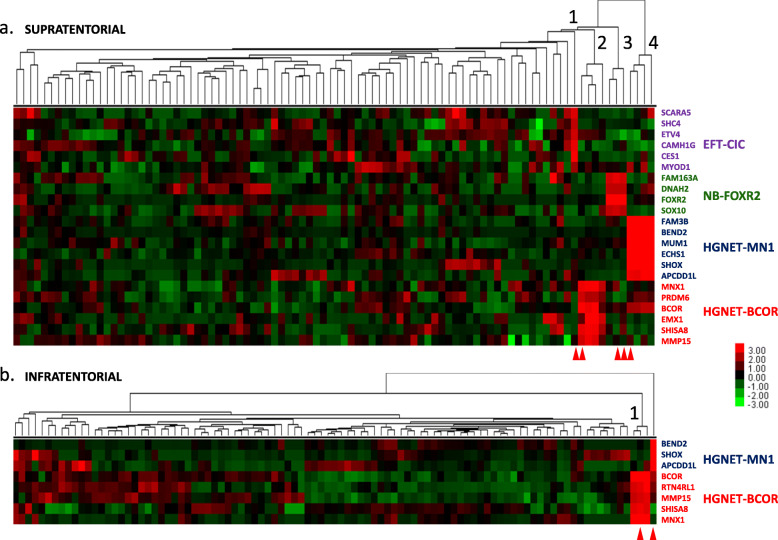
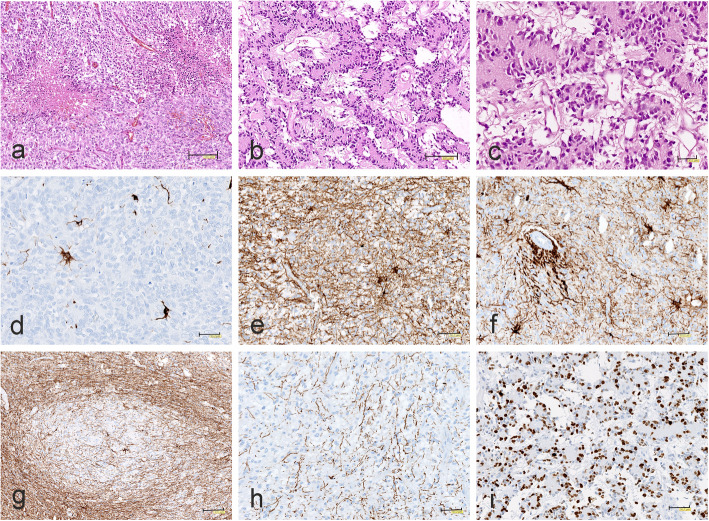
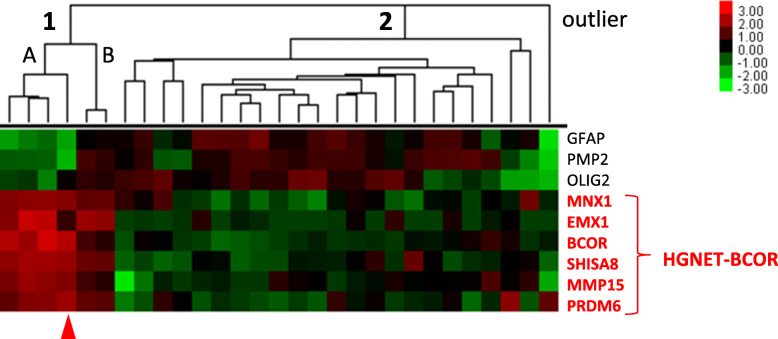
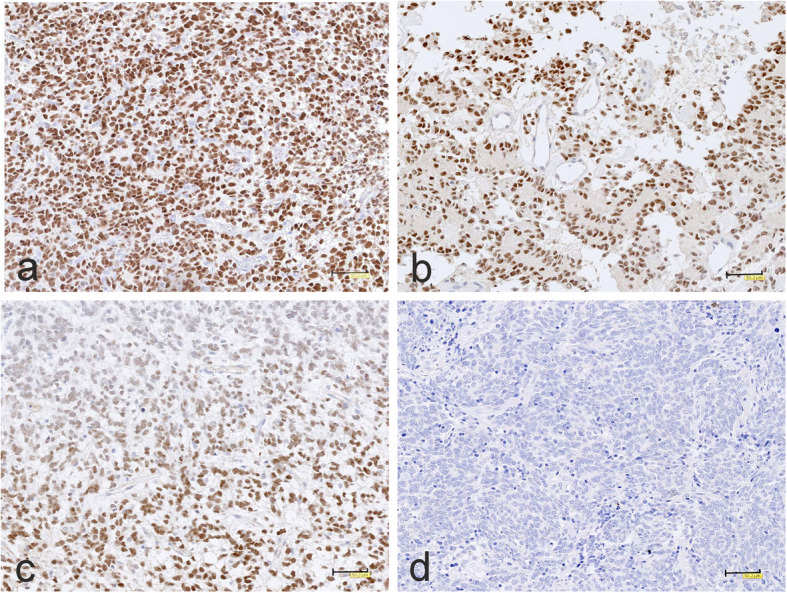
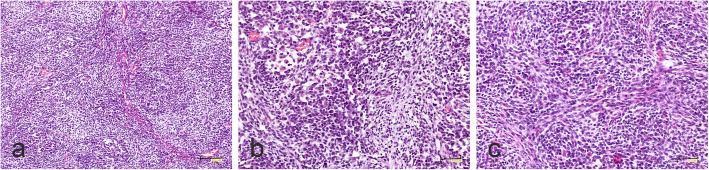
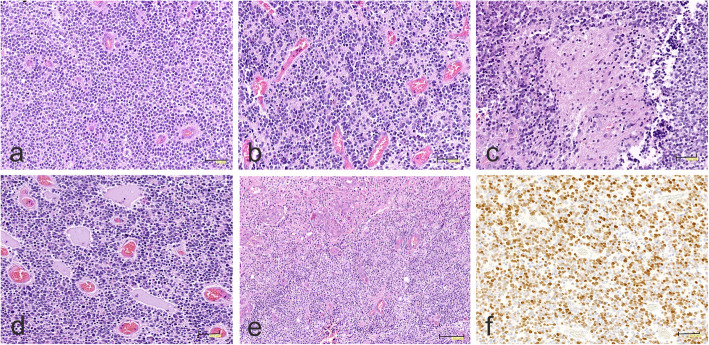
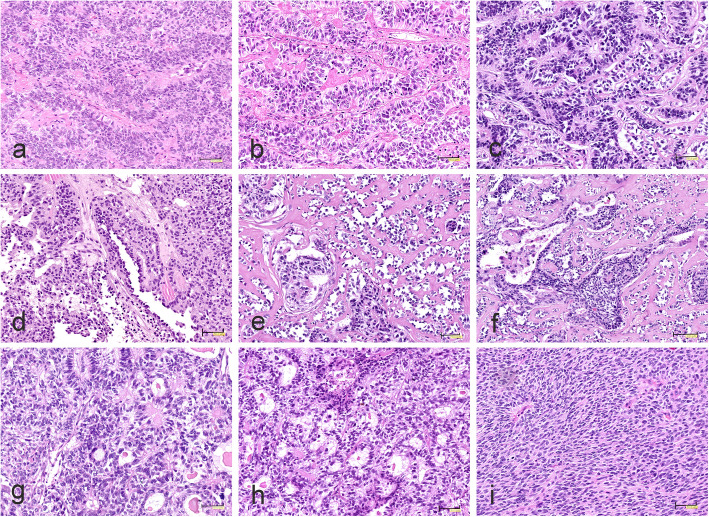
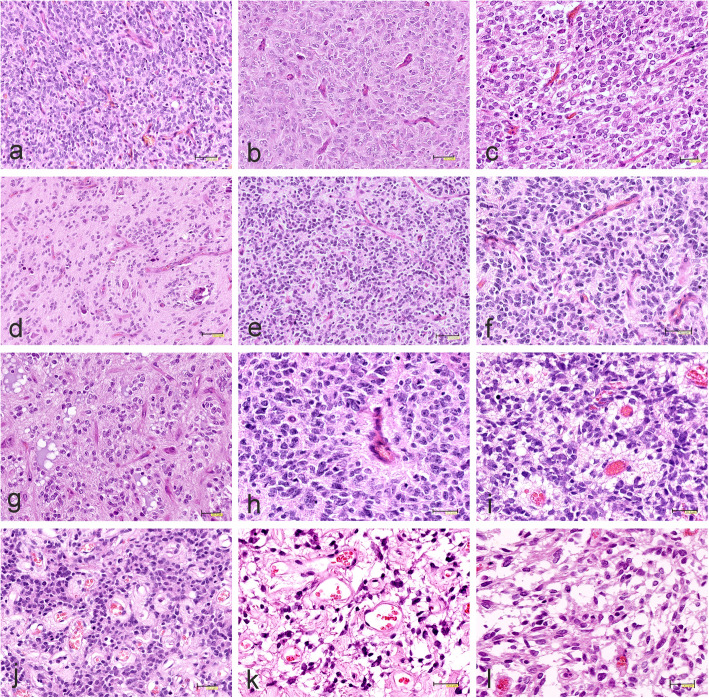
Four molecular types of rare central nervous system (CNS) tumors have been recently identified by gene methylation profiling: CNS Neuroblastoma with FOXR2 activation (CNS NB-FOXR2), CNS Ewing Sarcoma Family Tumor with CIC alteration (CNS EFT-CIC), CNS high grade neuroepithelial tumor with MN1 alteration (CNS HGNET-MN1) and CNS high grade neuroepithelial tumor with BCOR alteration (CNS HGNET-BCOR). Although they are not represented in 2016 updated WHO classification of CNS tumors, their diagnostic recognition is important because of clinical consequences. We have introduced a diagnostic method based on transcription profiling of tumor specific signature genes from formalin-fixed, paraffin-embedded tumor blocks using NanoString nCounter Technology. Altogether, 14 out of 187 (7.4%) high grade pediatric brain tumors were diagnosed with either of four new CNS categories. Histopathological examination of the tumors confirmed, that they demonstrate a spectrum of morphology mimicking other CNS high grade tumors. However, they also exhibit some suggestive histopathological and immunohistochemical features that allow for a presumptive diagnosis prior to molecular assessment. Clinical characteristics of patients corroborated with the previous findings for CNS EFT-CIC, CNS NB-FOXR2 and CNS HGNET-MN1 patients, with a favorable survival rate for the latter two groups. Among six CNS HGNET-BCOR patients, three patients are long term survivors, suggesting possible heterogeneity within this molecular category of tumors. In summary, we confirmed the effectiveness of NanoString method using a single, multi-gene tumor specific signature and recommend this novel approach for identification of either one of the four newly described CNS tumor entities.
最近通过基因甲基化分析,已经确定了四种罕见的中枢神经系统 (CNS) 肿瘤分子类型:FOXR2 激活的 CNS 神经母细胞瘤 (CNS NB-FOXR2)、CIC 改变的 CNS 尤文肉瘤家族肿瘤 (CNS EFT-CIC)、MN1 改变的 CNS 高级神经上皮肿瘤 (CNS HGNET-MN1) 和 BCOR 改变的 CNS 高级神经上皮肿瘤 (CNS HGNET-BCOR)。尽管它们在 2016 年更新的 CNS 肿瘤 WHO 分类中没有被代表,但由于其临床后果,诊断识别它们非常重要。我们已经引入了一种诊断方法,该方法基于使用 NanoString nCounter 技术对福尔马林固定、石蜡包埋的肿瘤块中的肿瘤特异性特征基因进行转录谱分析。总共,在 187 例高级别儿科脑肿瘤中,有 14 例被诊断为这四种新的 CNS 类别之一。肿瘤的组织病理学检查证实,它们表现出模仿其他 CNS 高级别肿瘤的形态谱。然而,它们也表现出一些提示性的组织病理学和免疫组织化学特征,允许在分子评估之前进行推定诊断。患者的临床特征与先前 CNS EFT-CIC、CNS NB-FOXR2 和 CNS HGNET-MN1 患者的发现相符,后两组患者的生存率较好。在 6 例 CNS HGNET-BCOR 患者中,有 3 例为长期幸存者,提示该分子肿瘤类别的可能存在异质性。总之,我们使用单一的、多基因肿瘤特异性特征证实了 NanoString 方法的有效性,并推荐这种新方法用于识别新描述的四种 CNS 肿瘤实体之一。