Crouwel Femke, Buiter Hans J C, de Boer Nanne K
Department of Gastroenterology and Hepatology, AG&M Research Institute, Amsterdam University Medical Centre, Vrije Universiteit Amsterdam, Amsterdam, the Netherlands.
Department of Clinical Pharmacology and Pharmacy, Amsterdam University Medical Centre, Vrije Universiteit Amsterdam, Amsterdam, the Netherlands.
J Crohns Colitis. 2020 Jul 11;15(2):307-15. doi: 10.1093/ecco-jcc/jjaa143.
The gut microbiota plays an important role in the metabolization and modulation of several types of drugs. With this study we aimed to review the literature about microbial drug metabolism of medication prescribed in inflammatory bowel disease practice.
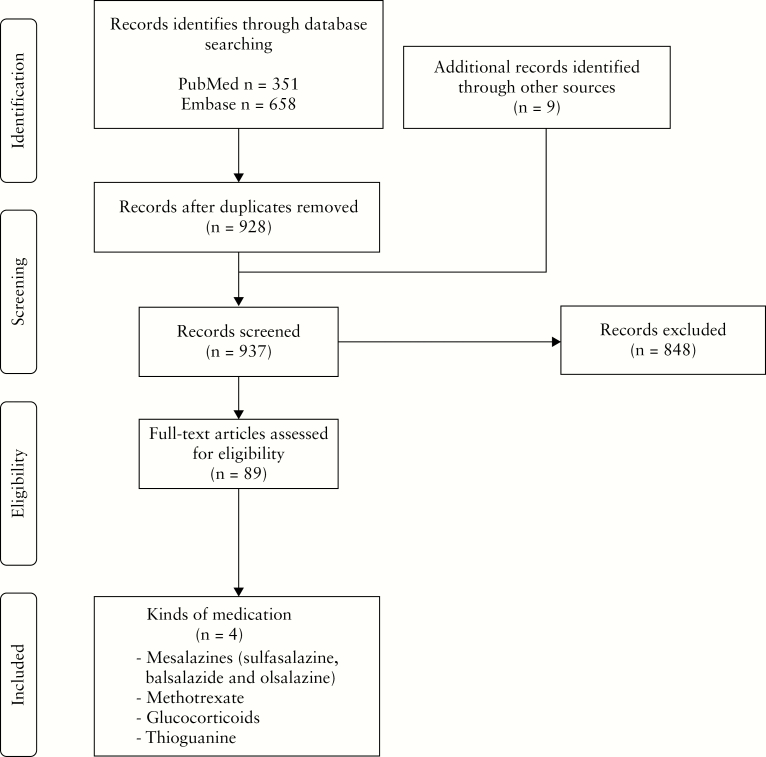
A systematic literature search was performed in Embase and PubMed from inception to October 2019. The search was conducted with predefined MeSH/Emtree and text terms. All studies about drug metabolism by microbiota of medication prescribed in inflammatory bowel disease practice were eligible. A total of 1018 records were encountered and 89 articles were selected for full text reading.
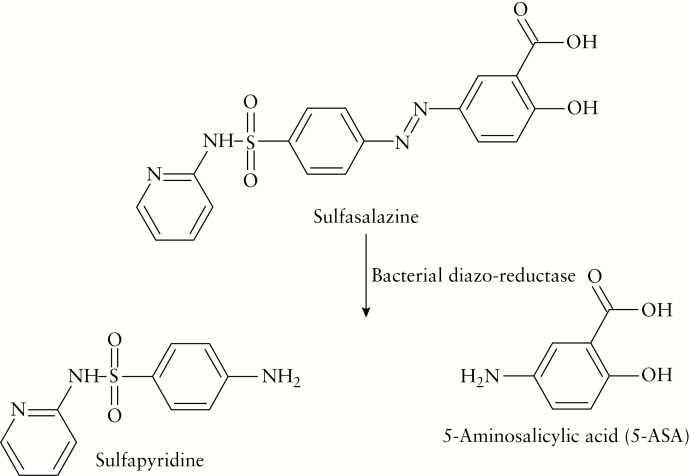
Intestinal bacterial metabolism or modulation is of influence in four specific drugs used in inflammatory bowel disease (mesalazines, methotrexate, glucocorticoids and thioguanine). The gut microbiota cleaves the azo-bond of sulfasalazine, balsalazide and olsalazine and releases the active moiety 5-aminosalicylic acid. It has an impact on the metabolization and potentially on the response of methotrexate therapy. Especially thioguanine can be converted by intestinal bacteria into the pharmacological active 6-thioguanine nucleotides without the requirement of host metabolism. Glucocorticoid compounds can be prone to bacterial degradation.
The human intestinal microbiota can have a major impact on drug metabolism and efficacy of medication prescribed in inflammatory bowel disease practice. A better understanding of these interactions between microbiota and drugs is needed and should be an integral part of the drug development pathway of new inflammatory bowel disease medication.
肠道微生物群在多种药物的代谢和调节中发挥着重要作用。本研究旨在综述有关炎症性肠病临床用药微生物药物代谢的文献。
在Embase和PubMed数据库中进行了从建库至2019年10月的系统文献检索。检索使用了预定义的医学主题词(MeSH)/Emtree词表和文本词。所有关于炎症性肠病临床用药微生物药物代谢的研究均符合纳入标准。共检索到1018条记录,筛选出89篇文章进行全文阅读。
肠道细菌代谢或调节对炎症性肠病中使用的四种特定药物(美沙拉嗪、甲氨蝶呤、糖皮质激素和硫鸟嘌呤)有影响。肠道微生物群可裂解柳氮磺吡啶、巴柳氮和奥沙拉嗪的偶氮键,释放出活性成分5-氨基水杨酸。它对甲氨蝶呤治疗的代谢及潜在反应有影响。特别是硫鸟嘌呤可被肠道细菌转化为具有药理活性的6-硫鸟嘌呤核苷酸,而无需宿主代谢。糖皮质激素化合物容易被细菌降解。
人类肠道微生物群可对炎症性肠病临床用药的药物代谢和疗效产生重大影响。需要更好地理解微生物群与药物之间的这些相互作用,并且这应该成为新型炎症性肠病药物研发途径的一个组成部分。