Division of Hematology and Oncology, Department of Pediatrics, Washington University School of Medicine, St. Louis, Missouri.
Department of Psychosocial Oncology, Dana-Farber Cancer Institute, Boston, Massachusetts.
Cancer. 2020 Oct 1;126(19):4400-4406. doi: 10.1002/cncr.33081. Epub 2020 Jul 13.
For adolescents and young adults (AYAs), the diagnosis of cancer can impede social development, especially with respect to education, employment, and financial independence. However, there are limited quantitative data on the extent and trajectory of life disruptions during cancer treatment for AYA patients.
This was a longitudinal, prospective, questionnaire-based cohort study of 145 AYA patients with cancer aged 15 to 29 years who were treated at a large academic cancer center. Questionnaires were administered shortly after diagnosis and 4 and 12 months after diagnosis.
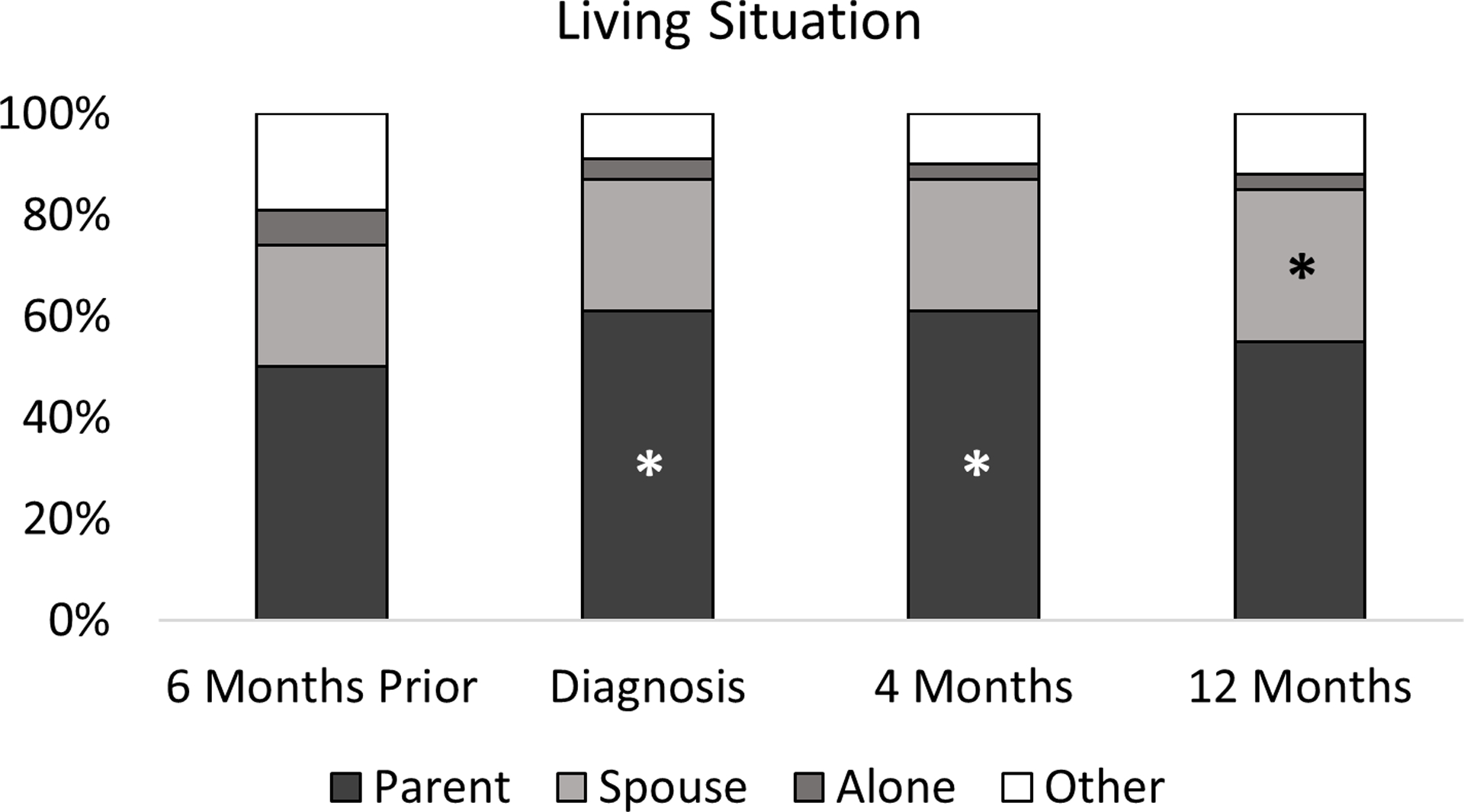
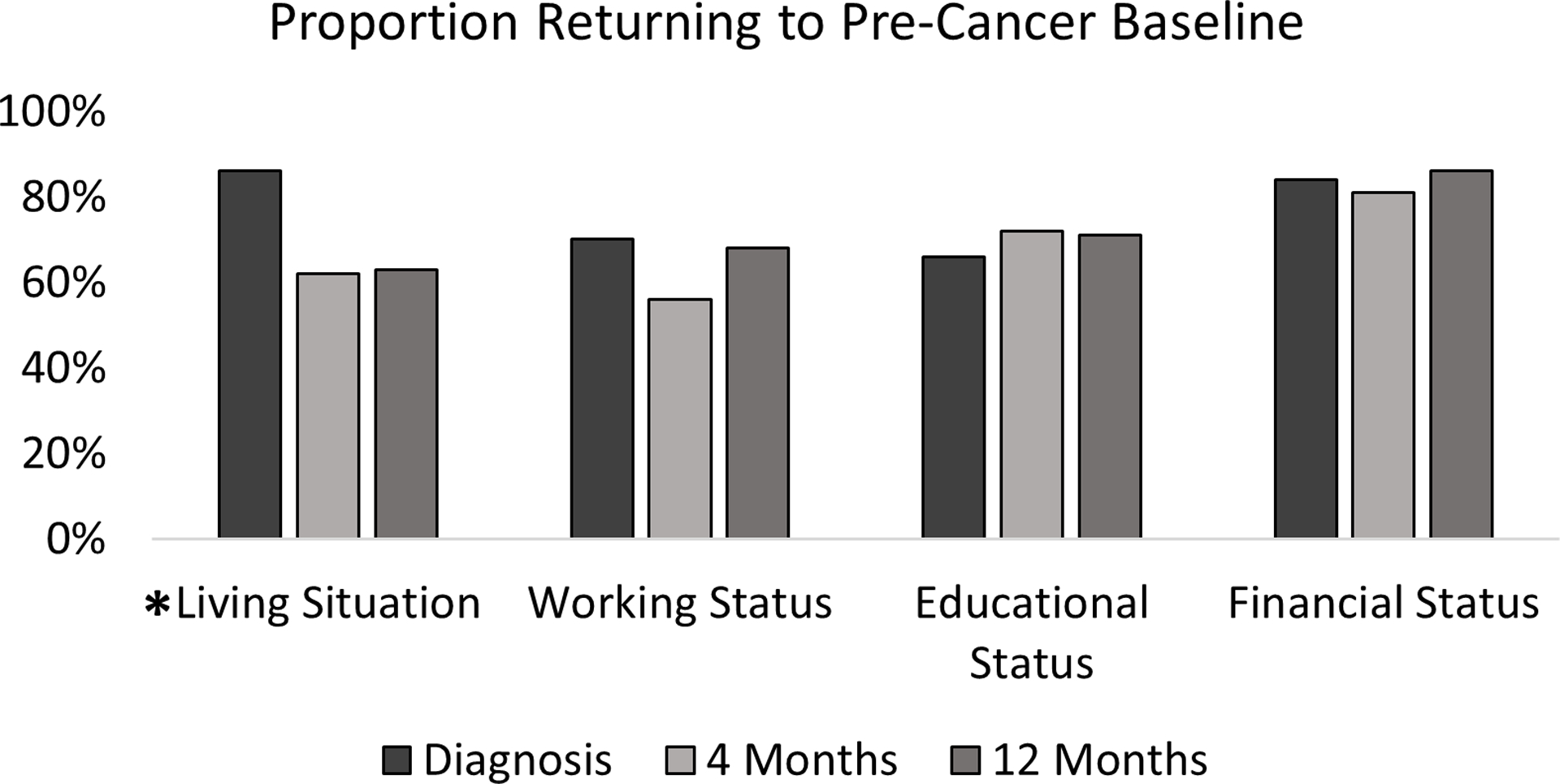
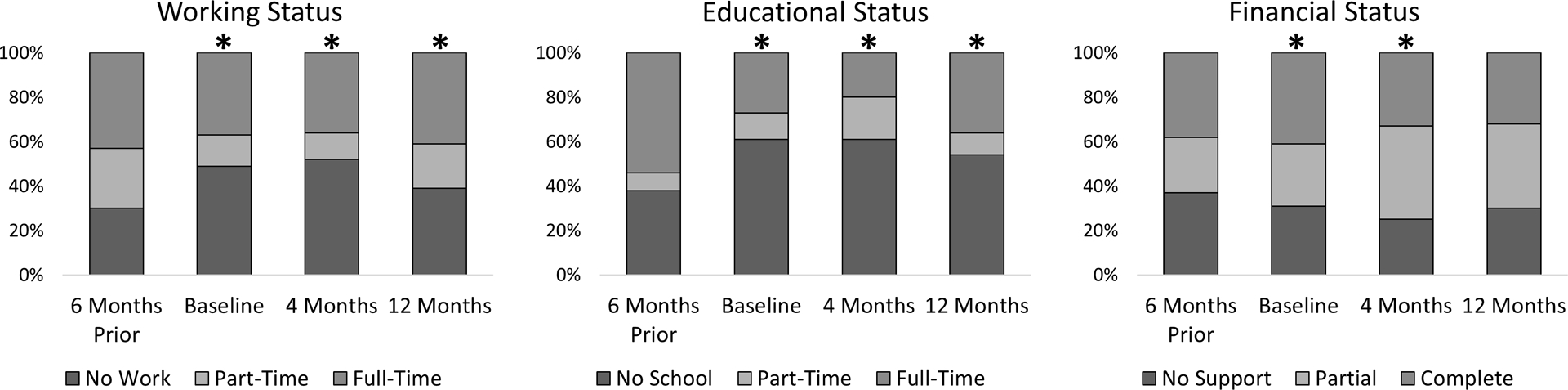
Although half of the participants lived with their parents 6 months before diagnosis, 61% lived with their parents after diagnosis (P = .0002 vs 6 months before diagnosis), with a similar proportion reported to be living with their parents 4 months after diagnosis (61%; P = .001) and 55% doing so 12 months after diagnosis (P = .07). Before diagnosis, 38% of the patients were not attending school. After diagnosis, that proportion rose to 61% (P < .0001), with a similar proportion 4 months after diagnosis (61%; P < .0001); 54% were not in school at 12 months (P = .001). Patients experienced similar decrements in employment (30% not working before diagnosis vs 49% not working after diagnosis; P < .0001) and financial independence (37% with complete financial independence before diagnosis vs 31% after diagnosis; P = .02). Overall, 65% of the patients (94 of 145) had not returned to their precancer baseline in at least 1 of these 4 social domains by 12 months after diagnosis.
For many AYA patients, cancer leads to less engagement with school and work activities and decreased financial independence from parents. Clinicians should engage in early and ongoing discussions with patients about the potential impact of cancer on their lives.
对于青少年和年轻人(AYA),癌症的诊断会阻碍其社会发展,尤其是在教育、就业和经济独立方面。然而,关于 AYA 患者癌症治疗期间生活中断的程度和轨迹,目前定量数据有限。
这是一项针对 145 名年龄在 15 至 29 岁的在大型学术癌症中心接受治疗的癌症 AYA 患者的纵向、前瞻性、基于问卷的队列研究。在诊断后不久以及诊断后 4 个月和 12 个月时进行问卷调查。
尽管一半的参与者在诊断前 6 个月与父母同住,但 61%的人在诊断后与父母同住(P<.0002 与诊断前 6 个月相比),在诊断后 4 个月(61%;P<.0001)和 55%在诊断后 12 个月(P=.07)时,也有类似比例的人报告与父母同住。在诊断前,38%的患者未上学。在诊断后,这一比例上升至 61%(P<.0001),在诊断后 4 个月时也有类似比例(61%;P<.0001);54%的人在 12 个月时不在学校(P=.001)。患者在就业方面也经历了类似的下降(30%的人在诊断前未工作,而 49%的人在诊断后未工作;P<.0001)和财务独立性下降(37%的人在诊断前完全独立于父母,而 31%的人在诊断后);P=.02)。总体而言,在诊断后 12 个月时,至少有 1 个社会领域未恢复到癌症前基线的患者比例为 65%(145 例中有 94 例)。
对于许多 AYA 患者,癌症会导致他们更少地参与学校和工作活动,并且从父母那里获得的经济独立性降低。临床医生应与患者进行早期和持续的讨论,探讨癌症对他们生活的潜在影响。