Department of Family Medicine, MacKay Memorial Hospital, No. 92, Section 2, Zhongshan North Road, Taipei City, 10449, Taiwan.
Institute of Epidemiology and Preventive Medicine, College of Public Health, National Taiwan University, No.17, Xu-Zhou Rd, Taipei City, 10055, Taiwan.
BMC Cardiovasc Disord. 2020 Jul 13;20(1):334. doi: 10.1186/s12872-020-01567-1.
Cardiovascular disease is the leading cause of morbidity and mortality with incidence rates of 5-10 per 1000 person-years, according to primary prevention studies. To control hyperlipidemia-a major risk factor of cardiovascular disease-initiation of lipid-lowering therapy with therapeutic lifestyle modification or lipid-lowering agent is recommended. Few systematic reviews and meta-analyses are available on lipid-lowering therapy for the primary prevention of cardiovascular diseases. In addition, the operational definitions of intensive lipid-lowering therapies are heterogeneous. The aim of our study was to investigate whether intensive lipid-lowering therapies reduce greater cardiovascular disease risks in primary prevention settings.
MEDLINE, EMBASE, and Cochrane Library databases were searched from inception to March 2019 for randomized controlled trials. We used random effects model for overall pooled risk ratio (RR) estimation with cardiovascular events of interest and all-cause mortality rate for the intensive lipid-lowering group using the standard lipid-lowering group as the reference. The Cochrane Risk of Bias Tool was used for quality assessment.
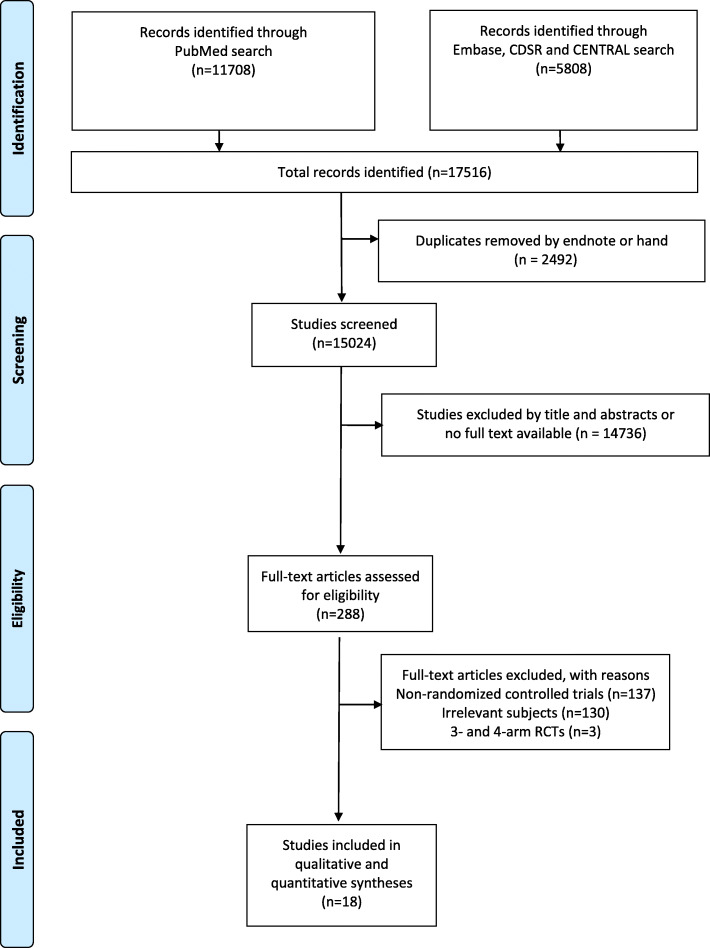
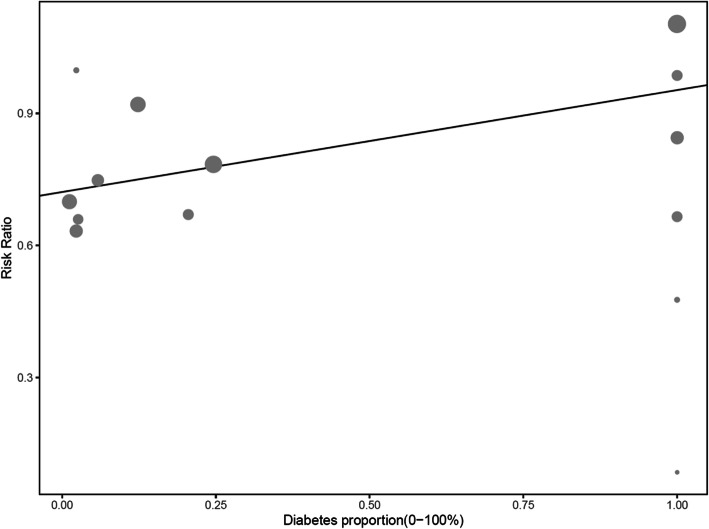
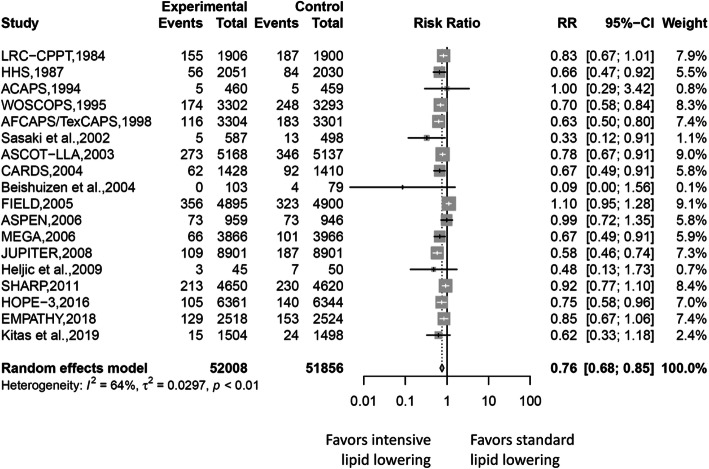
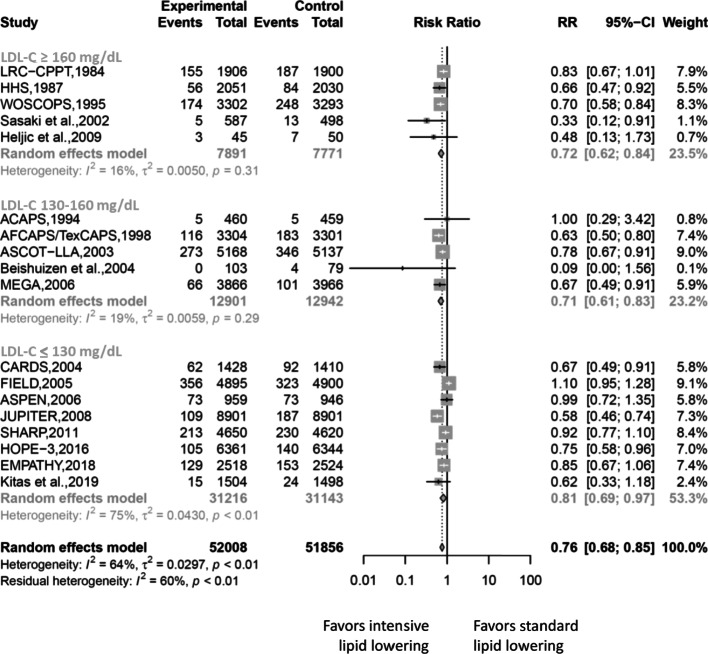
A total of 18 randomized controlled trials were included. The risk reductions in cardiovascular outcomes and all-cause mortality associated with more intensive vs. standard lipid-lowering therapy across all trials were 24 and 10%, respectively (RR 0.76, 95% confidence interval 0.68-0.85; RR 0.90, 95% confidence interval 0.83-0.97); however, the risk reduction varied by baseline LDL-C level in the trial. A greater risk reduction was noted with higher LDL-C level. Intensive lipid-lowering for coronary heart disease protection was more pronounced in the non-diabetic populations than in the diabetic populations.
More intensive LDL-C lowering was associated with a greater reduction in risk of total and cardiovascular mortality in trials of patients with higher baseline LDL-C levels than less intensive LDL-C lowering. Intensive lipid-lowering was associated with a significant risk reduction of coronary heart disease and must be considered even in the non-diabetic populations.
根据初级预防研究,心血管疾病是发病率为 5-10/1000 人年的主要发病率和死亡率原因。为了控制血脂异常——心血管疾病的主要危险因素,建议采用生活方式改变或降脂药物进行降脂治疗。关于降脂治疗在心血管疾病一级预防中的应用,目前仅有少数系统评价和荟萃分析。此外,强化降脂治疗的操作性定义也存在差异。本研究旨在探讨在一级预防环境中,强化降脂治疗是否能降低更大的心血管疾病风险。
从建库至 2019 年 3 月,我们在 MEDLINE、EMBASE 和 Cochrane Library 数据库中检索了随机对照试验。我们使用随机效应模型对所有心血管事件和全因死亡率的整体汇总风险比(RR)进行估计,以标准降脂组为参照,将强化降脂组作为参照。使用 Cochrane 偏倚风险工具进行质量评估。
共纳入 18 项随机对照试验。与标准降脂治疗相比,所有试验中强化降脂治疗与心血管结局和全因死亡率降低的风险分别为 24%和 10%(RR 0.76,95%置信区间 0.68-0.85;RR 0.90,95%置信区间 0.83-0.97);然而,试验中的基线 LDL-C 水平不同,风险降低也不同。LDL-C 水平较高时,风险降低更为显著。对于冠心病保护,强化降脂在基线 LDL-C 水平较高的患者中的效果更为显著,而非糖尿病患者中的效果更为显著。
与较低强度 LDL-C 降低相比,较高基线 LDL-C 水平的患者中,更强化的 LDL-C 降低与总死亡率和心血管死亡率风险降低幅度更大相关。强化降脂与显著的冠心病风险降低相关,即使在非糖尿病患者中也必须考虑。