Maponga Tongai Gibson, Glashoff Richard H, Vermeulen Hannali, Robertson Barbara, Burmeister Sean, Bernon Marc, Omoshoro-Jones Jones, Ruff Paul, Neugut Alfred I, Jacobson Judith S, Preiser Wolfgang, Andersson Monique I
Division of Medical Virology, Stellenbosch University, Faculty of Medicine and Health Sciences, Cape Town, South Africa.
Division of Medical Microbiology & Immunology, Stellenbosch University, Faculty of Medicine and Health Sciences, Cape Town, South Africa.
BMC Gastroenterol. 2020 Jul 13;20(1):226. doi: 10.1186/s12876-020-01372-2.
Patients co-infected with hepatitis B virus (HBV) and the human immunodeficiency virus (HIV) are at risk of developing hepatocellular carcinoma (HCC). In sub-Saharan Africa, the overlap between high HIV and HBV prevalence may increase the incidence of HCC. This study investigated the impact of HBV/HIV co-infection on age at presentation and survival of HCC.
Ethical approval was obtained to recruit, following informed written consent, patients diagnosed with HCC at oncology units at four South African hospitals. Between December 2012 and August 2015, patients newly diagnosed with HCC were recruited and provided demographic and clinical data and blood specimens. Patients were tested for HBV, hepatitis C virus (HCV) and HIV. Survival data was available for a subset of patients.
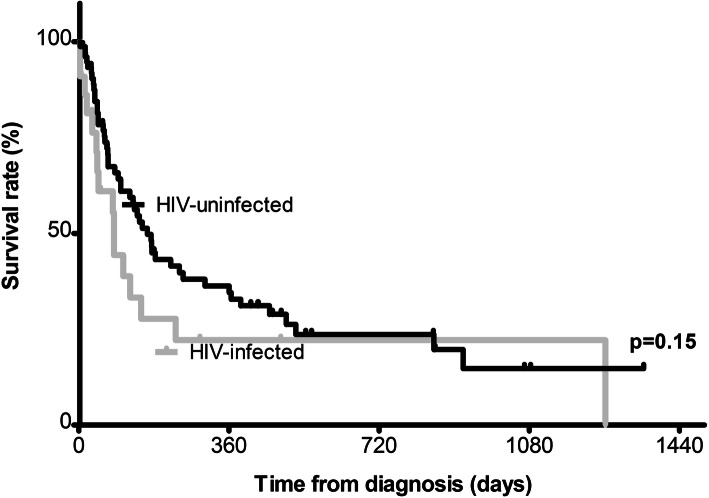
Of 107 HCC cases, 83 (78%) were male. Median age was 46 years (range 18 to 90 years), 68/106 (64%) were HBsAg-positive, and 22/100 (22%) were HIV infected. Among HBV surface antigen (HBsAg)-positive HCC cases, 18/66 (27%) were HIV-infected compared to 3/34 (9%) among those that were HBsAg-negative (p = 0.04). A greater proportion of HBV/HIV co-infected cases were female than HBV mono-infected (6/18, 33% vs 6/47, 13%; p = 0.005). In addition, HBV/HIV co-infected females presented at a younger mean age (36.8 years) than HBV mono-infected women (50.5 years) (p = 0.09). Median survival was 82 days among the HIV-infected HCC patients compared to 181 days among those without HIV (p = 0.15).
HCC is an important complication in the HIV/HBV infected patient. HIV-positive patients presented with HCC at a younger age than HIV-negative patients, this effect appears to be greater in women. These data provide more evidence supporting the call to address. HCC as a cause of morbidity and mortality in the HBV/HIV co-infected patient population. (281 words).
合并感染乙型肝炎病毒(HBV)和人类免疫缺陷病毒(HIV)的患者有患肝细胞癌(HCC)的风险。在撒哈拉以南非洲地区,高HIV感染率与高HBV感染率的重叠可能会增加HCC的发病率。本研究调查了HBV/HIV合并感染对HCC患者就诊年龄和生存率的影响。
在获得伦理批准后,经知情书面同意,招募在南非四家医院肿瘤科被诊断为HCC的患者。2012年12月至2015年8月期间,招募新诊断为HCC的患者,并提供人口统计学和临床数据以及血液样本。对患者进行HBV、丙型肝炎病毒(HCV)和HIV检测。部分患者可获得生存数据。
107例HCC病例中,83例(78%)为男性。中位年龄为46岁(范围18至90岁),106例中有68例(64%)HBsAg阳性,100例中有22例(22%)感染HIV。在HBV表面抗原(HBsAg)阳性的HCC病例中,18/66(27%)感染HIV,而在HBsAg阴性的病例中为3/34(9%)(p = 0.04)。与HBV单一感染病例相比,HBV/HIV合并感染病例中女性比例更高(6/18,33%对6/47,13%;p = 0.005)。此外,HBV/HIV合并感染的女性就诊时的平均年龄(36.8岁)比HBV单一感染的女性(50.5岁)更小(p = 0.09)。HIV感染的HCC患者中位生存期为82天,而未感染HIV的患者为181天(p = 0.15)。
HCC是HIV/HBV感染患者的一种重要并发症。HIV阳性患者患HCC的就诊年龄比HIV阴性患者小,这种影响在女性中似乎更大。这些数据为支持将HCC作为HBV/HIV合并感染患者群体发病和死亡原因加以关注的呼吁提供了更多证据。 (281字)