Marchwiany Maciej E, Birowska Magdalena, Popielski Mariusz, Majewski Jacek A, Jastrzębska Agnieszka M
Interdisciplinary Centre for Mathematical and Computational Modelling (ICM), University of Warsaw, Pawińskiego 5a, 02-106 Warsaw, Poland.
Faculty of Physics, University of Warsaw, Pasteura 5, 00-092 Warsaw, Poland.
Materials (Basel). 2020 Jul 10;13(14):3083. doi: 10.3390/ma13143083.
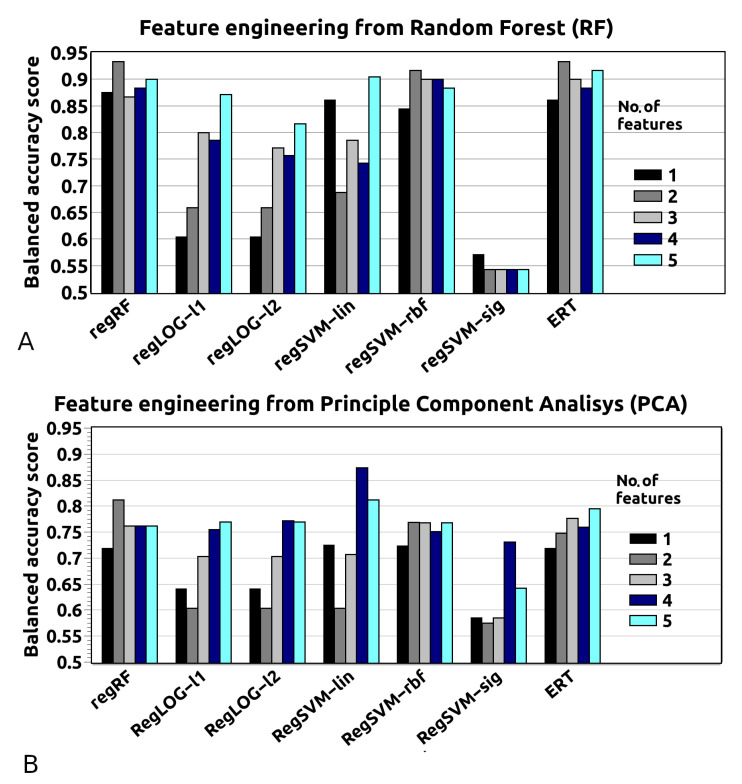
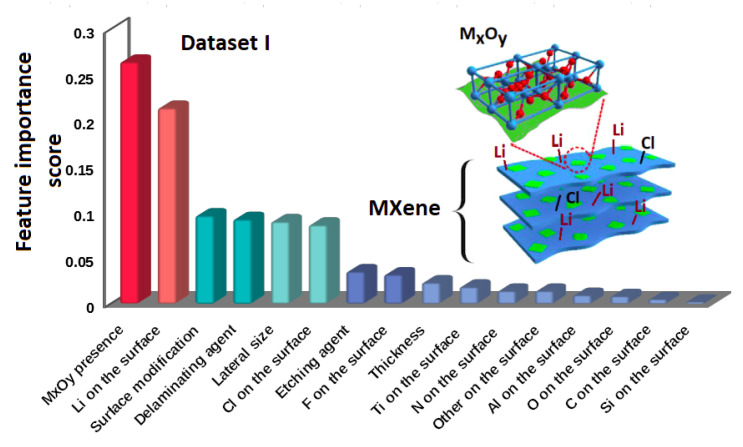
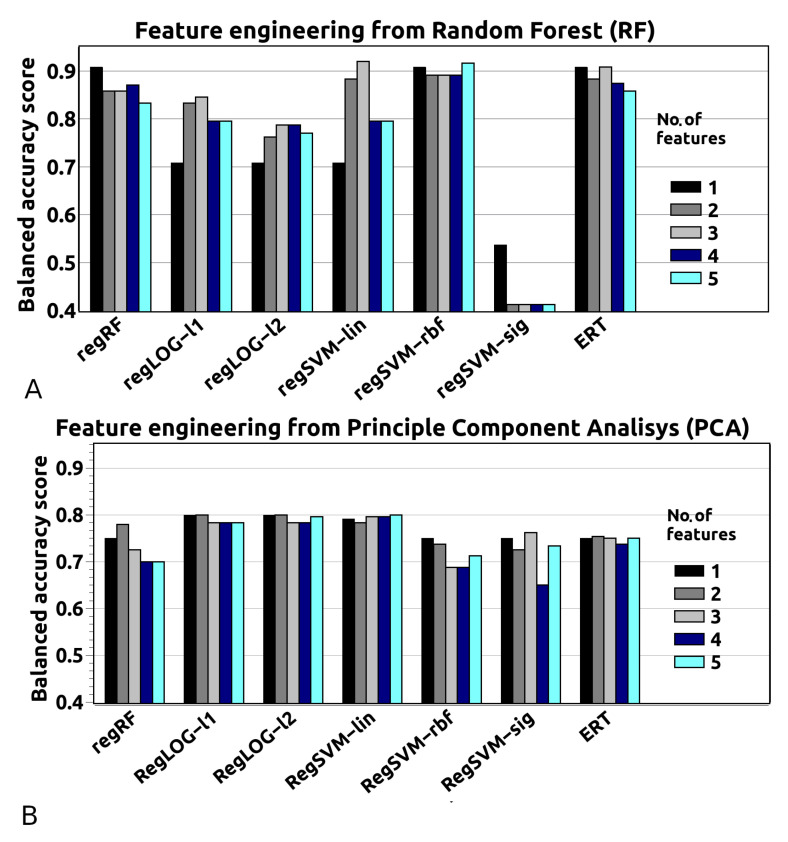
To speed up the implementation of the two-dimensional materials in the development of potential biomedical applications, the toxicological aspects toward human health need to be addressed. Due to time-consuming and expensive analysis, only part of the continuously expanding family of 2D materials can be tested in vitro. The machine learning methods can be used-by extracting new insights from available biological data sets, and provide further guidance for experimental studies. This study identifies the most relevant highly surface-specific features that might be responsible for cytotoxic behavior of 2D materials, especially MXenes. In particular, two factors, namely, the presence of transition metal oxides and lithium atoms on the surface, are identified as cytotoxicity-generating features. The developed machine learning model succeeds in predicting toxicity for other 2D MXenes, previously not tested in vitro, and hence, is able to complement the existing knowledge coming from in vitro studies. Thus, we claim that it might be one of the solutions for reducing the number of toxicological studies needed, and allows for minimizing failures in future biological applications.
为了加速二维材料在潜在生物医学应用开发中的应用,需要解决其对人类健康的毒理学问题。由于分析耗时且成本高昂,只有不断扩大的二维材料家族中的一部分能够进行体外测试。机器学习方法可以通过从现有的生物数据集中提取新的见解来使用,并为实验研究提供进一步的指导。本研究确定了可能导致二维材料,特别是MXenes细胞毒性行为的最相关的高度表面特异性特征。特别是,表面存在过渡金属氧化物和锂原子这两个因素被确定为产生细胞毒性的特征。所开发的机器学习模型成功地预测了其他此前未进行体外测试的二维MXenes的毒性,因此能够补充来自体外研究的现有知识。因此,我们认为这可能是减少所需毒理学研究数量的解决方案之一,并有助于最大限度地减少未来生物应用中的失败。