Rafieerad Alireza, Yan Weiang, Alagarsamy Keshav Narayan, Srivastava Abhay, Sareen Niketa, Arora Rakesh C, Dhingra Sanjiv
Regenerative Medicine Program Department of Physiology and Pathophysiology Rady Faculty of Health Sciences University of Manitoba Winnipeg Manitoba R3E 0W2 Canada.
Institute of Cardiovascular Sciences Albrechtsen St. Boniface Research Centre University of Manitoba Winnipeg Manitoba R2H 2A6 Canada.
Adv Funct Mater. 2021 Nov 10;31(46):2106786. doi: 10.1002/adfm.202106786. Epub 2021 Sep 8.
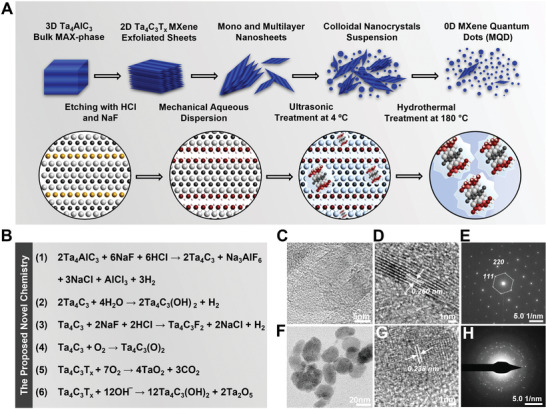
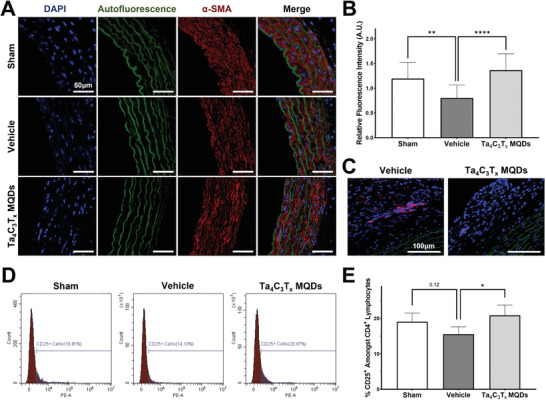
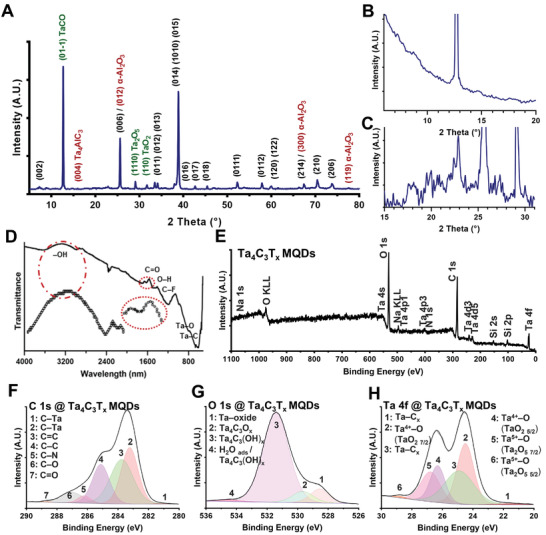
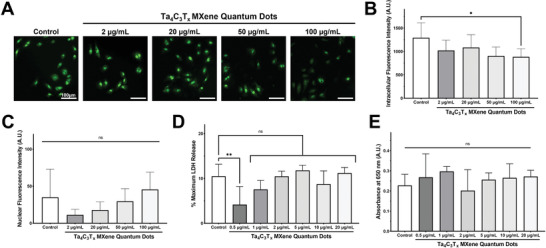
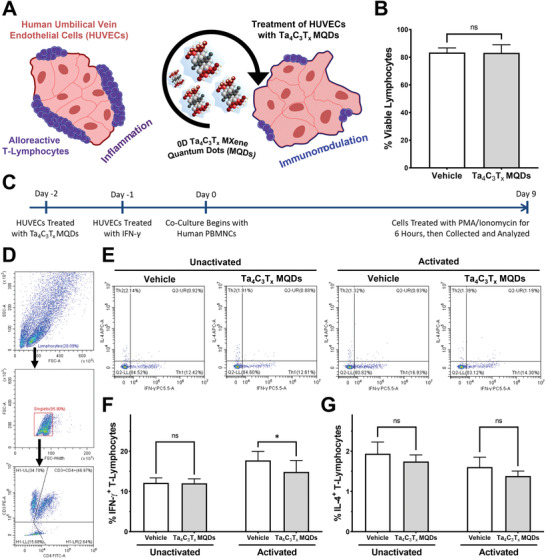
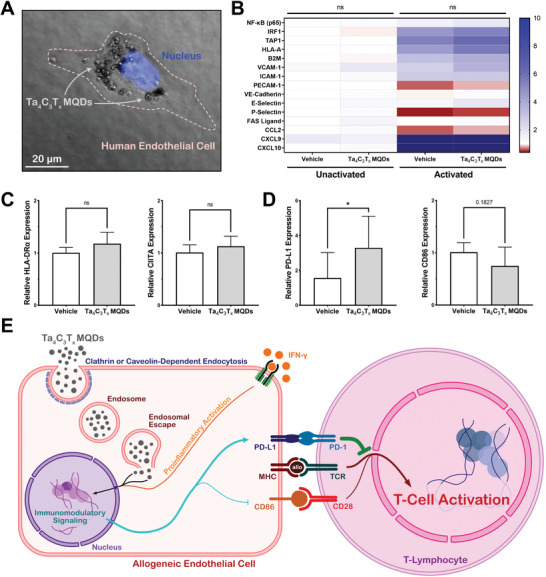
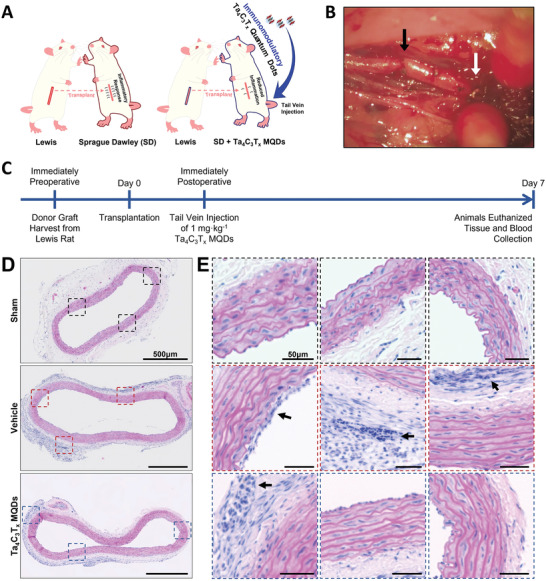
MXene nanomaterials have sparked significant interest among interdisciplinary researchers to tackle today's medical challenges. In particular, colloidal MXene quantum dots (MQDs) offer the high specific surface area and compositional flexibility of MXene while providing improvements to aqueous stability and material-cell interactions. The current study for the first time reports the development and application of immunoengineered tantalum-carbide (TaCT ) MQDs for in vivo treatment of transplant vasculopathy. This report comes at a critical juncture in the field as poor long-term safety of other MXene compositions challenge the eventual clinical translatability of these materials. Using rational design and synthesis strategies, the TaCT MQDs leverage the intrinsic anti-inflammatory and antiapoptotic properties of tantalum to provide a novel nanoplatform for biomedical engineering. In particular, these MQDs are synthesized with high efficiency and purity using a facile hydrofluoric acid-free protocol and are enriched with different bioactive functional groups and stable surface TaO and TaO. Furthermore, MQDs are spontaneously uptaken into antigen-presenting endothelial cells and alter surface receptor expression to reduce their activation of allogeneic T-lymphocytes. Finally, when applied in vivo, TaCT MQDs ameliorate the cellular and structural changes of early allograft vasculopathy. These findings highlight the robust potential of tailored TaCT MQDs for future applications in medicine.
MXene纳米材料引发了跨学科研究人员的浓厚兴趣,以应对当今的医学挑战。特别是,胶体MXene量子点(MQDs)具有MXene的高比表面积和成分灵活性,同时改善了水稳定性和材料与细胞的相互作用。当前的研究首次报道了免疫工程碳化钽(TaCT )MQDs在体内治疗移植血管病变方面的开发和应用。随着其他MXene成分的长期安全性不佳对这些材料最终的临床可转化性构成挑战,本报告正值该领域的关键节点。通过合理的设计和合成策略,TaCT MQDs利用钽固有的抗炎和抗凋亡特性,为生物医学工程提供了一种新型纳米平台。特别是,这些MQDs采用简便的无氢氟酸方案高效、纯地合成,并富含不同的生物活性官能团以及稳定的表面TaO和TaO 。此外,MQDs能自发地被抗原呈递内皮细胞摄取,并改变表面受体表达,以减少其对同种异体T淋巴细胞的激活。最后,当在体内应用时,TaCT MQDs可改善早期同种异体移植血管病变的细胞和结构变化。这些发现凸显了定制的TaCT MQDs在未来医学应用中的强大潜力。