Li Yan, Lee Jae-Seung
Materials Science and Engineering, Korea University 145 Anam-ro, Seongbuk-gu, Seoul 02841, Korea.
Materials (Basel). 2020 Jul 10;13(14):3093. doi: 10.3390/ma13143093.
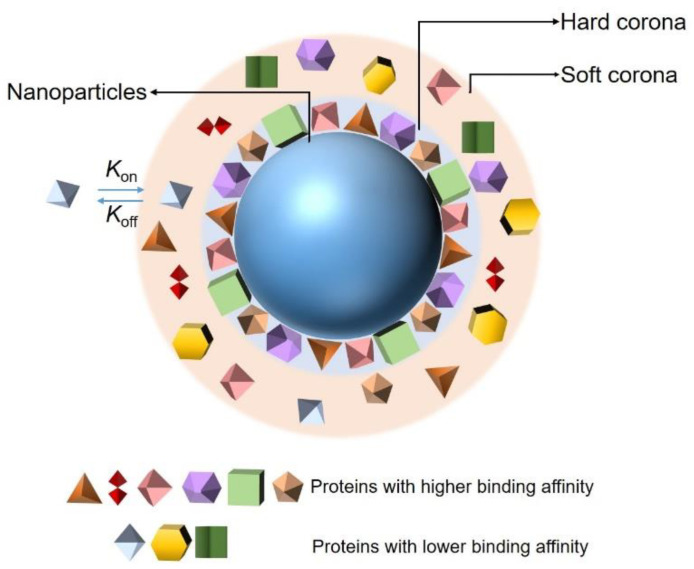
Nanoparticles (NPs) exposed to a biological milieu will strongly interact with proteins, forming "coronas" on the surfaces of the NPs. The protein coronas (PCs) affect the properties of the NPs and provide a new biological identity to the particles in the biological environment. The characterization of NP-PC complexes has attracted enormous research attention, owing to the crucial effects of the properties of an NP-PC on its interactions with living systems, as well as the diverse applications of NP-PC complexes. The analysis of NP-PC complexes without a well-considered approach will inevitably lead to misunderstandings and inappropriate applications of NPs. This review introduces methods for the characterization of NP-PC complexes and investigates their recent applications in biomedicine. Furthermore, the review evaluates these characterization methods based on comprehensive critical views and provides future perspectives regarding the applications of NP-PC complexes.
暴露于生物环境中的纳米颗粒(NPs)会与蛋白质发生强烈相互作用,在纳米颗粒表面形成“冠层”。蛋白质冠层(PCs)会影响纳米颗粒的性质,并在生物环境中赋予颗粒新的生物学特性。由于纳米颗粒-蛋白质冠层(NP-PC)的性质对其与生命系统相互作用具有关键影响,以及NP-PC复合物的多种应用,NP-PC复合物的表征已引起了大量研究关注。对NP-PC复合物进行分析时,若没有经过深思熟虑的方法,将不可避免地导致对纳米颗粒的误解和不恰当应用。本综述介绍了NP-PC复合物的表征方法,并研究了它们在生物医学中的最新应用。此外,本综述基于全面批判性观点对这些表征方法进行了评估,并提供了关于NP-PC复合物应用的未来展望。