• 文献检索
  • 文档翻译
  • 深度研究
  • 学术资讯
  • Suppr Zotero 插件Zotero 插件
  • 邀请有礼
  • 套餐&价格
  • 历史记录
应用&插件
Suppr Zotero 插件Zotero 插件浏览器插件Mac 客户端Windows 客户端微信小程序
定价
高级版会员购买积分包购买API积分包
服务
文献检索文档翻译深度研究API 文档MCP 服务
关于我们
关于 Suppr公司介绍联系我们用户协议隐私条款
关注我们

Suppr 超能文献

核心技术专利:CN118964589B侵权必究
粤ICP备2023148730 号-1Suppr @ 2026

文献检索

告别复杂PubMed语法,用中文像聊天一样搜索,搜遍4000万医学文献。AI智能推荐,让科研检索更轻松。

立即免费搜索

文件翻译

保留排版,准确专业,支持PDF/Word/PPT等文件格式,支持 12+语言互译。

免费翻译文档

深度研究

AI帮你快速写综述,25分钟生成高质量综述,智能提取关键信息,辅助科研写作。

立即免费体验

利用主客体相互作用可逆控制金纳米粒子上蛋白质冠的形成。

Reversible Control of Protein Corona Formation on Gold Nanoparticles Using Host-Guest Interactions.

机构信息

CIC biomaGUNE, Basque Research and Technology Alliance (BRTA), Paseo de Miramon 182, 20014 Donostia-San Sebastián, Spain.

CIBER de Bioingeniería, Biomateriales y Nanomedicina (CIBER-BBN), 20014 Donostia-San Sebastián, Spain.

出版信息

ACS Nano. 2020 May 26;14(5):5382-5391. doi: 10.1021/acsnano.9b08752. Epub 2020 Mar 5.

DOI:10.1021/acsnano.9b08752
PMID:32105057
原文链接:https://pmc.ncbi.nlm.nih.gov/articles/PMC7254833/
Abstract

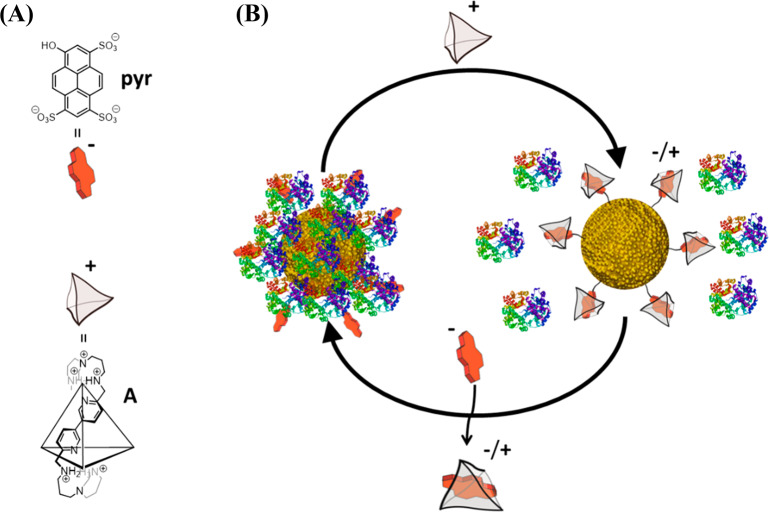
When nanoparticles (NPs) are exposed to biological media, proteins are adsorbed, forming a so-called protein corona (PC). This cloud of protein aggregates hampers the targeting and transport capabilities of the NPs, thereby compromising their biomedical applications. Therefore, there is a high interest in the development of technologies that allow control over PC formation, as this would provide a handle to manipulate NPs in biological fluids. We present a strategy that enables the reversible disruption of the PC using external stimuli, thereby allowing a precise regulation of NP cellular uptake. The approach, demonstrated for gold nanoparticles (AuNPs), is based on a biorthogonal, supramolecular host-guest interactions between an anionic dye bound to the AuNP surface and a positively charged macromolecular cage. This supramolecular complex effectively behaves as a zwitterionic NP ligand, which is able not only to prevent PC formation but also to disrupt a previously formed hard corona. With this supramolecular stimulus, the cellular internalization of AuNPs can be enhanced by up to 30-fold in some cases, and even NP cellular uptake in phagocytic cells can be regulated. Additionally, we demonstrate that the conditional cell uptake of purposely designed gold nanorods can be used to selectively enhance photothermal cell death.

摘要

当纳米颗粒(NPs)暴露于生物介质中时,蛋白质会被吸附,形成所谓的蛋白质冠(PC)。这种蛋白质聚集的云团阻碍了 NPs 的靶向和传输能力,从而影响了它们在生物医学中的应用。因此,人们对开发能够控制 PC 形成的技术产生了浓厚的兴趣,因为这将提供一种控制 NPs 在生物流体中行为的手段。我们提出了一种使用外部刺激来可逆地破坏 PC 的策略,从而能够精确调节 NP 的细胞摄取。该方法已针对金纳米颗粒(AuNPs)进行了演示,其基于带负电荷的染料与 AuNP 表面结合,以及带正电荷的大分子笼之间的生物正交、超分子主客体相互作用。这种超分子复合物有效地表现为两性离子 NP 配体,不仅能够防止 PC 的形成,还能够破坏先前形成的硬 corona。通过这种超分子刺激,AuNPs 的细胞内化率在某些情况下可以提高多达 30 倍,甚至可以调节吞噬细胞中的 NP 细胞摄取。此外,我们证明了,通过有目的设计的金纳米棒的条件性细胞摄取,可以选择性地增强光热细胞死亡。
https://cdn.ncbi.nlm.nih.gov/pmc/blobs/7082/7254833/366db41084bd/nn9b08752_0004.jpg
https://cdn.ncbi.nlm.nih.gov/pmc/blobs/7082/7254833/639195bef688/nn9b08752_0001.jpg
https://cdn.ncbi.nlm.nih.gov/pmc/blobs/7082/7254833/a1de513a6592/nn9b08752_0003.jpg
https://cdn.ncbi.nlm.nih.gov/pmc/blobs/7082/7254833/366db41084bd/nn9b08752_0004.jpg
https://cdn.ncbi.nlm.nih.gov/pmc/blobs/7082/7254833/639195bef688/nn9b08752_0001.jpg
https://cdn.ncbi.nlm.nih.gov/pmc/blobs/7082/7254833/a1de513a6592/nn9b08752_0003.jpg
https://cdn.ncbi.nlm.nih.gov/pmc/blobs/7082/7254833/366db41084bd/nn9b08752_0004.jpg

相似文献

1
Reversible Control of Protein Corona Formation on Gold Nanoparticles Using Host-Guest Interactions.利用主客体相互作用可逆控制金纳米粒子上蛋白质冠的形成。
ACS Nano. 2020 May 26;14(5):5382-5391. doi: 10.1021/acsnano.9b08752. Epub 2020 Mar 5.
2
Surface chemistry of gold nanoparticles determines the biocorona composition impacting cellular uptake, toxicity and gene expression profiles in human endothelial cells.金纳米颗粒的表面化学决定了生物被膜的组成,从而影响人内皮细胞的摄取、毒性和基因表达谱。
Nanotoxicology. 2017 May;11(4):507-519. doi: 10.1080/17435390.2017.1314036. Epub 2017 Apr 19.
3
Protein-gold nanoparticle interactions and their possible impact on biomedical applications.蛋白质-金纳米粒子相互作用及其对生物医学应用的可能影响。
Acta Biomater. 2017 Jun;55:13-27. doi: 10.1016/j.actbio.2017.03.055. Epub 2017 Apr 2.
4
Nanoparticle-cell interactions: molecular structure of the protein corona and cellular outcomes.纳米颗粒与细胞的相互作用:蛋白质冠的分子结构及细胞效应
Acc Chem Res. 2014 Aug 19;47(8):2651-9. doi: 10.1021/ar500190q. Epub 2014 Jul 11.
5
Bypassing Protein Corona Issue on Active Targeting: Zwitterionic Coatings Dictate Specific Interactions of Targeting Moieties and Cell Receptors.主动靶向中规避蛋白冠问题:两性离子涂层决定靶向部分和细胞受体的特定相互作用。
ACS Appl Mater Interfaces. 2016 Sep 7;8(35):22808-18. doi: 10.1021/acsami.6b05099. Epub 2016 Aug 25.
6
Analysis of temporally evolved nanoparticle-protein corona highlighted the potential ability of gold nanoparticles to stably interact with proteins and influence the major biochemical pathways in Brassica juncea.分析随时间演变的纳米颗粒-蛋白质冠,突出了金纳米颗粒与蛋白质稳定相互作用并影响芥菜中主要生化途径的潜在能力。
Plant Physiol Biochem. 2020 Jan;146:143-156. doi: 10.1016/j.plaphy.2019.10.036. Epub 2019 Nov 11.
7
Protein corona modulates interaction of spiky nanoparticles with lipid bilayers.蛋白质冠调节刺突纳米颗粒与脂质双层的相互作用。
J Colloid Interface Sci. 2021 Dec;603:550-558. doi: 10.1016/j.jcis.2021.06.047. Epub 2021 Jun 9.
8
The interaction between nanoparticles-protein corona complex and cells and its toxic effect on cells.纳米颗粒-蛋白冠复合物与细胞的相互作用及其对细胞的毒性作用。
Chemosphere. 2020 Apr;245:125624. doi: 10.1016/j.chemosphere.2019.125624. Epub 2019 Dec 12.
9
Gold nanoparticle should understand protein corona for being a clinical nanomaterial.金纳米颗粒作为一种临床纳米材料,应该了解蛋白质冠。
J Control Release. 2018 Feb 28;272:39-53. doi: 10.1016/j.jconrel.2018.01.002. Epub 2018 Jan 4.
10
In Situ Characterization of Protein Adsorption onto Nanoparticles by Fluorescence Correlation Spectroscopy.荧光相关光谱法原位表征蛋白质在纳米颗粒上的吸附。
Acc Chem Res. 2017 Feb 21;50(2):387-395. doi: 10.1021/acs.accounts.6b00579. Epub 2017 Feb 1.

引用本文的文献

1
Impact of Protein Corona Formation on the Thermoresponsive Behavior of Acrylamide-Based Nanogels.蛋白质冠形成对丙烯酰胺基纳米凝胶的温敏行为的影响。
Biomacromolecules. 2024 Feb 12;25(2):1340-1350. doi: 10.1021/acs.biomac.3c01405. Epub 2024 Jan 19.
2
Nanomedical research and development in Spain: improving the treatment of diseases from the nanoscale.西班牙的纳米医学研发:从纳米尺度改善疾病治疗
Front Bioeng Biotechnol. 2023 Jul 21;11:1191327. doi: 10.3389/fbioe.2023.1191327. eCollection 2023.
3
Interaction of Iron Oxide Nanoparticles with Macrophages Is Influenced Distinctly by "Self" and "Non-Self" Biological Identities.

本文引用的文献

1
Mini Gold Nanorods with Tunable Plasmonic Peaks beyond 1000 nm.具有超过1000纳米可调谐等离子体峰的微型金纳米棒。
Chem Mater. 2018 Feb 27;30(4):1427-1435. doi: 10.1021/acs.chemmater.7b05310. Epub 2018 Jan 25.
2
Disconnecting Symmetry Breaking from Seeded Growth for the Reproducible Synthesis of High Quality Gold Nanorods.将对称性破缺与种子生长分离以实现高质量金纳米棒的可重复合成。
ACS Nano. 2019 Apr 23;13(4):4424-4435. doi: 10.1021/acsnano.8b09658. Epub 2019 Apr 8.
3
The Human In Vivo Biomolecule Corona onto PEGylated Liposomes: A Proof-of-Concept Clinical Study.
氧化铁纳米颗粒与巨噬细胞的相互作用受“自身”和“非自身”生物特性的显著影响。
ACS Appl Mater Interfaces. 2023 Aug 2;15(30):35906-35926. doi: 10.1021/acsami.3c05555. Epub 2023 Jul 21.
4
Protein-Nanoparticle Interactions Govern the Interfacial Behavior of Polymeric Nanogels: Study of Protein Corona Formation at the Air/Water Interface.蛋白质-纳米颗粒相互作用控制着聚合物纳米凝胶的界面行为:空气/水界面处蛋白质冠形成的研究。
Int J Mol Sci. 2023 Feb 1;24(3):2810. doi: 10.3390/ijms24032810.
5
Interaction between Nanoparticles, Membranes and Proteins: A Surface Plasmon Resonance Study.纳米颗粒、膜和蛋白质的相互作用:表面等离子体共振研究。
Int J Mol Sci. 2022 Dec 29;24(1):591. doi: 10.3390/ijms24010591.
6
Effects of morphology and size of nanoscale drug carriers on cellular uptake and internalization process: a review.纳米级药物载体的形态和尺寸对细胞摄取及内化过程的影响:综述
RSC Adv. 2022 Dec 20;13(1):80-114. doi: 10.1039/d2ra06888e. eCollection 2022 Dec 19.
7
Interaction of Colloidal Gold Nanoparticles with Urine and Saliva Biofluids: An Exploratory Study.胶体金纳米颗粒与尿液和唾液生物流体的相互作用:一项探索性研究。
Nanomaterials (Basel). 2022 Dec 13;12(24):4434. doi: 10.3390/nano12244434.
8
The Impact of PEGylation on Cellular Uptake and In Vivo Biodistribution of Gold Nanoparticle MRI Contrast Agents.聚乙二醇化对金纳米颗粒磁共振成像造影剂细胞摄取及体内生物分布的影响
Bioengineering (Basel). 2022 Dec 4;9(12):766. doi: 10.3390/bioengineering9120766.
9
Hyperthermia based individual recombinant vaccine enhances lymph nodes drainage for antitumor immunity.基于热疗的个体化重组疫苗可增强淋巴结引流以促进抗肿瘤免疫。
Acta Pharm Sin B. 2022 Aug;12(8):3398-3409. doi: 10.1016/j.apsb.2022.02.026. Epub 2022 Feb 26.
10
Gold nanocluster adjuvant enables the eradication of persister cells by antibiotics and abolishes the emergence of resistance.金纳米簇佐剂可通过抗生素消除持留细胞并消除耐药性的出现。
Nanoscale. 2022 Jul 21;14(28):10016-10032. doi: 10.1039/d2nr01003h.
人内源性生物分子冠对聚乙二醇化脂质体的影响:概念验证性临床研究。
Adv Mater. 2019 Jan;31(4):e1803335. doi: 10.1002/adma.201803335. Epub 2018 Nov 28.
4
Cellular Uptake of Nanoparticles versus Small Molecules: A Matter of Size.纳米颗粒与小分子的细胞摄取:大小的问题。
Acc Chem Res. 2018 Sep 18;51(9):2305-2313. doi: 10.1021/acs.accounts.8b00292. Epub 2018 Aug 29.
5
Synthesis and Biomedical Applications of Multifunctional Nanoparticles.多功能纳米粒子的合成及生物医学应用。
Adv Mater. 2018 Dec;30(49):e1802309. doi: 10.1002/adma.201802309. Epub 2018 Aug 21.
6
Cellular Uptake of Gold Nanoparticles Triggered by Host-Guest Interactions.主体-客体相互作用引发的金纳米颗粒的细胞摄取。
J Am Chem Soc. 2018 Apr 4;140(13):4469-4472. doi: 10.1021/jacs.7b12505. Epub 2018 Mar 26.
7
Protein corona: a new approach for nanomedicine design.蛋白质冠层:纳米医学设计的新方法。
Int J Nanomedicine. 2017 Apr 18;12:3137-3151. doi: 10.2147/IJN.S129300. eCollection 2017.
8
Nanomedicine: Evolution of the nanoparticle corona.纳米医学:纳米颗粒冠的演变
Nat Nanotechnol. 2017 Apr 6;12(4):288-290. doi: 10.1038/nnano.2017.61.
9
Diverse Applications of Nanomedicine.纳米医学的多种应用。
ACS Nano. 2017 Mar 28;11(3):2313-2381. doi: 10.1021/acsnano.6b06040. Epub 2017 Mar 14.
10
Size-Dependent Protein-Nanoparticle Interactions in Citrate-Stabilized Gold Nanoparticles: The Emergence of the Protein Corona.柠檬酸盐稳定的金纳米颗粒中尺寸依赖性蛋白质-纳米颗粒相互作用:蛋白质冠层的出现
Bioconjug Chem. 2017 Jan 18;28(1):88-97. doi: 10.1021/acs.bioconjchem.6b00575. Epub 2016 Dec 20.