Bahrololoomi Zahra, Sadat-Hashemi Azam, Hassan-Akhavan-Karbassi Mohammad, Khaksar Yasamin
Department of pediatric dentistry, Shahid Sadoughi University of Medical Sciences and Health Services, Yazd, Iran.
Department of Pediatrics, Hematology, Oncology and Genetics Research Center, Shahid Sadoughi University of Medical Sciences and Health Services, Yazd, Iran.
J Clin Exp Dent. 2020 Jun 1;12(6):e574-e580. doi: 10.4317/jced.56104. eCollection 2020 Jun.
No definitive protocol has been introduced for treatment or prevention of chemotherapy induced mucositis. The aim of this study was to assess the additive effect of Persica and chlorhexidine on chemotherapy induced mucositis of children with hematomalignancies.
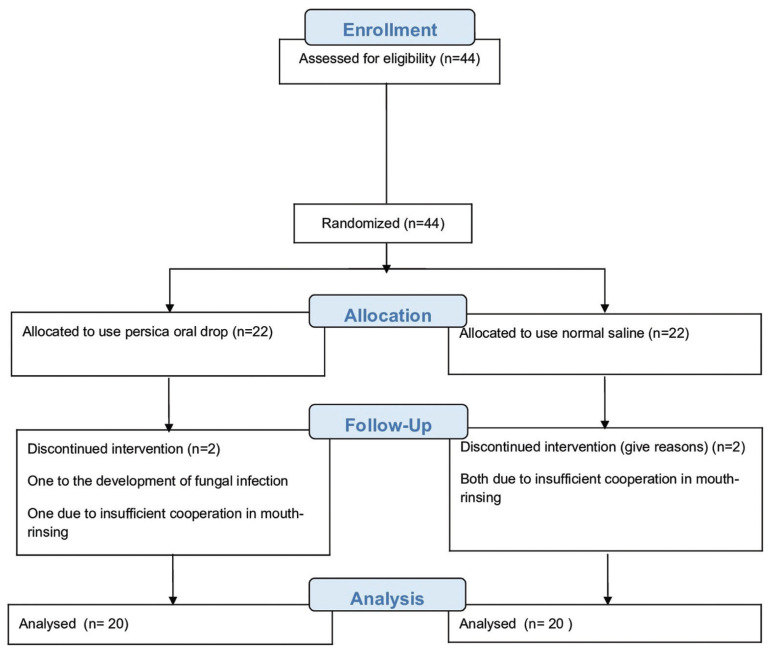
This randomized clinical trial was performed on 44 children aged 6 to 12 years who were under a similar maintenance chemotherapy protocol for their hematomalignancies. The clinician instructed oral hygiene cares to the patients and their parents and the severity of the mucositis and oral health status of patients were evaluated according to Oral Assessment Guide index. Then, the patients were randomly assigned to one of two experimental groups and were instructed to rinse either with Persica oral drops or normal saline, twice a day for two weeks. Subsequently, the patients in both groups were educated to rinse with chlorhexidine for 30 seconds and avoid eating for an hour. Second and third oral examinations were performed on the 8th and 15th day using the same questionnaire.
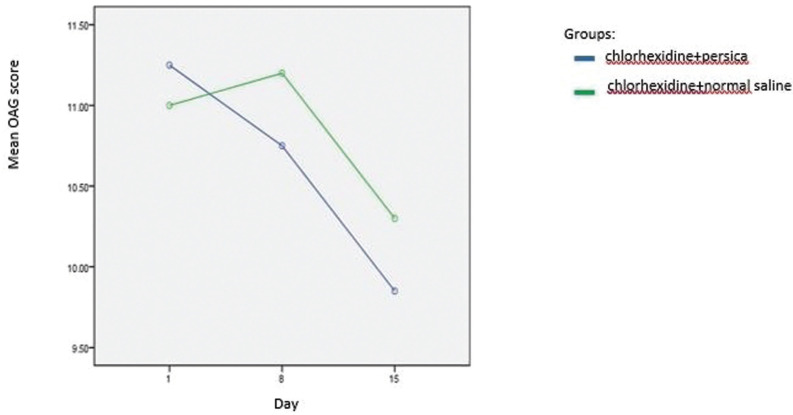
Comparing severity of mucositis and oral health status of patients did not show any significant difference between treatment groups in either of examination sessions (>0.05). However, both treatment groups showed statistically significant oral health improvement, in terms of mucositis, plaque accumulation and gingival condition, in 14 days following mouthrinses administration (<0.05).
Both mouth-rinse combinations were effective on mucositis, plaque and gingival status of children receiving chemotherapy. However, Persica does not seem to pose additional effect on chlorhexidine in decreasing severity of chemotherapy induced mucositis. Mucositis, chemotherapy, children, chlorhexidine, Persica.
尚未引入用于治疗或预防化疗引起的口腔黏膜炎的确切方案。本研究的目的是评估桃仁和氯己定对血液系统恶性肿瘤患儿化疗引起的口腔黏膜炎的附加作用。
本随机临床试验对44名6至12岁的儿童进行,这些儿童因血液系统恶性肿瘤接受相似的维持化疗方案。临床医生指导患者及其家长进行口腔卫生护理,并根据口腔评估指南指数评估患者口腔黏膜炎的严重程度和口腔健康状况。然后,将患者随机分配到两个实验组之一,指导他们每天用桃仁口服液或生理盐水漱口两次,持续两周。随后,两组患者均接受教育,用氯己定漱口30秒,一小时内避免进食。在第8天和第15天使用相同问卷进行第二次和第三次口腔检查。
在任何一次检查中,比较患者口腔黏膜炎的严重程度和口腔健康状况,治疗组之间均未显示出任何显著差异(>0.05)。然而,在漱口给药后的14天内,两个治疗组在口腔黏膜炎、牙菌斑积聚和牙龈状况方面均显示出统计学上显著的口腔健康改善(<0.05)。
两种漱口组合对接受化疗的儿童的口腔黏膜炎、牙菌斑和牙龈状况均有效。然而,在降低化疗引起的口腔黏膜炎的严重程度方面,桃仁似乎对氯己定没有附加作用。口腔黏膜炎、化疗、儿童、氯己定、桃仁。