Santana-Clavijo N F, Reyes Romero D P, Arango Fajardo D F, Velandia Muñoz A, Taniwaki S A, de Souza Silva S O, Brandão P E
Department of Preventive Veterinary Medicine and Animal Health, College of Veterinary Medicine, University of São Paulo, Av Professor Doutor Orlando Marques de Paiva, 87, 05508-270, São Paulo, SP Brazil.
Vida Animal SV, Bogotá, Colombia.
Heliyon. 2020 Jul 7;6(7):e04381. doi: 10.1016/j.heliyon.2020.e04381. eCollection 2020 Jul.
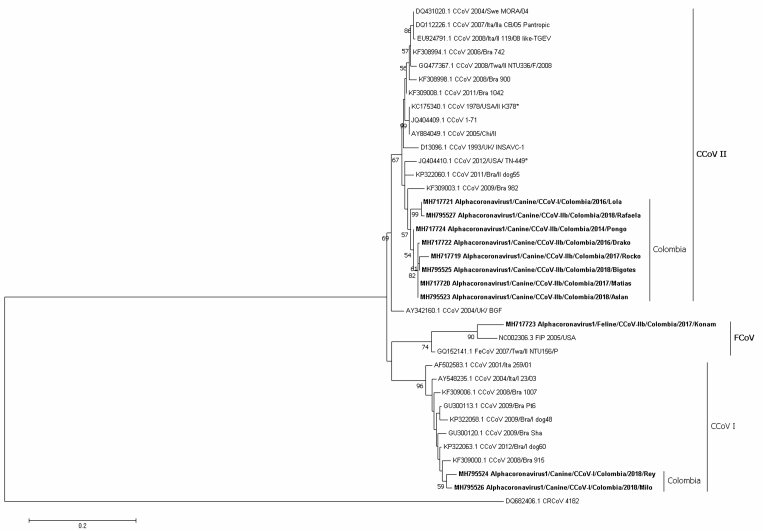
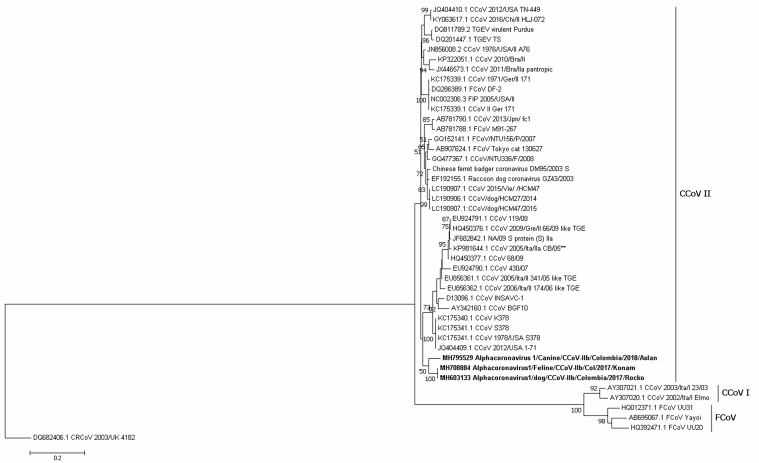
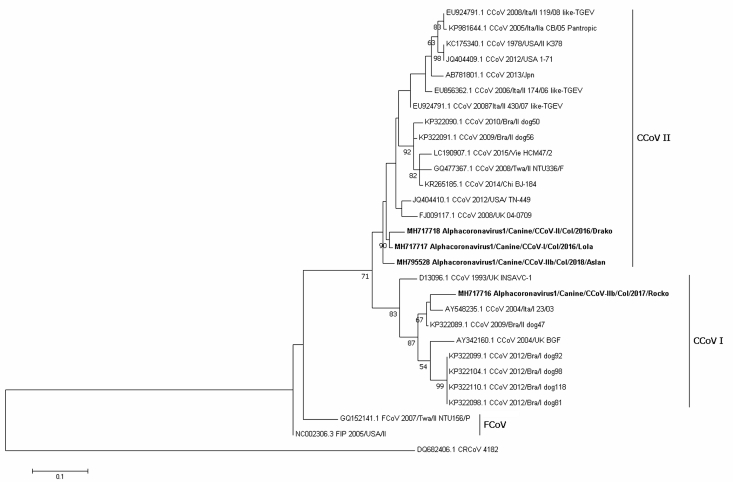
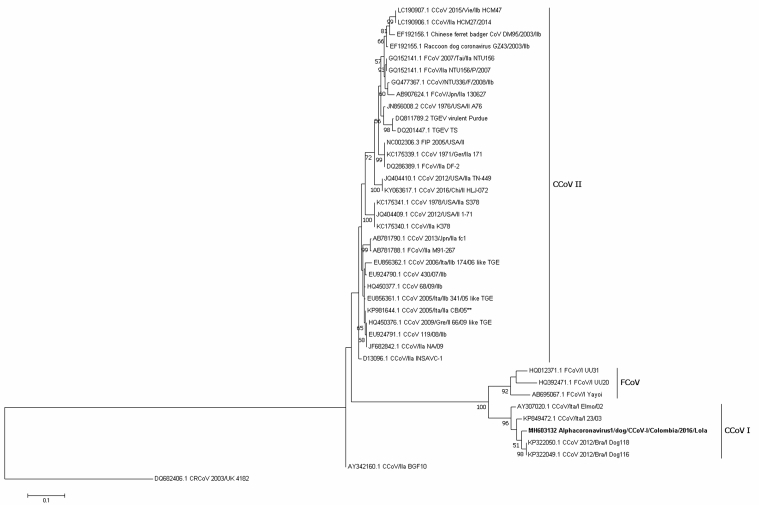
(subgenus genus , family ), which encompasses transmissible gastroenteritis virus (TGEV), feline coronavirus (FCoV) and canine coronavirus (CCoV), is an important pathogen that can cause severe gastroenteritis and is distributed worldwide. CCoV has two different genotypes: CCoV type I, which has a high identity with FCoV-I, and CCoV type II, which is divided into two subtypes, CCoV IIa (pantropic) and CCoV IIb, which is related to FCoV-II and has been involved in multiple recombination events. Between 2014 and 2018, 43 fecal samples from puppies and young dogs under 1 year of age with hemorrhagic enteritis and from 5 cats under 2 years of age with ascites or thoracic effusion were collected by a private veterinary practice in Bogotá, Colombia. A screening for via RT-PCR (nsp12) and PCR amplification of (VP1) revealed 27.1% (13/49) and 72.9% (35/49) positive samples, respectively. Positive samples for coronavirus were tested for M, N, S and the sequences grouped in the FCoV, CCoV-I and CCoV-IIb clusters that were distant from the pantropic type (IIa). The N gene formed two clusters, one exclusively with samples from this study in subtype II and another with strains in subtype I. For gene S (subtype I), the samples clustered with the Brazilian samples, while samples positive for S subtype IIb grouped into a cluster distinct from the other reference sequences. The prevalence of coronaviruses identified in this study is within the range reported by different countries worldwide.
(亚属、属、科),包括传染性胃肠炎病毒(TGEV)、猫冠状病毒(FCoV)和犬冠状病毒(CCoV),是一种可引起严重胃肠炎的重要病原体,在全球范围内均有分布。CCoV有两种不同的基因型:与FCoV-I高度同源的CCoV I型,以及分为两个亚型的CCoV II型,即泛嗜性的CCoV IIa和与FCoV-II相关且参与了多次重组事件的CCoV IIb。2014年至2018年期间,哥伦比亚波哥大的一家私人兽医诊所收集了43份来自1岁以下患有出血性肠炎的幼犬和幼狗的粪便样本,以及5份来自2岁以下患有腹水或胸腔积液的猫的样本。通过RT-PCR(nsp12)和PCR扩增(VP1)进行的检测显示,阳性样本分别为27.1%(13/49)和72.9%(35/49)。对冠状病毒阳性样本进行了M、N、S检测,其序列分组在与泛嗜性类型(IIa)不同的FCoV、CCoV-I和CCoV-IIb簇中。N基因形成了两个簇,一个仅包含本研究中II型亚型的样本,另一个包含I型亚型的菌株。对于基因S(I型亚型),样本与巴西样本聚类,而S IIb亚型阳性样本则分组为一个与其他参考序列不同的簇。本研究中鉴定出的冠状病毒患病率在世界不同国家报告的范围内。