Department of Anatomy and Physiology of Farm Animals, Faculty of Animal Science and Aquaculture, Agricultural University of Athens, Iera Odos 75, 118 55 Athens, Greece.
Infect Genet Evol. 2013 Jun;16:129-36. doi: 10.1016/j.meegid.2013.01.014. Epub 2013 Feb 8.
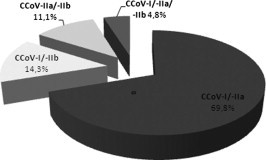
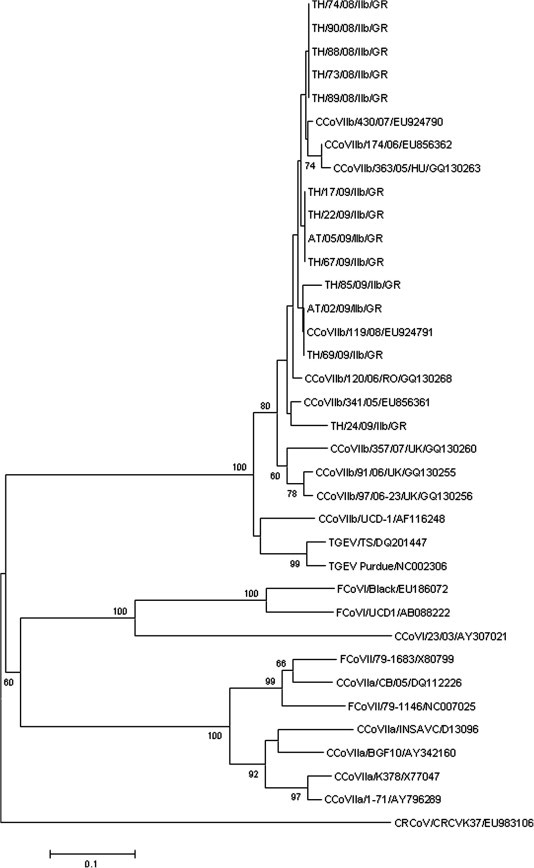
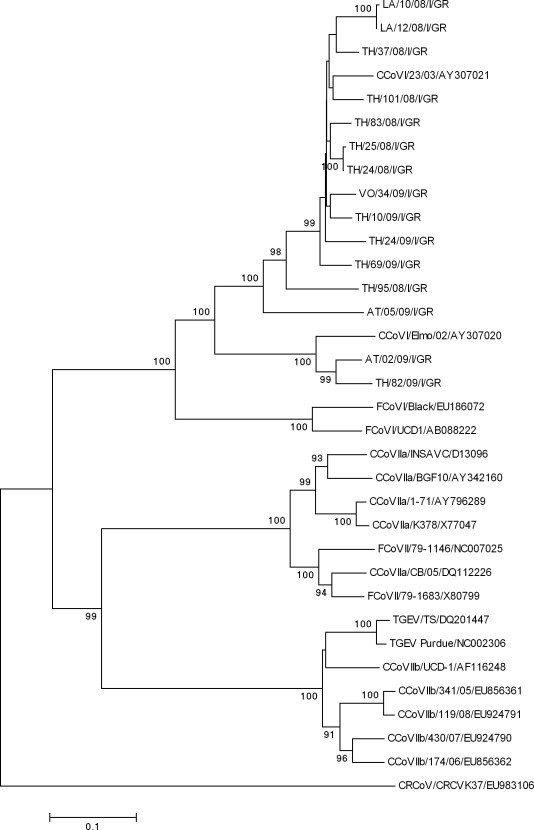
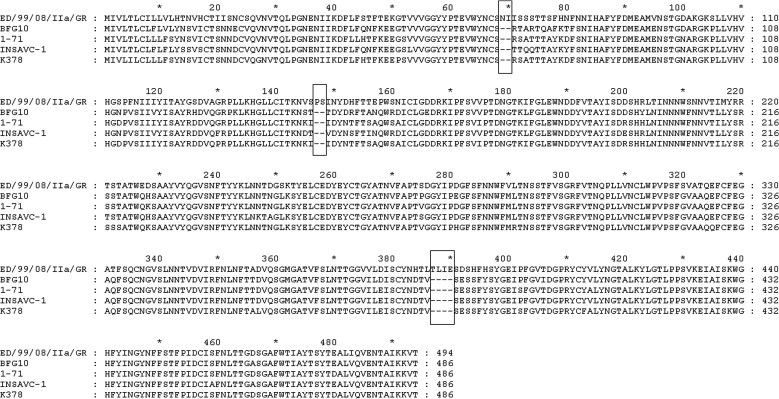
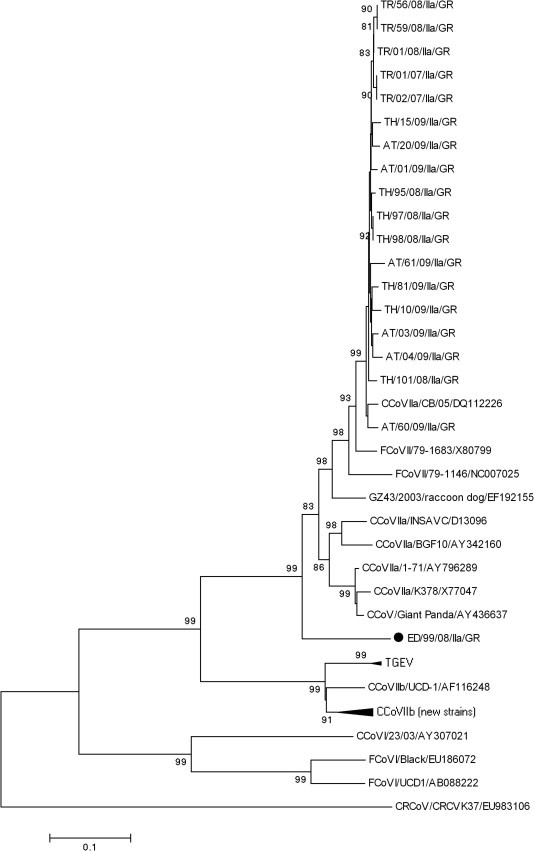
Canine coronavirus (CCoV) is an etiologic agent of diarrhea in dogs and is known to have spread worldwide. Mild disease or asymptomatic carriage are probably in many cases common outcomes of infection. To date, two different genotypes of CCoV are known, CCoV type I (CCoV-I) and CCoV type II (CCoV-II). CCoV type II is divided in two subtypes, CCoV-IIa (classical strains) and CCoV-IIb, with CCoV-IIb emerging as a result of a putative recombination between CCoV-IIa and transmissible gastroenteritis virus (TGEV). The aim of the present study was to investigate the presence of CCoV in Greece and to genetically analyze the circulating strains. Between December 2007 and December 2009, 206 fecal samples were collected from dogs with diarrhea from kennels, pet shops and veterinary clinics of different country regions. RT-PCR and real time RT-PCR assays were used for CCoV detection and characterization. CCoV was identified in 65.1% of the dogs presenting diarrhea, being more frequently detected in animals younger than 3 months old and in animals housed in groups. In 47% of the positive samples more than one CCoV genotype/subtype were detected, with triple CCoV-I/CCoV-IIa/CCoV-IIb infections being identified for the first time. Molecular and phylogenetic analysis revealed that CCoV-I Greek strains share low genetic relatedness to each other and to the prototype CCoV-I strains in the 5' end of the S gene. Moreover, a divergent CCoV-IIa strain was identified. The circulation of highly variable CCoV-I and CCoV-IIb emerging strains, as well as the detection of the divergent strain, raise concerns on the importance of these new strains as primary pathogens of diarrhoeic syndromes diagnosed in dogs.
犬冠状病毒(CCoV)是一种引起犬腹泻的病原体,已在全球范围内传播。轻度疾病或无症状携带在许多情况下可能是感染的常见结果。迄今为止,已知有两种不同的 CCoV 基因型,即 CCoV 型 I(CCoV-I)和 CCoV 型 II(CCoV-II)。CCoV 型 II 分为两个亚型,CCoV-IIa(经典株)和 CCoV-IIb,CCoV-IIb 是 CCoV-IIa 和传染性胃肠炎病毒(TGEV)之间可能发生重组的结果。本研究旨在调查希腊是否存在 CCoV,并对循环毒株进行遗传分析。2007 年 12 月至 2009 年 12 月,从不同国家地区的犬舍、宠物店和兽医诊所收集了 206 份患有腹泻的犬粪便样本。使用 RT-PCR 和实时 RT-PCR 检测法检测和鉴定 CCoV。在出现腹泻的犬中,65.1%的犬中检测到 CCoV,小于 3 个月大的动物和群居动物中更常检测到 CCoV。在 47%的阳性样本中检测到了不止一种 CCoV 基因型/亚型,首次鉴定出三重 CCoV-I/CCoV-IIa/CCoV-IIb 感染。分子和系统发育分析表明,希腊的 CCoV-I 株在 5'端 S 基因上彼此之间以及与原型 CCoV-I 株的遗传关系较低。此外,还鉴定出一种分化的 CCoV-IIa 株。高变异性的 CCoV-I 和 CCoV-IIb 新兴株的流行以及分化株的检测引起了人们对这些新株作为犬诊断为腹泻综合征的主要病原体的重要性的关注。