Vollum Institute, Oregon Health and Science University, Portland, OR 97239, USA.
Department of Molecular and Medical Genetics, Oregon Health and Science University, Portland, OR 97239, USA.
Cell Rep. 2020 Jul 14;32(2):107878. doi: 10.1016/j.celrep.2020.107878.
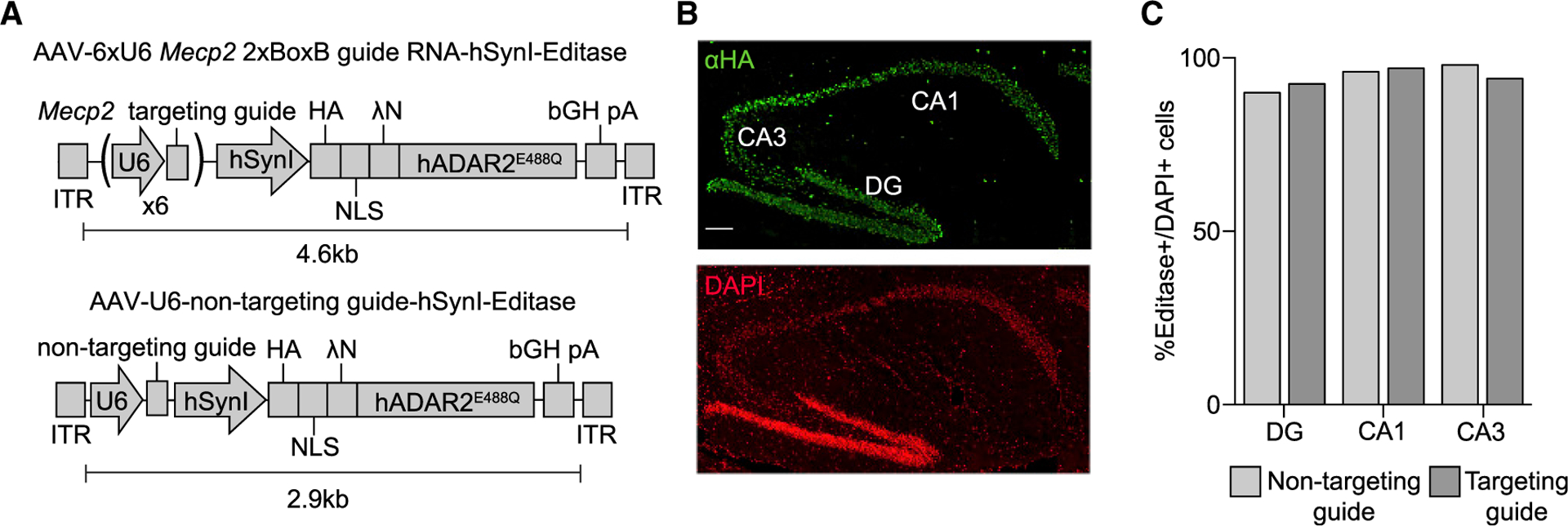
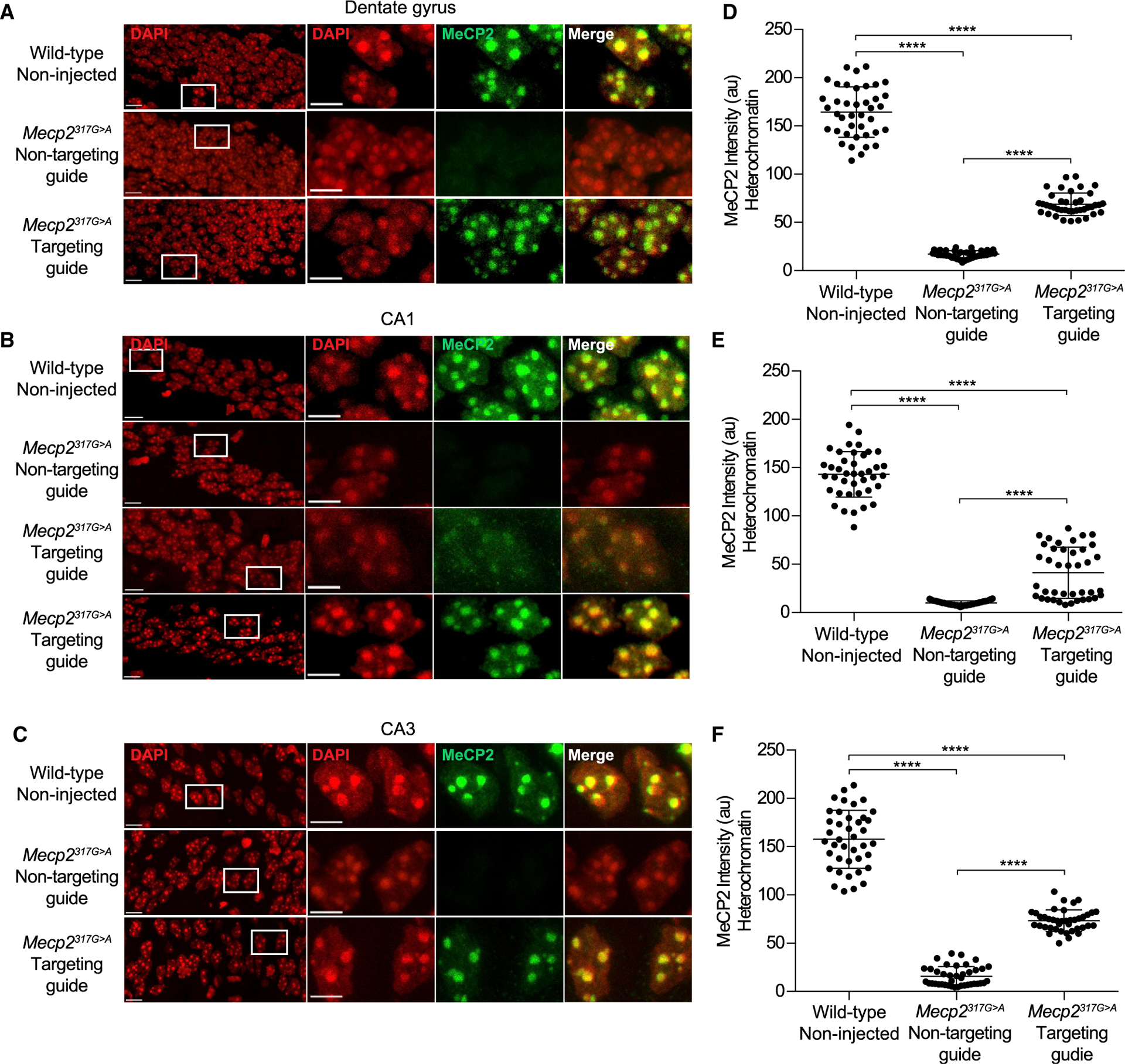
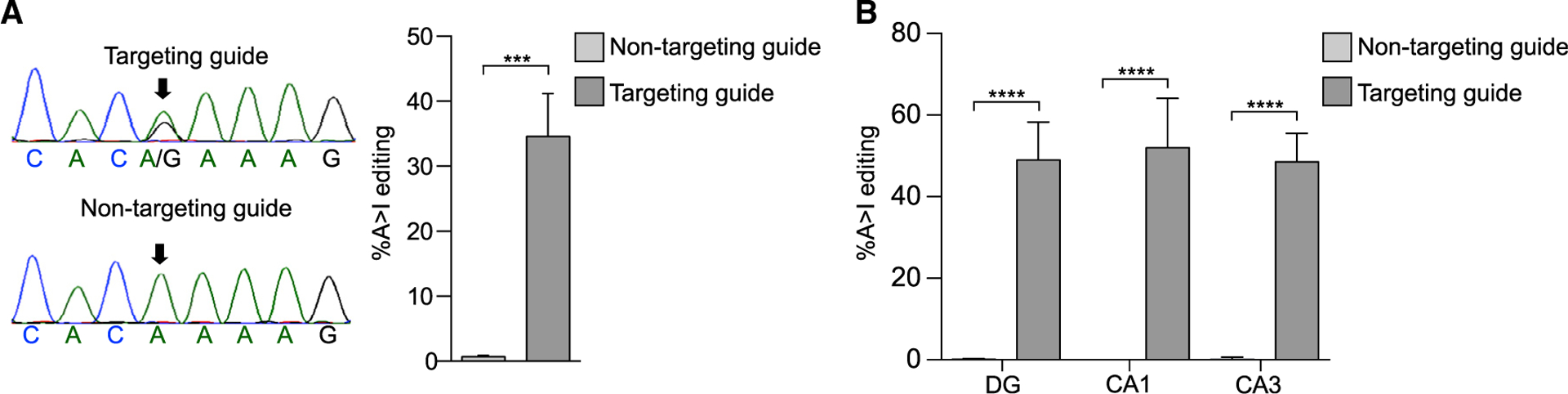
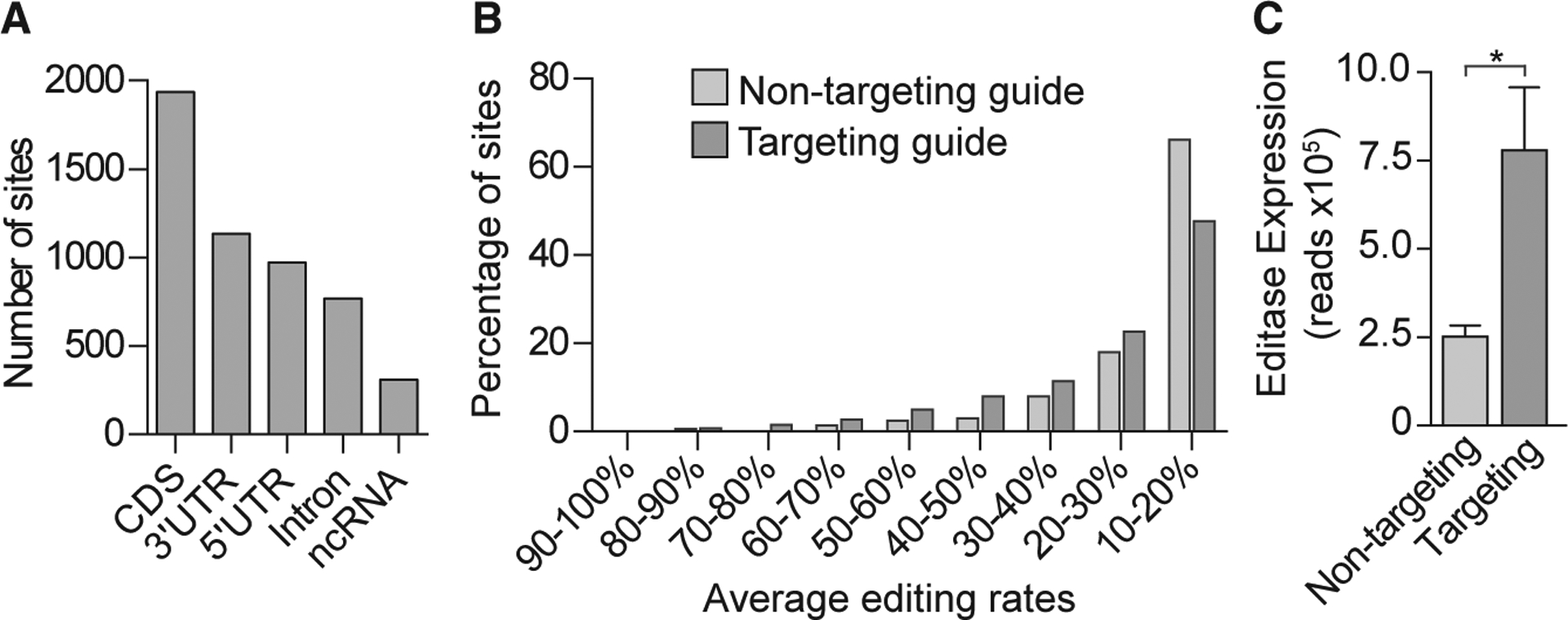
Programmable RNA editing is gaining momentum as an approach to repair mutations, but its efficiency in repairing endogenous mutant RNA in complex tissue is unknown. Here we apply this approach to the brain and successfully repair a guanosine-to-adenosine mutation in methyl CpG binding protein 2 RNA that causes the neurodevelopmental disease Rett syndrome. Repair is mediated by hippocampal injections of juvenile Mecp2 mice with an adeno-associated virus expressing the hyperactive catalytic domain of adenosine deaminase acting on RNA 2 and Mecp2 guide. After 1 month, 50% of Mecp2 RNA is recoded in three different hippocampal neuronal populations. MeCP2 protein localization to heterochromatin is restored in neurons to 50% of wild-type levels. Whole-transcriptome RNA analysis of one neuronal population indicates that the majority of off-target editing sites exhibit rates of 30% or less. This study demonstrates that programmable RNA editing can be utilized to repair mutations in mouse models of neurological disease.
RNA 编辑的可编程性作为一种修复突变的方法正在兴起,但它在修复复杂组织中内源性突变 RNA 的效率尚不清楚。在这里,我们将这种方法应用于大脑,并成功修复了导致神经发育疾病雷特综合征的甲基 CpG 结合蛋白 2 RNA 的鸟嘌呤到腺嘌呤突变。修复是通过向幼年 Mecp2 小鼠的海马内注射表达具有活性的腺嘌呤脱氨酶催化结构域的腺相关病毒 2 和 Mecp2 向导来介导的。1 个月后,在三个不同的海马神经元群体中,有 50%的 Mecp2 RNA 被重新编码。神经元中 MeCP2 蛋白定位到异染色质的水平恢复到野生型的 50%。对一个神经元群体的全转录组 RNA 分析表明,大多数脱靶编辑位点的编辑率在 30%或以下。这项研究表明,可编程 RNA 编辑可用于修复神经疾病小鼠模型中的突变。