Pediatric Critical Care Unit, Helen DeVos Children's Hospital, 100 Michigan Street NE, Grand Rapids, MI 49503, USA.
Department of Pediatrics and Human Development, Michigan State University, Life Sciences Building, 1355 Bogue Street, East Lansing, MI 48824, USA.
Nutrients. 2020 Jul 13;12(7):2073. doi: 10.3390/nu12072073.
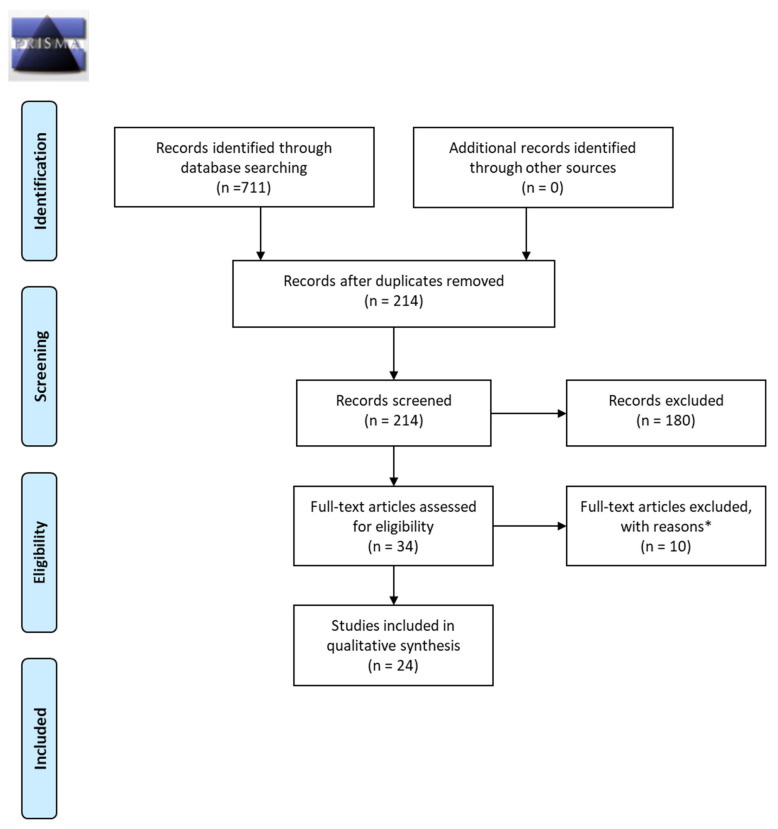
Metabolites are generated from exogenous sources such as diet. This scoping review will summarize nascent metabolite literature and discriminating metabolites for formula vs. human- milk-fed infants. Using the PICOS framework (P-Patient, Problem or Population; I-Intervention; C-Comparison; O-Outcome; S-Study Design) and PRISMA item-reporting protocols, infants less than 12 months old, full-term, and previously healthy were included. Protocol was registered with Open Science Framework (OSF). Publications from 1 January 2009-2019 were selected, for various biofluids, study designs, and techniques (such as high-performance liquid chromatography (HPLC)). From 711 articles, blinded screening of 214 articles using Abstrackr software, resulted in 24 for final review. Strengthening the Reporting of Observational studies in Epidemiology (STROBE) guidelines were adopted, which included a 24-point checklist. Articles were stratified according to biofluid. Of articles reporting discriminating metabolites between formula- and human milk-fed infants, 62.5% (5/8) of plasma/serum/dried blood spot, 88% (7/8) of urine and 100% (6/6) of feces related articles reported such discriminating metabolites. Overall, no differences were found between analytical approach used (targeted ( = 9) vs. un-targeted ( = 10)). Current articles are limited by small sample sizes and differing methodological approaches. Of the metabolites reviewed herein, fecal metabolites provided the greatest distinction between diets, which may be indicative of usefulness for future diet metabolite-focused work.
代谢物来自于饮食等外源。本综述将总结新生代谢物文献和配方奶与母乳喂养婴儿的鉴别代谢物。使用 PICOS 框架(P-患者、问题或人群;I-干预;C-比较;O-结果;S-研究设计)和 PRISMA 项目报告协议,纳入小于 12 个月、足月和健康的婴儿。方案在开放科学框架(OSF)上注册。纳入 2009 年 1 月至 2019 年的各种生物流体、研究设计和技术(如高效液相色谱法(HPLC))的出版物。从 711 篇文章中,使用 Abstrackr 软件对 214 篇文章进行盲法筛选,最终有 24 篇文章进行综述。采用观察性研究的报告质量评估工具(STROBE)指南,包括 24 项检查表。根据生物流体对文章进行分层。在报告配方奶与母乳喂养婴儿之间有鉴别代谢物的文章中,62.5%(8/13)的血浆/血清/干血斑、88%(7/8)的尿液和 100%(6/6)的粪便相关文章报告了此类鉴别代谢物。总体而言,使用的分析方法(靶向(=9)与非靶向(=10))之间没有差异。目前的文章受到样本量小和方法学方法不同的限制。在综述的代谢物中,粪便代谢物在饮食之间提供了最大的区别,这可能表明它们在未来的饮食代谢物研究中具有实用性。