Orr L Casey, Graham Andrea K, Mohr David C, Greene Carolyn J
Center for Health Services Research, Psychiatric Research Institute, University of Arkansas for Medical Sciences, Little Rock, AR, United States.
Center for Behavioral Intervention Technologies, Northwestern University, Chicago, IL, United States.
JMIR Ment Health. 2020 Jul 8;7(7):e16341. doi: 10.2196/16341.
Technology-based mental health interventions are an increasingly attractive option for expanding access to mental health services within the primary care system. Older adults are among the groups that could potentially benefit from the growing ubiquity of technology-based mental health interventions; however, older adults are perceived to be averse to using technology and have reported barriers to use.
The aim of this paper is to present a case study of 3 participants from a clinical trial evaluating IntelliCare, an evidence-based mobile intervention for depression and anxiety, among adults recruited from primary care clinics. Our report of these 3 participants, who were aged 60 years or older, focuses on their engagement with the IntelliCare service (ie, app use, coach communication) and clinical changes in depression or anxiety symptoms over the intervention period.
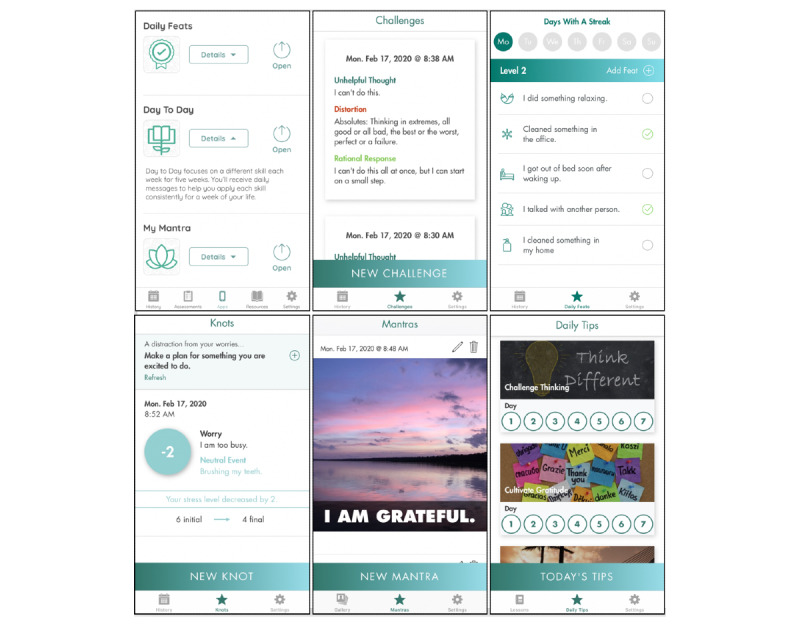
The 3 case study participants were offered IntelliCare with coaching for 8 weeks. The intervention consisted of 5 treatment intervention apps that support a variety of psychological skills, a Hub app that contained psychoeducational content and administered weekly assessments, and coaching for encouragement, accountability, and technical assistance as needed. The 3 case study participants were selected to reflect the overall demographics of participants within the trial and because their interactions with IntelliCare provided a good illustration of varied experiences regarding engagement with the intervention.
The 3 participants' unique experiences with the intervention are described. Despite potential barriers and experiencing some technical glitches, the participants showed proficient ability to use the apps, high levels of participation through frequent app use and coach interaction, and decreased depression and anxiety scores. At the end of the 8-week intervention, each of these 3 participants expressed great enthusiasm for the benefit of this program through feedback to their coach, and they each identified a number of ways they had seen improvements in themselves.
These 3 cases provide examples of older individuals who engaged with and benefitted from the IntelliCare service. Although the results from these 3 cases may not generalize to others, they provide an important, informed perspective of the experiences that can contribute to our understanding of how older adults use and overcome barriers to mental health technologies. The findings also contribute toward the ultimate goal of ensuring that the IntelliCare intervention is appropriate for individuals of all ages.
基于技术的心理健康干预措施对于在初级保健系统中扩大心理健康服务的可及性而言,正日益成为一个颇具吸引力的选择。老年人是可能从基于技术的心理健康干预措施日益普及中受益的群体之一;然而,人们认为老年人不愿意使用技术,并且他们报告了使用方面的障碍。
本文旨在呈现一项临床试验中3名参与者的案例研究,该试验评估了IntelliCare,这是一种针对从初级保健诊所招募的成年人的基于证据的抑郁症和焦虑症移动干预措施。我们对这3名年龄在60岁及以上的参与者的报告,重点关注他们与IntelliCare服务的互动情况(即应用程序使用、与指导教练的沟通)以及干预期间抑郁或焦虑症状的临床变化。
为这3名案例研究参与者提供了为期8周的带有指导的IntelliCare。该干预措施包括5个支持多种心理技能的治疗干预应用程序、一个包含心理教育内容并进行每周评估的中心应用程序,以及根据需要提供鼓励、问责和技术援助的指导。选择这3名案例研究参与者是为了反映试验中参与者的总体人口统计学特征,并且因为他们与IntelliCare的互动很好地说明了参与干预的不同经历。
描述了这3名参与者在干预中的独特经历。尽管存在潜在障碍且遇到了一些技术故障,但参与者表现出了熟练使用应用程序的能力,通过频繁使用应用程序和与指导教练互动实现了高水平的参与,并且抑郁和焦虑得分有所降低。在为期8周的干预结束时,这3名参与者中的每一个人都通过向他们的指导教练反馈,对该项目的益处表达了极大的热情,并且他们每个人都指出了自己看到自身有所改善的一些方面。
这3个案例提供了参与IntelliCare服务并从中受益的老年人的例子。尽管这3个案例的结果可能无法推广到其他人,但它们提供了一个重要的、有依据的视角,有助于我们理解老年人如何使用心理健康技术以及如何克服使用障碍。这些发现也有助于实现确保IntelliCare干预措施适用于所有年龄段人群的最终目标。