,.
Invest Ophthalmol Vis Sci. 2020 Jul 1;61(8):22. doi: 10.1167/iovs.61.8.22.
Ocular surface microbiome changes can affect meibomian gland dysfunction (MGD) development. This study aimed to delineate differences among the microbiome of eyelid skin, conjunctiva, and meibum in healthy controls (HCs) and patients afflicted with MGD.
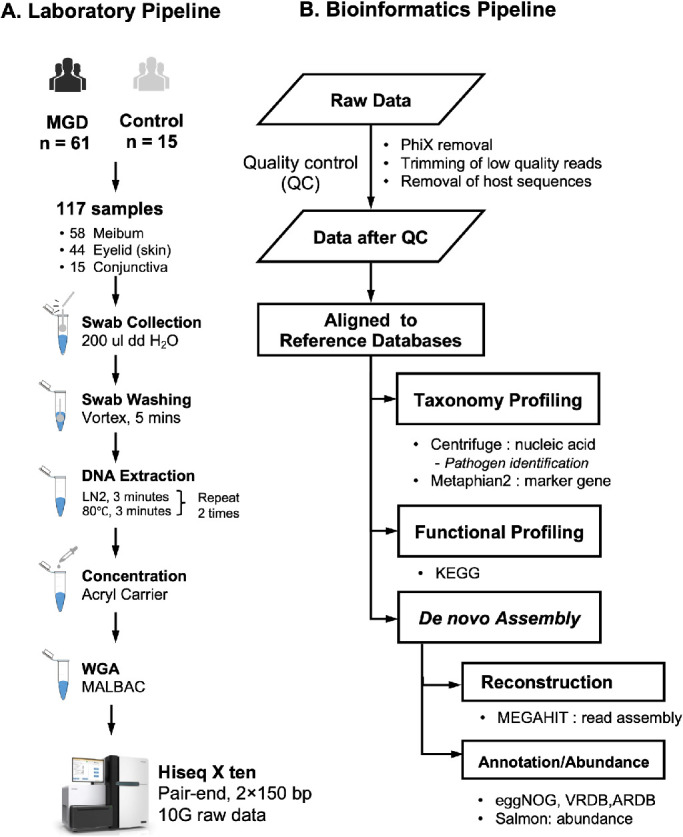
Shotgun metagenomic analysis was used to determine if there are differences between the microbial communities in ocular sites surrounding the meibomian gland in healthy individuals and patients afflicted with MGD.
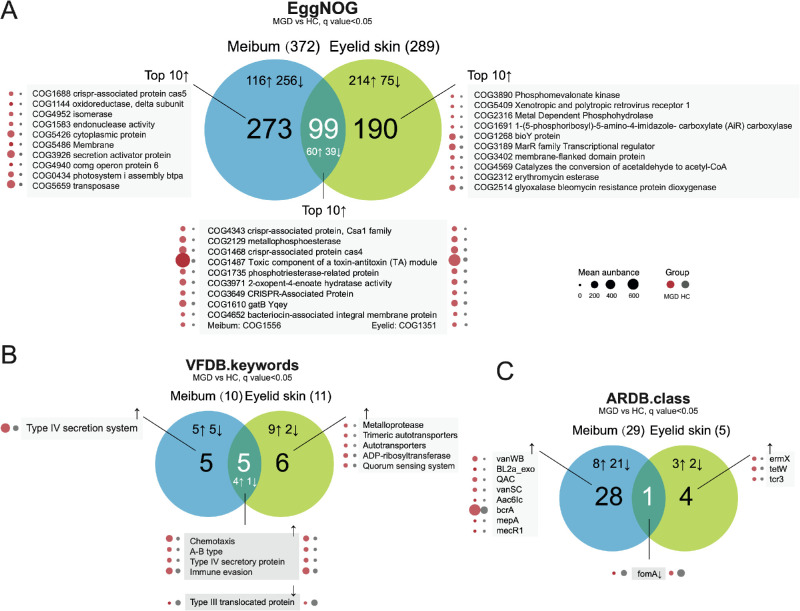
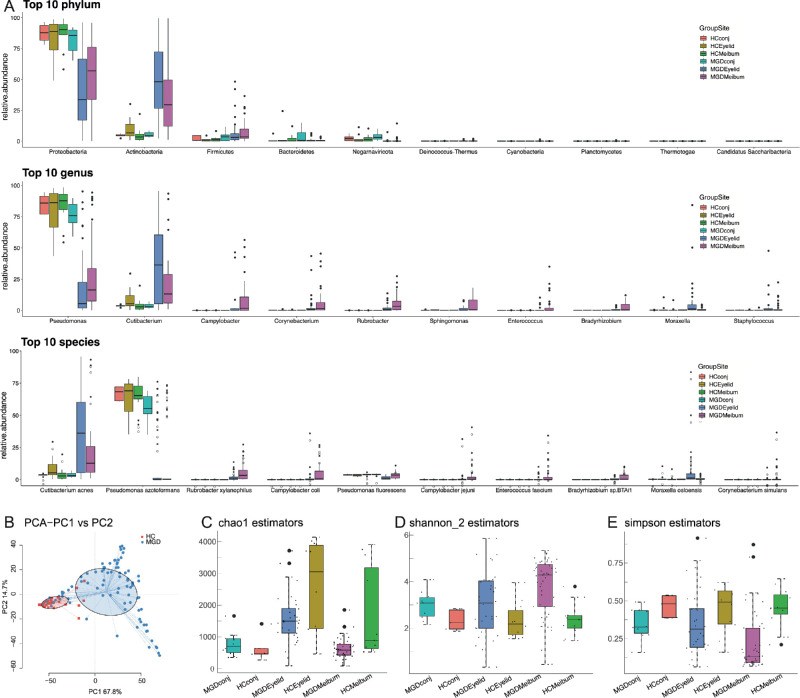
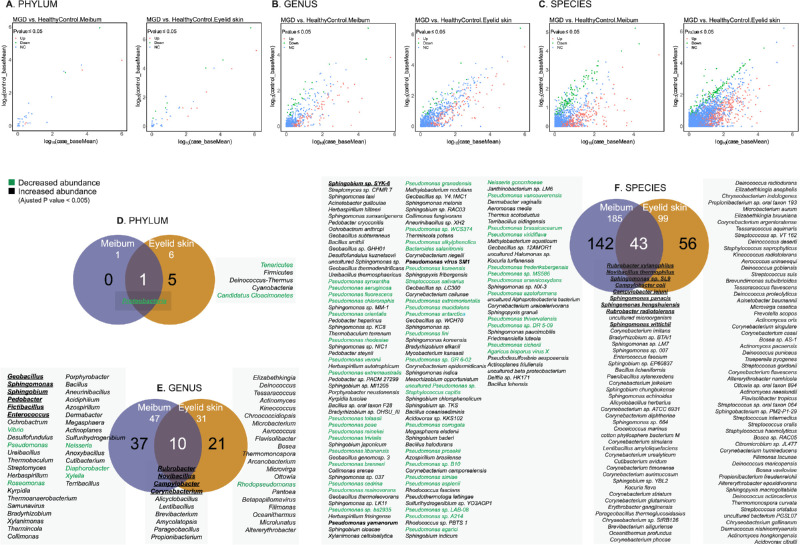
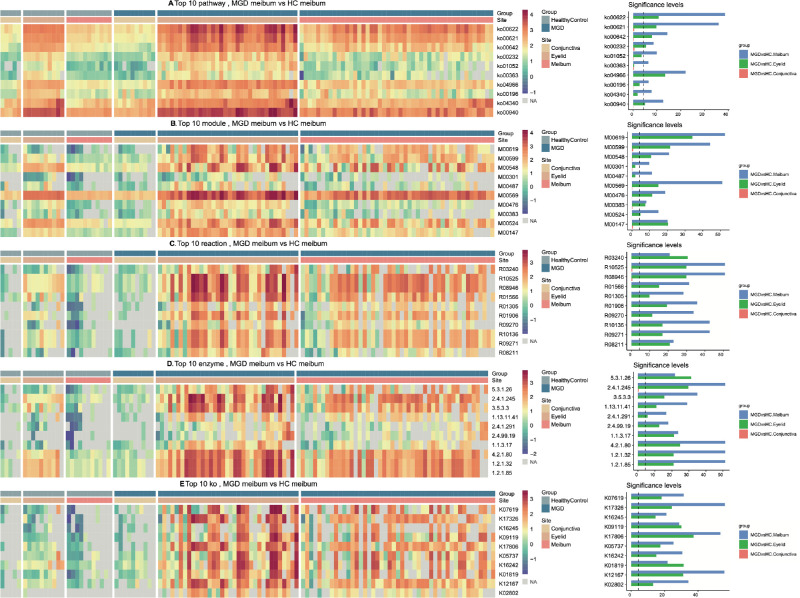
The meibum bacterial content of these microbiomes was dissimilar in these two different types of individuals. Almost all of the most significant taxonomic changes in the meibum microbiome of individuals with MGD were also present in their eyelid skin, but not in the conjunctiva. Such site-specific microbe pattern changes accompany increases in the gene expression levels controlling carbohydrate and lipid metabolism. Most of the microbiomes in patients with MGD possess a microbe population capable of metabolizing benzoate. Pathogens known to underlie ocular infection were evident in these individuals. MGD meibum contained an abundance of Campylobacter coli, Campylobacter jejuni, and Enterococcus faecium pathogens, which were almost absent from HCs. Functional annotation indicated that in the microbiomes of MGD meibum their capability to undergo chemotaxis, display immune evasive virulence, and mediate type IV secretion was different than that in the microbiomes of meibum isolated from HCs.
MGD meibum contains distinct microbiota whose immune evasive virulence is much stronger than that in the HCs. Profiling differences between the meibum microbiome makeup in HCs and patients with MGD characterizes changes of microbial communities associated with the disease status.
眼表微生物组的变化可能会影响睑板腺功能障碍(MGD)的发展。本研究旨在描述健康对照者(HCs)和 MGD 患者的眼睑皮肤、结膜和睑板腺分泌物的微生物组之间的差异。
使用 shotgun 宏基因组分析来确定健康个体和 MGD 患者的睑板腺周围眼区的微生物群落之间是否存在差异。
这些微生物组中睑板腺分泌物的细菌含量在这两种不同类型的个体中存在差异。MGD 患者的睑板腺分泌物微生物组中几乎所有的主要分类变化也存在于他们的眼睑皮肤中,但不存在于结膜中。这种特定部位的微生物模式变化伴随着控制碳水化合物和脂质代谢的基因表达水平的增加。MGD 患者的大多数微生物组都拥有能够代谢苯甲酸的微生物群。在这些个体中存在已知引起眼部感染的病原体。MGD 睑板腺含有丰富的弯曲杆菌科细菌,包括空肠弯曲菌和粪肠球菌,而这些病原体在 HCs 中几乎不存在。功能注释表明,在 MGD 睑板腺分泌物微生物组中,它们进行趋化、表现免疫逃避毒性以及介导 IV 型分泌的能力与 HCs 分离的微生物组不同。
MGD 睑板腺含有独特的微生物群,其免疫逃避毒性比 HCs 中的更强。在 HCs 和 MGD 患者的睑板腺分泌物微生物组组成之间进行差异分析,可描绘与疾病状态相关的微生物群落变化。