Developmental Therapeutics Branch & Laboratory of Molecular Pharmacology, Center for Cancer Research, National Cancer Institute, NIH, Bethesda, MD 20892, United States.
Developmental Therapeutics Branch & Laboratory of Molecular Pharmacology, Center for Cancer Research, National Cancer Institute, NIH, Bethesda, MD 20892, United States.
DNA Repair (Amst). 2020 Oct;94:102926. doi: 10.1016/j.dnarep.2020.102926. Epub 2020 Jul 10.
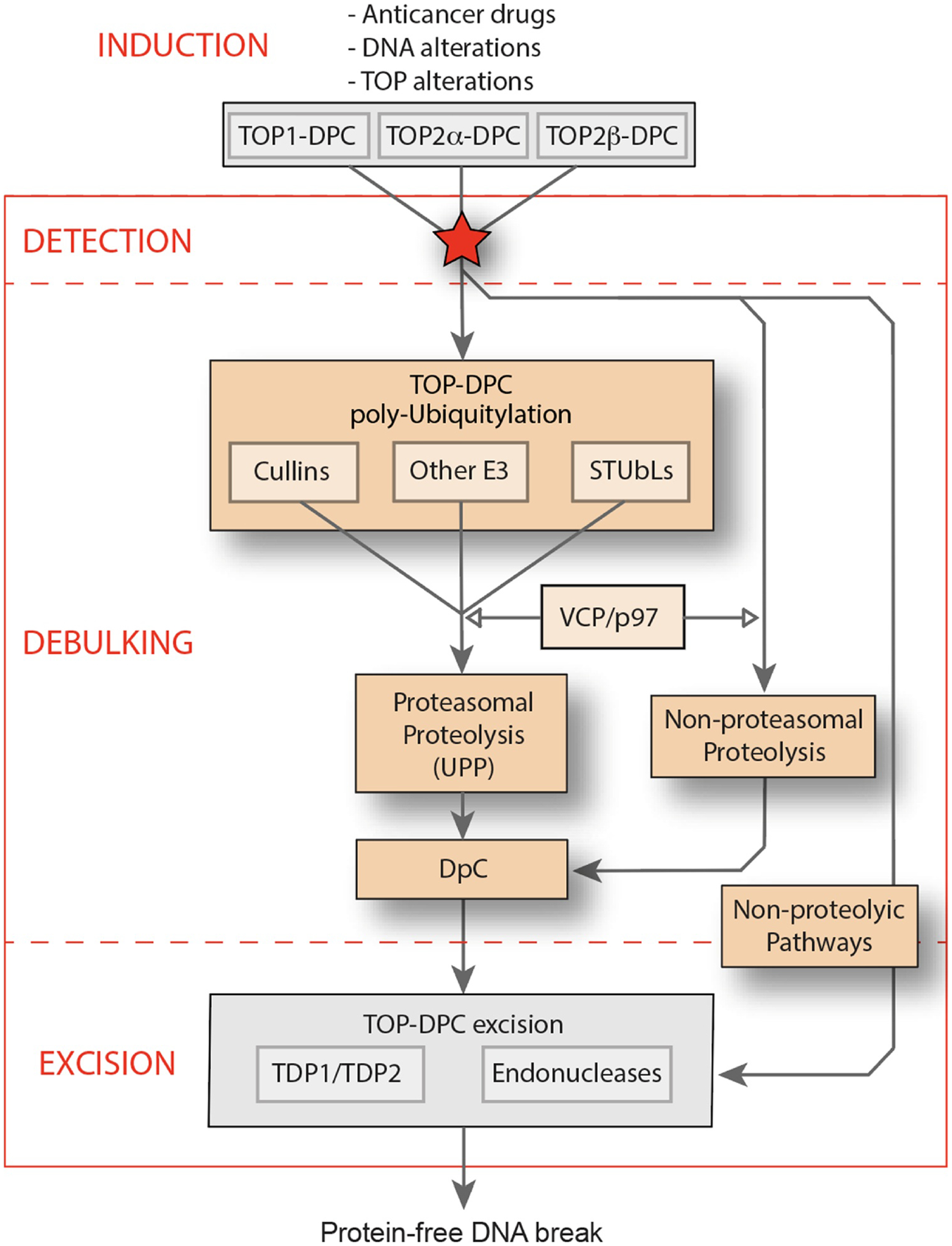
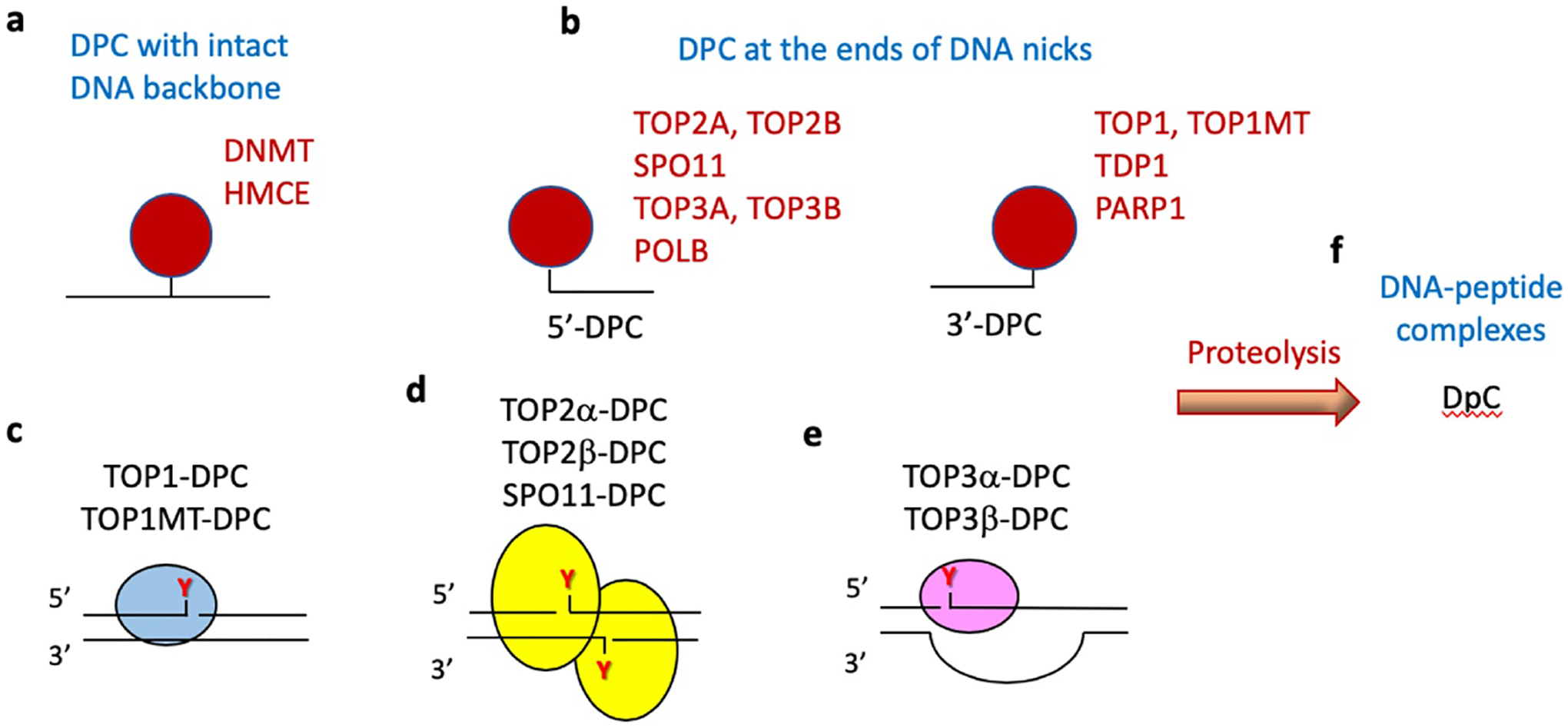
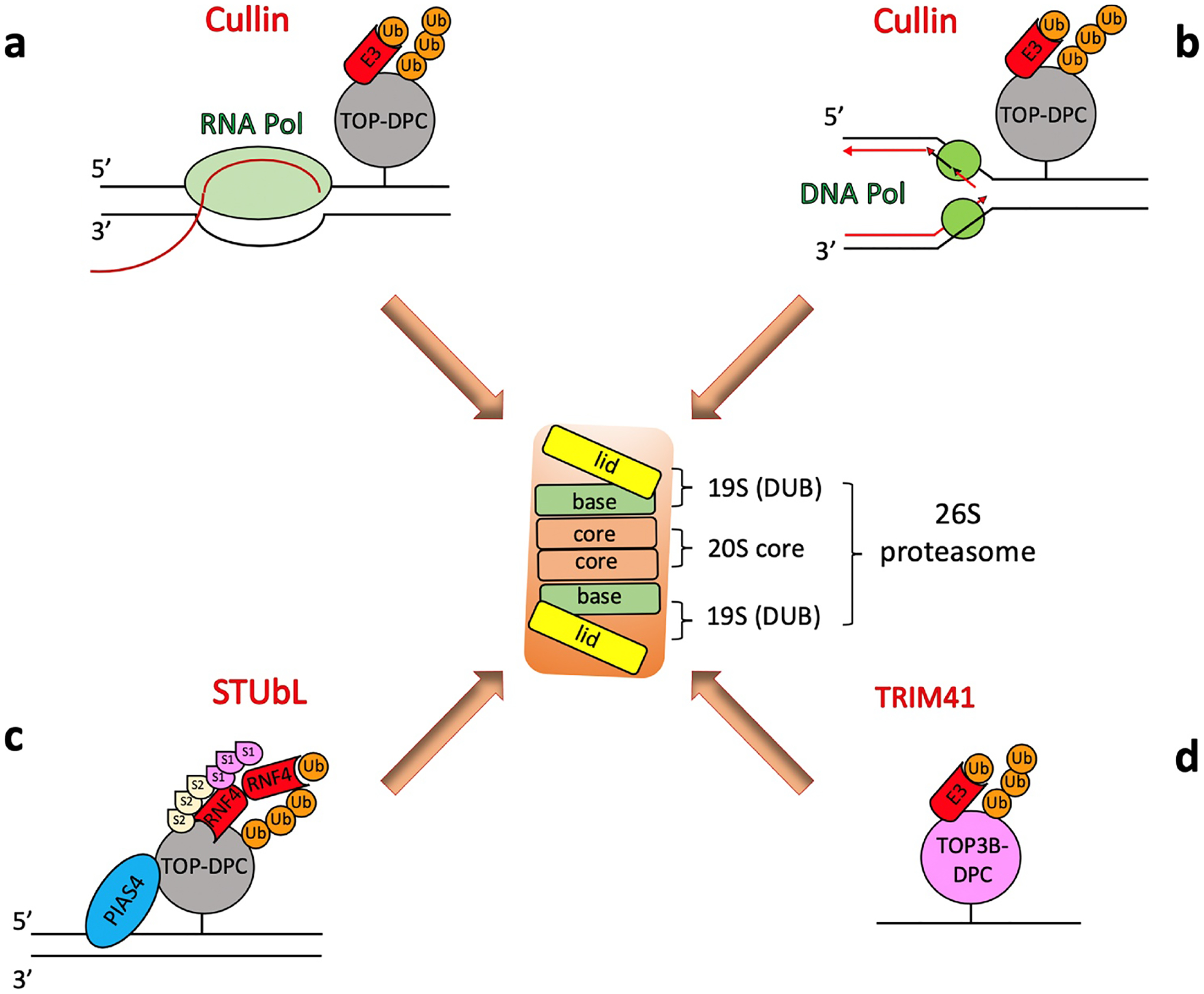
Topoisomerases play a pivotal role in ensuring DNA metabolisms during replication, transcription and chromosomal segregation. To manage DNA topology, topoisomerases generate break(s) in the DNA backbone by forming transient enzyme-DNA cleavage complexes (TOPcc) with phosphotyrosyl linkages between DNA ends and topoisomerase catalytic tyrosyl residues. Topoisomerases have been identified as the cellular targets of a variety of anti-cancer drugs (e.g. topotecan, irinotecan, etoposide and doxorubicin, and antibiotics (e.g. ciprofloxacin and levofloxacin). These drugs, as well as other exogenous and endogenous agents, convert the transient TOPcc into persistent TOPcc, which we refer to as topoisomerase DNA-protein crosslinks (TOP-DPC) that challenge genome integrity and lead to cell death if left unrepaired. Proteolysis of the bulky protein component of TOP-DPC (debulking) is a poorly understood repair process employed across eukaryotes. TOP-DPC proteolysis can be achieved either by the ubiquitin-proteasome pathway (UPP) or by non-proteasomal proteases, which are typified by the metalloprotease SPRTN/WSS1. Debulking of TOP-DPC exposes the phosphotyrosyl bonds, hence enables tyrosyl-DNA phosphodiesterases (TDP1 and TDP2) to access and cleave the bonds. In this review, we focus on current knowledge of the protease pathways for debulking TOP-DPC and highlighting recent advances in understanding the mechanisms regulating the proteolytic repair pathways. We also discuss the avenues that are being exploited to target the proteolytic repair pathways for improving the clinical outcome of topoisomerase inhibitors.
拓扑异构酶在复制、转录和染色体分离过程中确保 DNA 代谢中起着关键作用。为了管理 DNA 拓扑结构,拓扑异构酶通过在 DNA 末端和拓扑异构酶催化酪氨酸残基之间形成磷酸酪氨酸键,形成瞬时酶-DNA 断裂复合物(TOPcc),从而在 DNA 骨架上产生断裂。拓扑异构酶已被确定为多种抗癌药物(如拓扑替康、伊立替康、依托泊苷和阿霉素以及抗生素(如环丙沙星和左氧氟沙星)的细胞靶点。这些药物以及其他外源性和内源性试剂,将瞬时 TOPcc 转化为持久的 TOPcc,我们称之为拓扑异构酶-DNA 蛋白交联(TOP-DPC),这会挑战基因组完整性,如果不进行修复,会导致细胞死亡。TOP-DPC 中大块蛋白质成分的蛋白水解(脱包络)是真核生物中广泛采用的一种修复过程,但了解甚少。TOP-DPC 的蛋白水解可以通过泛素-蛋白酶体途径(UPP)或非蛋白酶体蛋白酶来实现,后者以金属蛋白酶 SPRTN/WSS1 为代表。TOP-DPC 的脱包络暴露了磷酸酪氨酸键,从而使酪氨酸-DNA 磷酸二酯酶(TDP1 和 TDP2)能够进入并切割这些键。在这篇综述中,我们重点介绍了目前关于脱包络 TOP-DPC 的蛋白酶途径的知识,并强调了最近在理解调节蛋白水解修复途径的机制方面的进展。我们还讨论了正在利用的途径来靶向蛋白水解修复途径,以提高拓扑异构酶抑制剂的临床疗效。