World Bank, USA.
World Bank, USA.
Soc Sci Med. 2020 Aug;259:113171. doi: 10.1016/j.socscimed.2020.113171. Epub 2020 Jul 5.
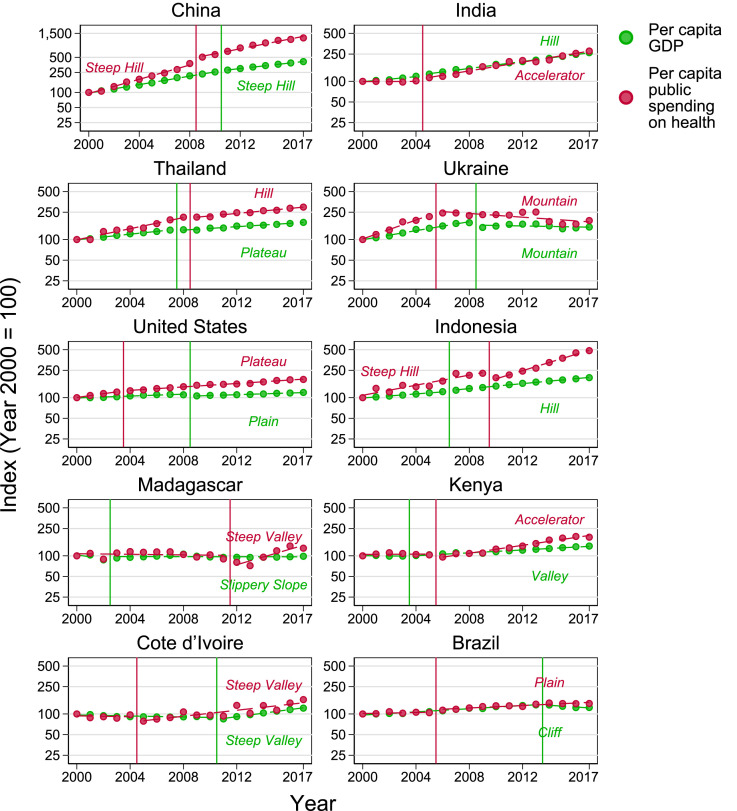
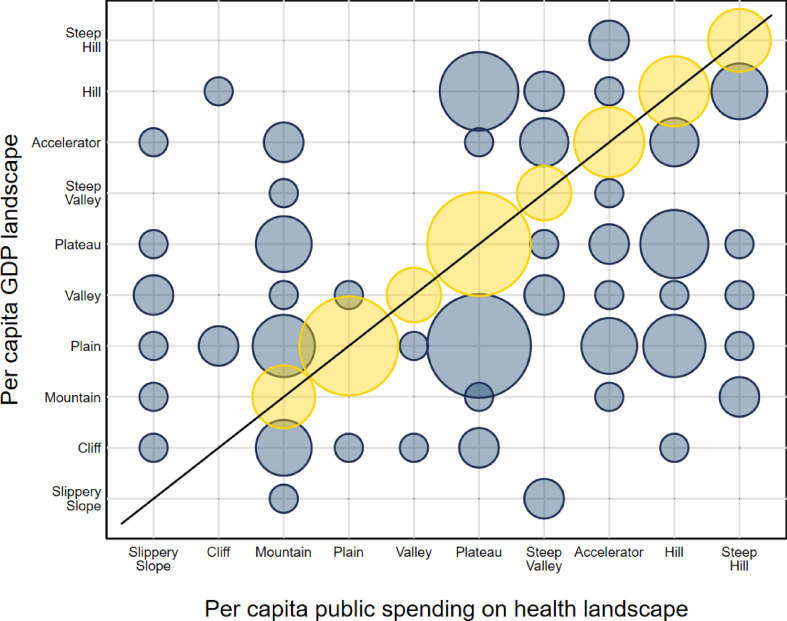
Identifying ways to increase public spending on health is critical for the achievement of universal health coverage. While policymakers and donors often look at available options for increasing public spending for health in the medium-term, examining trends and drivers of past growth can help countries elucidate important lessons and to anticipate changes in the future. This note analyzes trends in inflation-adjusted per capita public spending for health vis-à-vis economic growth within and across a sample of 150 countries over the 2000-2017 period. Since 2000, per capita public spending for health across low- and middle-income countries has more than doubled. Less than one-fifth of this increase, however, resulted from a higher priority for health in government budgets. The remainder was largely due to conducive macroeconomic conditions such as economic growth and increases in total public spending. Furthermore, across most countries, a single time trend does not adequately capture the evolution either of economic growth or of per capita public spending on health. Instability in growth rates is large for both indicators, revealing distinct episodic patterns.
确定增加公共卫生支出的途径对于实现全民健康覆盖至关重要。虽然政策制定者和捐助者通常着眼于中期内增加公共卫生支出的可用选择,但审视过去增长的趋势和驱动因素可以帮助各国阐明重要经验教训,并预测未来的变化。本说明分析了 2000-2017 年期间,150 个国家样本中卫生方面经通胀调整后的人均公共支出与经济增长之间的趋势。自 2000 年以来,低收入和中等收入国家的人均公共卫生支出增加了一倍多。然而,这一增长中只有不到五分之一是由于政府预算对卫生的重视程度提高。其余部分主要归因于有利的宏观经济条件,如经济增长和公共总支出的增加。此外,在大多数国家,单一的时间趋势都不能充分说明经济增长或人均公共卫生支出的演变。这两个指标的增长率都很不稳定,显示出明显的阶段性模式。