University of Winchester, Winchester, UK.
University Hospital Southampton NHS Foundation Trust, Southampton, UK.
BMC Med Educ. 2020 Jul 16;20(1):226. doi: 10.1186/s12909-020-02138-w.
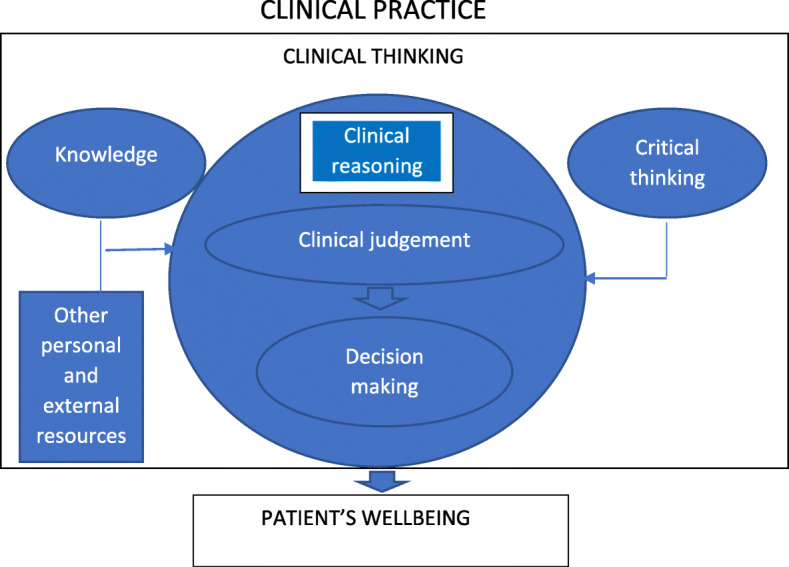
An important element of effective clinical practice is the way physicians think when they encounter a clinical situation, with a significant number of trainee physicians challenged by translating their learning into professional practice in the clinical setting. This research explores the perceptions of educators about how trainee physicians develop their clinical thinking in clinical settings. It considers what educators and their colleagues did to help, as well as the nature of the context in which they worked.
A qualitative approach was used in this study with in depth interviews carried out with educators as key informants. Rich data derived from 15 interview transcripts were analysed thematically in a rigorous and iterative process.
Three broad and overlapping themes were identified: working in an educationally minded culture; proximity of the educator to the trainee physician; and trajectory of the trainee physician. The departments in which these educators worked emphasised the importance for the education of trainee physicians. All members of the team were responsible for education of the team, and all members, particularly senior nurses, were able to give feedback upon the trainee physicians' progress. Educators described working side by side with their trainee physician and frequently being in close proximity to them which means that the educator was both easily accessible and spent more time with their trainee physicians. They described a trajectory of the trainee physicians through the placement with close monitoring and informal assessment throughout.
Recommendations are made as to how trainee physicians can be supported to develop their clinical thinking. Educators and managers can analyse their own and their department's practice and select the recommendations relevant to their local circumstances in order to make change. This study adds the educator perspective to a body of literature about the importance of context and supportive learning environments. As such the discussion is applicable to the education of other health professionals.
有效的临床实践的一个重要元素是医生在遇到临床情况时的思维方式,大量的实习医生在将学习转化为临床实践时都面临着挑战。本研究探讨了教育工作者对实习医生如何在临床环境中发展临床思维的看法。它考虑了教育工作者及其同事所做的帮助,以及他们工作的环境性质。
本研究采用定性方法,对教育工作者进行了深入访谈,作为主要信息来源。从 15 份访谈记录中提取丰富的数据,通过严格和迭代的过程进行主题分析。
确定了三个广泛且重叠的主题:在教育意识文化中工作;教育工作者与实习医生的接近程度;以及实习医生的轨迹。这些教育工作者所在的部门强调了对实习医生教育的重要性。团队的所有成员都对团队的教育负责,所有成员,特别是高级护士,都能够对实习医生的进展提供反馈。教育工作者描述了与实习医生并肩工作,并经常与他们近距离接触,这意味着教育工作者既容易接触,又与实习医生共度更多时间。他们描述了实习医生在整个实习过程中的轨迹,密切监测和非正式评估贯穿始终。
提出了如何支持实习医生发展临床思维的建议。教育工作者和管理人员可以分析自己和部门的实践,并选择与当地情况相关的建议,以进行变革。本研究将教育者的观点纳入了关于环境和支持性学习环境重要性的文献中。因此,讨论适用于其他卫生专业人员的教育。