Department of Neurosurgery, National Institute of Mental Health and Neuro-Sciences, Bangalore, India.
Department of Neurosurgery, All India Institute of Medical Sciences, New Delhi, India.
World Neurosurg. 2020 Oct;142:e396-e406. doi: 10.1016/j.wneu.2020.07.038. Epub 2020 Jul 15.
The coronavirus 2019 (COVID-19) pandemic has changed the practice of neurosurgery. Significant resources have been dedicated to the disease. The pandemic in the Indian subcontinent, compared with the rest of the world, is relatively delayed. The neurosurgical practice cannot remain unaffected by hugely disruptive measures such as a lockdown. The inevitable increase in COVID infections with the gradual relaxation of lockdown continues to pose a risk for health care providers. Therefore, it is imperative to evaluate whether the pandemic has had a discernible effect on health care providers, especially in terms of practice modifications in private establishments and publicly funded hospitals, the emotional impact on the surgeon, and the influence of social media on the psyche of the surgeon.
An online questionnaire-based survey was prepared, with questions related to the COVID-specific themes of precautions taken in outpatient services and operating theaters, the influence of social media, the economic loss incurred, and the perceptible impact of telemedicine and webinars. The links to the survey were mailed to neurosurgeons in private and public practice countrywide. The responses were anonymized to ensure free and unbiased answers to the survey questions.
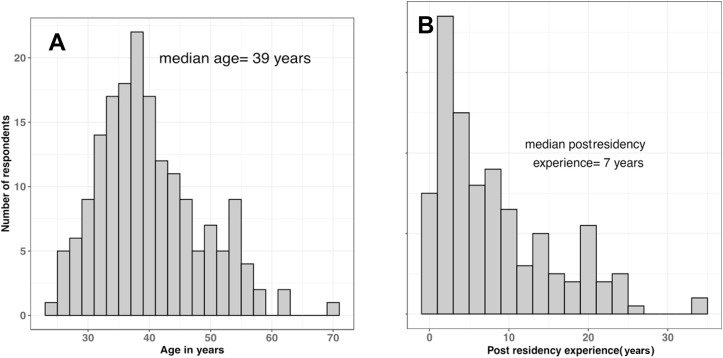
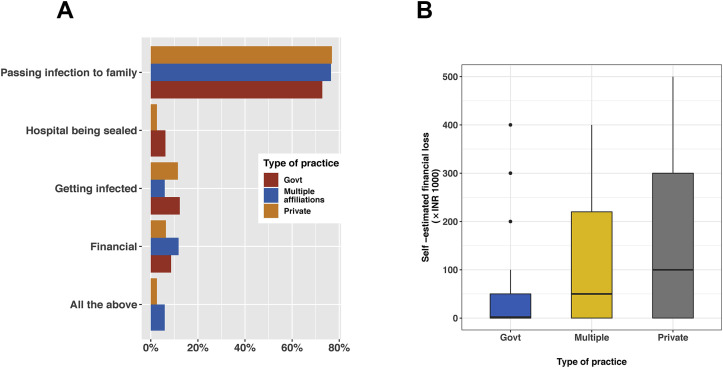
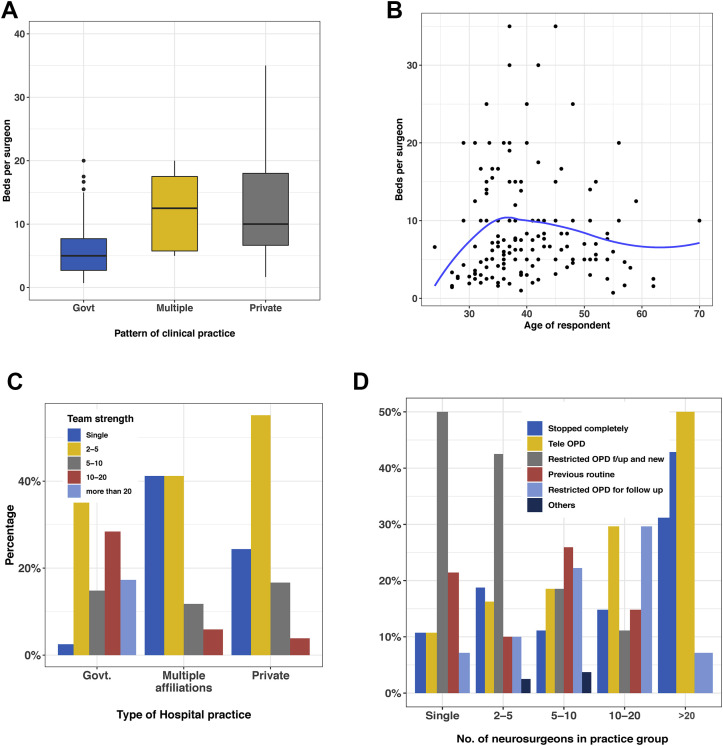
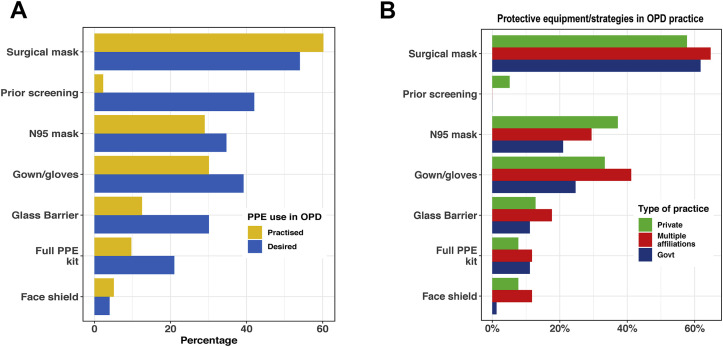
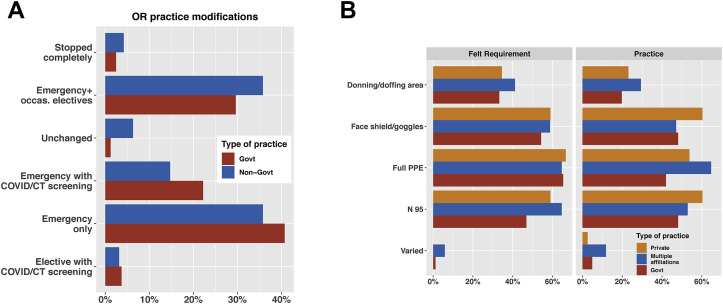
A total of 176 responses were received from across the Indian subcontinent. The median age of respondents was 39 years (range, 32-70 years) and the postresidency experience was 7 years (range, 0-34 years). Respondents were an equitable mix of public and private practitioners. Of respondents, 46% were practicing restricted outpatient services, more in public institutions (P = 0.22) which also had a higher incidence of tele-outpatient services (26% vs. 17%). Wearing surgical masks, N95 masks, and gloves were the most commonly practiced precautionary measures in outpatient services (>60%). Although private practitioners were continuing elective cases (40%), public institutes were more cautious, with only emergency patients being operated on (29%). The greatest fear among all practitioners was passing the infection to their family (75%). Social media were helpful for brainstorming queries and updating practice modifications, but some surgeons admitted to receiving threats on social media platforms (37.5%). Depression and economic losses were palpable for approximately 30% neurosurgeons.
The survey highlights the perception of neurosurgeons toward the pandemic and the difference in public-private practice. Suspension of elective procedures, severe curtailment of regular outpatient appointments, drastic modifications of the normal outpatient department/operating room practices, and apprehensions related to inadequacy of safety provided by personal protective equipment use and financial losses of private establishments were some of the visible themes in our survey results. Although telemedicine has not been as widely adopted as expected, online education has been favorably received.
2019 年冠状病毒病(COVID-19)大流行改变了神经外科的实践。大量资源用于治疗该疾病。与世界其他地区相比,印度次大陆的大流行相对较晚。神经外科实践不可能不受封锁等极具破坏性措施的影响。随着封锁的逐步放松,COVID 感染的不可避免增加继续对医疗保健提供者构成风险。因此,有必要评估大流行是否对医疗保健提供者产生了明显影响,特别是在私人机构和公共资助医院的实践修改、外科医生的情绪影响以及社交媒体对外科医生心理的影响方面。
准备了一份基于在线问卷调查的调查,其中包括有关门诊服务和手术室中采取的 COVID 特定主题的问题、社交媒体的影响、经济损失以及远程医疗和网络研讨会的可感知影响。将调查链接发送到全国各地的私人和公共执业神经外科医生。为了确保对调查问题的自由和公正的回答,对回复进行了匿名处理。
共收到来自印度次大陆各地的 176 份回复。回复者的中位年龄为 39 岁(范围,32-70 岁),住院后经验为 7 年(范围,0-34 年)。回复者是公私执业医生的均等混合体。46%的受访者正在进行限制门诊服务,在公共机构中更多(P=0.22),这些机构还提供更高比例的远程门诊服务(26%比 17%)。在门诊服务中,最常见的预防措施是戴手术口罩、N95 口罩和手套(>60%)。尽管私人执业者正在继续进行选择性病例(40%),但公共机构更为谨慎,只有急诊患者接受手术(29%)。所有从业者中最大的恐惧是将感染传染给家人(75%)。社交媒体对于头脑风暴查询和更新实践修改很有帮助,但一些外科医生承认在社交媒体平台上收到了威胁(37.5%)。大约 30%的神经外科医生感到抑郁和经济损失。
该调查突出了神经外科医生对大流行的看法以及公私实践之间的差异。暂停选择性手术、大幅削减常规门诊预约、大幅修改正常门诊/手术室的实践、以及对个人防护设备使用提供的安全性不足以及私人机构的经济损失的担忧,是我们调查结果中的一些明显主题。尽管远程医疗的采用并不像预期的那样广泛,但在线教育受到了好评。