Mariano Stefania, Panzarini Elisa, Inverno Maria D, Voulvoulis Nick, Dini Luciana
Department of Biological and Environmental Science and Technology, University of Salento, 73100 Lecce, Italy.
Centre for Environmental Policy, Imperial College London, London SW7 2AZ, UK.
Nanomaterials (Basel). 2020 Jul 15;10(7):1377. doi: 10.3390/nano10071377.
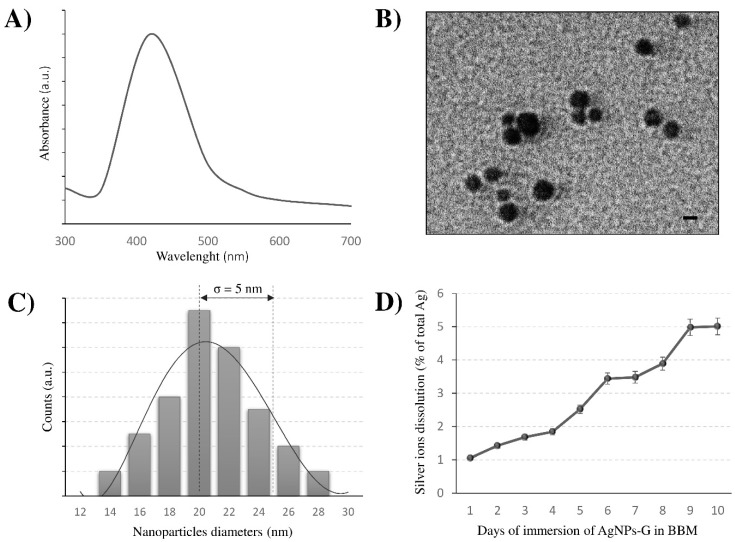
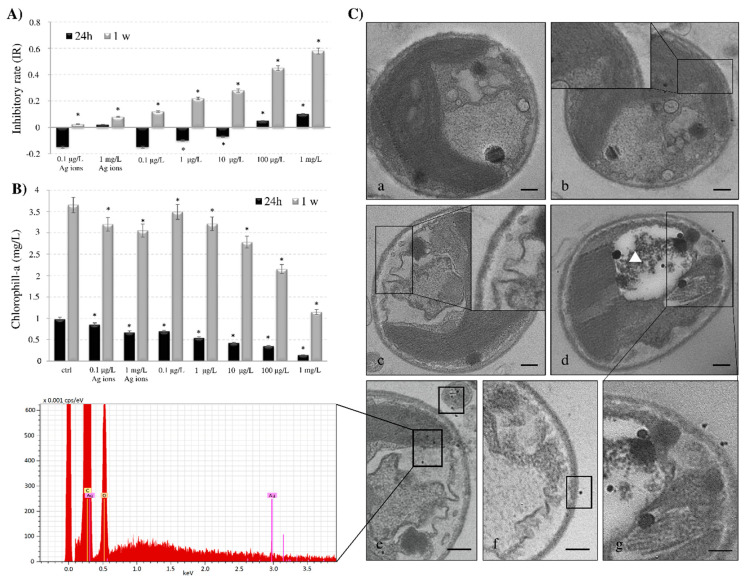
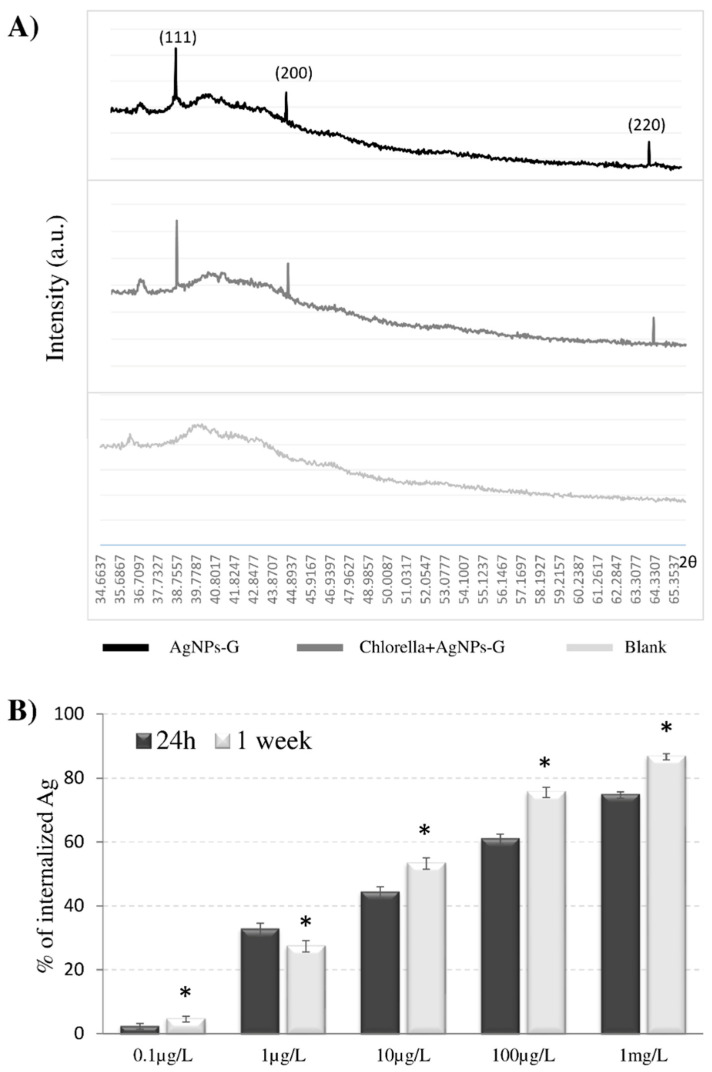
Silver nanoparticles (AgNPs) are one of the most widely used nanomaterials in consumer products. When discharged into the aquatic environment AgNPs can cause toxicity to aquatic biota, through mechanisms that are still under debate, thus rendering the nanoparticles (NPs) effects evaluation a necessary step. Different aquatic organism models, i.e., microalgae, mussels, , sea urchins and , etc. have been largely exploited for NPs toxicity assessment. On the other hand, alternative biological microorganisms abundantly present in nature, i.e., microalgae, are nowadays exploited as a potential sink for removal of toxic substances from the environment. Indeed, the green microalgae is one of the most used microorganisms for waste treatment. With the aim to verify the possible involvement of not only as a model microorganism of NPs toxicity but also for the protection toward NPs pollution, we used these microalgae to measure the AgNPs biotoxicity and bioaccumulation. In particular, to exclude any toxicity derived by Ag ions release, green chemistry-synthesised and glucose-coated AgNPs (AgNPs-G) were used. actively internalised AgNPs-G whose amount increases in a time- and dose-dependent manner. The internalised NPs, found inside large vacuoles, were not released back into the medium, even after 1 week, and did not undergo biotransformation since AgNPs-G maintained their crystalline nature. Biotoxicity of AgNPs-G causes an exposure time and AgNPs-G dose-dependent growth reduction and a decrease in chlorophyll-a amount. These results confirm as a bioaccumulating microalgae for possible use in environmental protection.
银纳米颗粒(AgNPs)是消费产品中使用最广泛的纳米材料之一。当排放到水生环境中时,AgNPs可通过仍在争论中的机制对水生生物群造成毒性,因此对纳米颗粒(NPs)的效应评估成为必要步骤。不同的水生生物模型,即微藻、贻贝、海胆等,已被大量用于NPs毒性评估。另一方面,自然界中大量存在的替代性生物微生物,即微藻,如今被用作从环境中去除有毒物质的潜在汇。事实上,绿色微藻是最常用于废物处理的微生物之一。为了验证其不仅作为NPs毒性的模型微生物,而且对NPs污染具有保护作用的可能性,我们使用这些微藻来测量AgNPs的生物毒性和生物积累。特别是,为了排除银离子释放产生的任何毒性,使用了绿色化学合成的葡萄糖包覆AgNPs(AgNPs-G)。微藻积极内化AgNPs-G,其数量呈时间和剂量依赖性增加。内化的NPs存在于大液泡内,即使在1周后也不会释放回培养基中,并且由于AgNPs-G保持其晶体性质而不会发生生物转化。AgNPs-G的生物毒性导致暴露时间和AgNPs-G剂量依赖性的生长减少以及叶绿素a含量的降低。这些结果证实微藻可作为一种生物积累性微藻,可能用于环境保护。