College of Life Science, Henan Normal University, Green Medicine Biotechnology Henan Engineering Laboratory, Engineering Technology Research Center of Nursing and Utilization of Genuine Chinese Crude Drugs in Henan Province, Xinxiang, 453007, China.
BMC Plant Biol. 2020 Jul 17;20(1):338. doi: 10.1186/s12870-020-02551-9.
Gleditsia sinensis Lam. (Leguminosae), a dioecious perennial arbor, demonstrates important medicinal properties and economic value. These properties can be harnessed depending on the sex of the plant. However, the sex of the plants is difficult to identify accurately through morphological methods before the flowering.
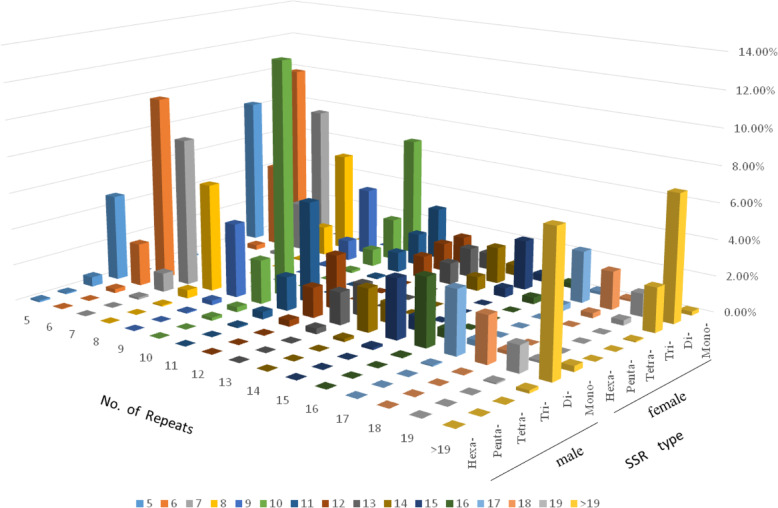
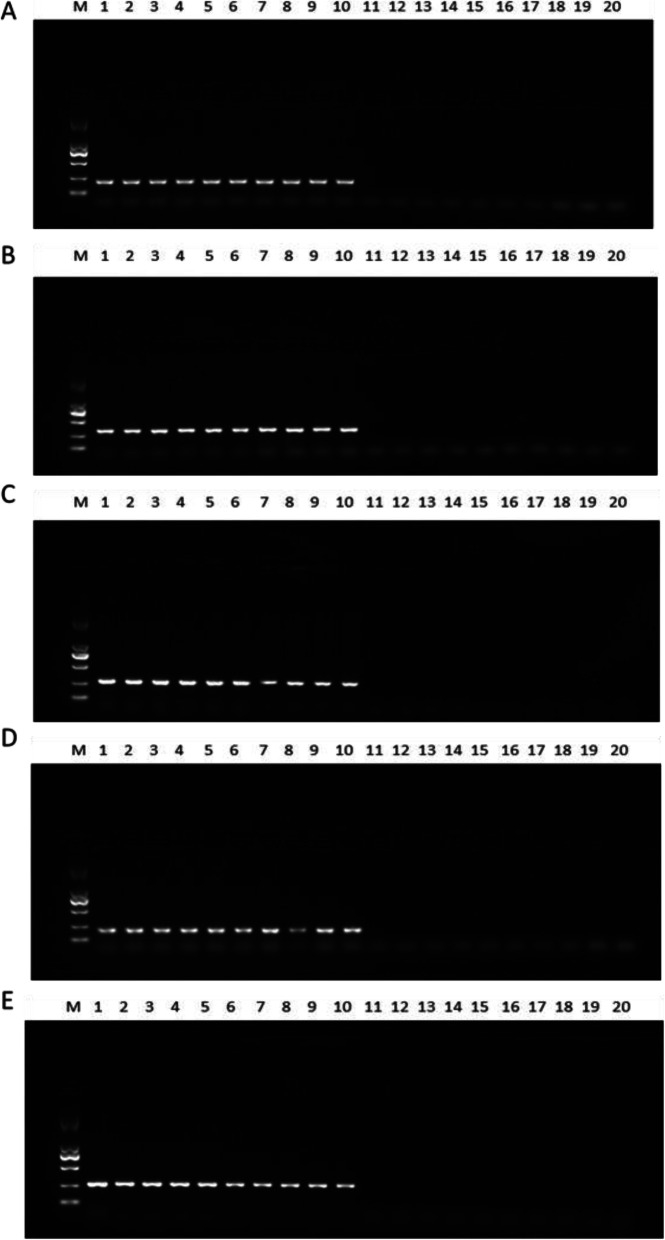
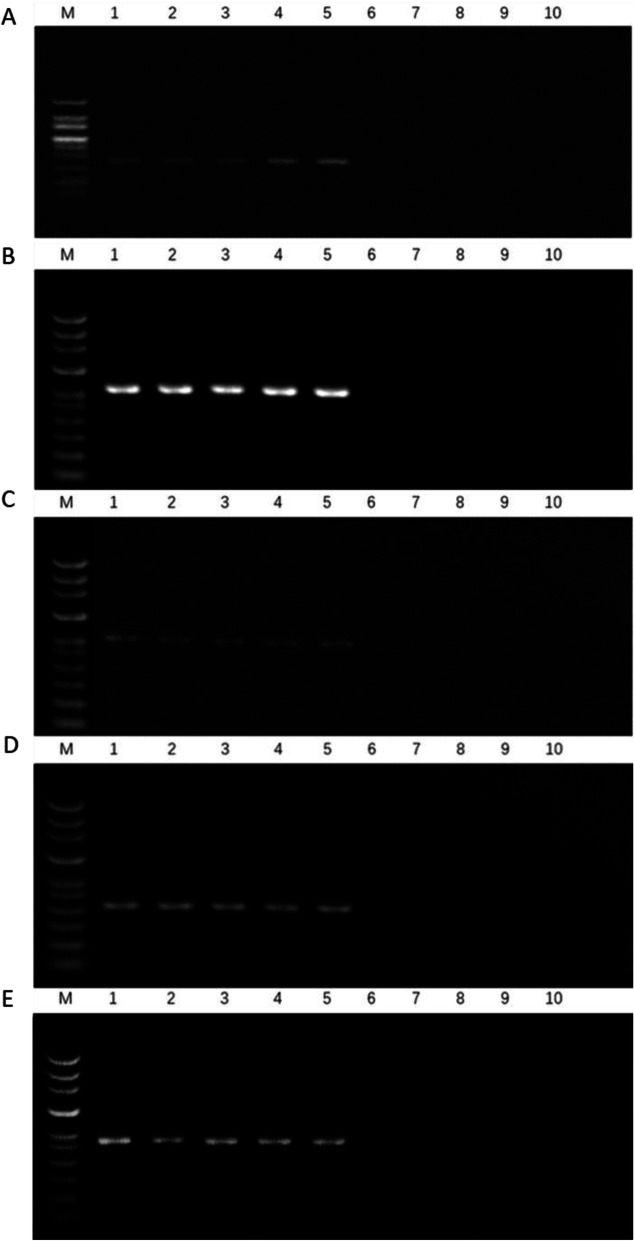
We used bulked segregant analysis to screen sex-specific simple sequence repeat (SSR) markers in G. sinensis. Five male and five female plants were pooled to form the male and female bulks, respectively, and subjected to whole-genome sequencing. After high-throughput sequencing, 5,350,359 sequences were obtained, in which 2,065,210 SSRs were searched. Among them, the number of duplicated SSRs was the highest. The male plants could reach 857,874, which accounted for 60.86% of the total number of male plants. The female plants could reach 1,447,603, which accounted for 56.25% of the total model of the female plants. Among all the nucleotide repeat types, the A/T-rich motif was the most abundant. A total of 309,516 female strain-specific SSRs were selected by clustering. After designing the primers, the male and female gene pools were amplified, and five pairs of primers (i.e., 27, 34, 36, 39, and 41) were found to amplify the differential bands in the male and female gene pools. Using the five pairs of primers, we performed PCR verification on 10 individuals of known sex, which constructed the gene pool. The female plants amplified a single fragment of lengths (i.e., 186, 305, 266, 203, and 260 bp) and no male plant strip, thereby completing the identification of the male and female sexes of the G. sinensis.
This study provides accurate sex identification strategies between female and male plants, thus improving the utilization rate of G. sinensis resources.
皂荚(豆科)是一种雌雄异株的多年生乔木,具有重要的药用价值和经济价值。这些特性可以根据植物的性别来利用。然而,在开花前,通过形态学方法很难准确识别植物的性别。
我们使用混池分离分析法筛选了皂荚中的性别特异性简单重复序列(SSR)标记。分别将 5 株雄性和 5 株雌性植株混合形成雄性和雌性混池,并进行全基因组测序。高通量测序后,共获得 5350359 条序列,其中搜索到 2065210 个 SSR。其中,重复 SSR 的数量最多,雄性植物可达 857874 个,占雄性植物总数的 60.86%;雌性植物可达 1447603 个,占雌性植物总数的 56.25%。在所有核苷酸重复类型中,A/T 富含基序最为丰富。通过聚类共选择了 309516 个雌性特异 SSR。设计引物后,对雄性和雌性基因池进行扩增,发现 5 对引物(27、34、36、39 和 41)可在雄性和雌性基因池中扩增出差异条带。使用这 5 对引物,对 10 株已知性别的个体进行 PCR 验证,构建了基因池。雌性植物扩增出单个片段长度(186、305、266、203 和 260bp),而雄性植物没有条带,从而完成了皂荚雌雄性别鉴定。
本研究为雌雄植株之间提供了准确的性别鉴定策略,从而提高了皂荚资源的利用率。