Department of Pediatrics, Mackay Children's Hospital, Mackay Medical College Taipei, Taiwan.
Department of Pediatrics, Chang Gung Children's Hospital, Chang Gung Memorial Hospital, Chang Gung University, College of Medicine, Taoyuan, Taiwan.
J Formos Med Assoc. 2020 Oct;119(10):1490-1499. doi: 10.1016/j.jfma.2020.07.014. Epub 2020 Jul 15.
BACKGROUND/PURPOSE: The purpose of this study was to determine the pathogens and to estimate the incidence of pediatric community-acquired pneumonia (CAP) in Taiwan.
This prospective study was conducted at eight medical centers from November 2010 to September 2013. Children aged 6 weeks to 18 years who met the radiologic criteria for pneumonia were enrolled. To detect classical and atypical bacteria and viruses, blood and pleural fluids were cultured, and respiratory specimens were examined by multiple conventional and molecular methods.
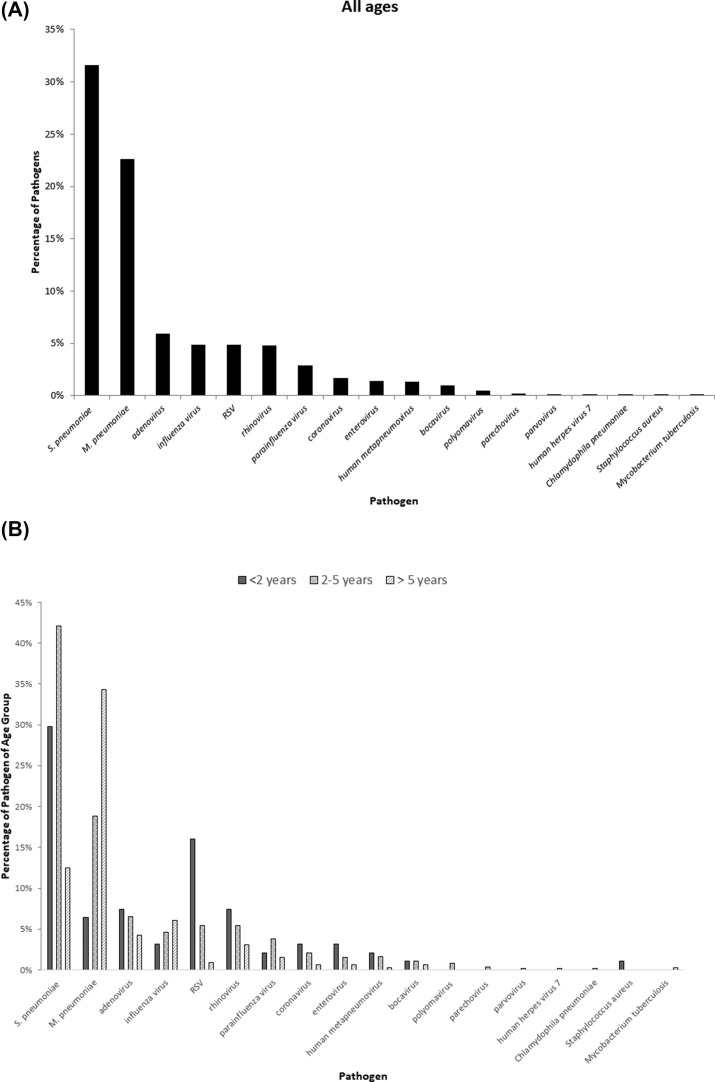
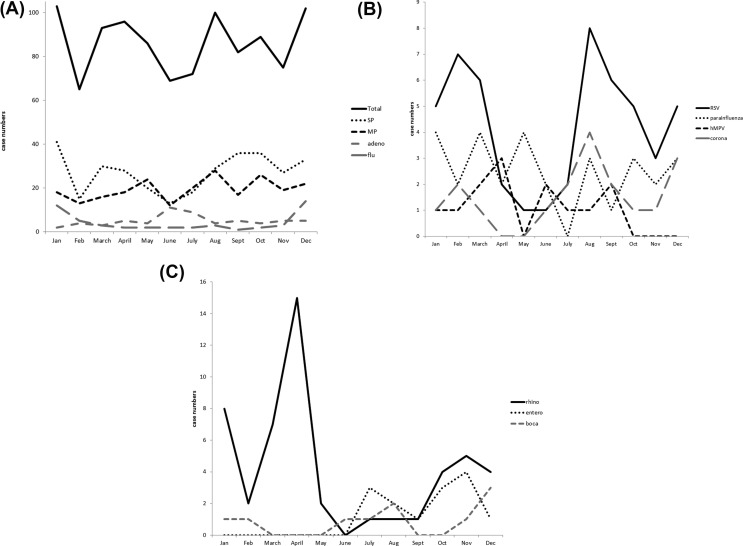
At least one potential pathogen was identified in 705 (68.3%) cases of 1032 children enrolled, including bacteria in 420 (40.7%) cases, virus in 180 (17.4%) cases, and mixed viral-bacterial infection in 105 (10.2%) cases. Streptococcus pneumoniae (31.6%) was the most common pathogen, followed by Mycoplasma pneumoniae (22.6%). Adenovirus (5.9%) was the most common virus. RSV was significantly associated with children aged under 2 years, S. pneumoniae in children aged between 2 and 5 years, and M. pneumoniae in children aged >5 years. The annual incidence rate of hospitalization for CAP was highest in children aged 2-5 years (229.7 per 100,000). From 2011 to 2012, significant reduction in hospitalization rates pertained in children under 5 years of age, in pneumonia caused by pneumococcus, adenovirus or co-infections and complicated pneumonia.
CAP related pathogens have changed after increased conjugated pneumococcal vaccination rates. This study described the latest incidences and trends of CAP pathogens, which are crucial for prompt delivery of appropriate therapy.
背景/目的:本研究旨在确定病原体,并估计台湾小儿社区获得性肺炎(CAP)的发病率。
本前瞻性研究于 2010 年 11 月至 2013 年 9 月在 8 家医疗中心进行。符合肺炎放射学标准的 6 周至 18 岁儿童入组。为了检测经典和非典型细菌和病毒,进行了血液和胸腔液培养,并采用多种常规和分子方法检测呼吸道标本。
在纳入的 1032 例儿童中,至少有一个潜在病原体在 705 例(68.3%)中得到鉴定,包括细菌 420 例(40.7%)、病毒 180 例(17.4%)和混合病毒-细菌感染 105 例(10.2%)。肺炎链球菌(31.6%)是最常见的病原体,其次是肺炎支原体(22.6%)。腺病毒(5.9%)是最常见的病毒。RSV 与年龄<2 岁的儿童显著相关,S. pneumoniae 与 2-5 岁儿童相关,肺炎支原体与>5 岁儿童相关。CAP 住院率在 2-5 岁儿童中最高(每 100,000 人 229.7 例)。2011 年至 2012 年,5 岁以下儿童、肺炎球菌、腺病毒或合并感染和合并肺炎的住院率显著下降。
随着结合型肺炎球菌疫苗接种率的提高,CAP 相关病原体发生了变化。本研究描述了 CAP 病原体的最新发病率和趋势,这对及时提供适当的治疗至关重要。