Wuhan University School of Law, Wuhan, China.
Wuhan University School of Health Sciences, Wuhan, 430072 Hubei China.
Glob Health Res Policy. 2020 Jul 13;5:35. doi: 10.1186/s41256-020-00162-3. eCollection 2020.
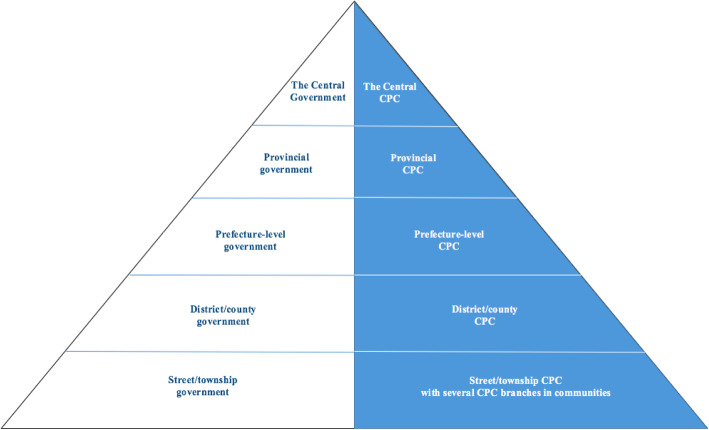
During the early stage of the COVID-19 outbreak in Wuhan, the lockdown of the densely-populated metropolis caused panic and disorderly behavior among its population. Community governance systems (CGSs) were mobilized to lead community engagement to address the challenges and issues brought about by the sudden quarantine measures, still unprecedented in any part of the world during that time. This commentary aims to describe and analyze the roles of the CGSs, its implementation of culturally-tailored strategies and the performance of new functions as called for by the outbreak. We will introduce the community governance structure which has two parallel administrative units of government including the branches of the Communist Party of China (CPC). The pandemic showed that the roles of the CGSs evolved and may continue to be improved in the future. It is important to engage the community and to have community-based approaches in addressing issues brought about by lockdowns. This community experience in Wuhan provides important lessons for the rest of the world.
在武汉 COVID-19 疫情早期,人口密集的特大城市的封锁导致其民众出现恐慌和混乱行为。社区治理系统 (CGS) 被动员起来,领导社区参与,以应对突然实施的隔离措施带来的挑战和问题,而这些措施在当时全球任何地方都是前所未有的。本评论旨在描述和分析 CGS 的作用、其实施的文化定制策略以及根据疫情需要发挥的新功能。我们将介绍社区治理结构,该结构有两个平行的政府行政单位,包括中国共产党(CPC)的分支机构。疫情表明,CGS 的作用已经演变,并可能在未来继续得到改善。让社区参与并采取基于社区的方法来解决封锁带来的问题非常重要。武汉的社区经验为世界其他地区提供了重要的经验教训。