Graduate School of Advanced Science and Engineering, Hiroshima University, 1-4-1 Kagamiyama, Higashi-Hiroshima, Hiroshima, 739-8527, Japan.
Graduate School of Engineering, Hiroshima University, 1-4-1 Kagamiyama, Higashi-Hiroshima, Hiroshima, 739-8527, Japan.
Sci Rep. 2020 Jul 20;10(1):11970. doi: 10.1038/s41598-020-68627-6.
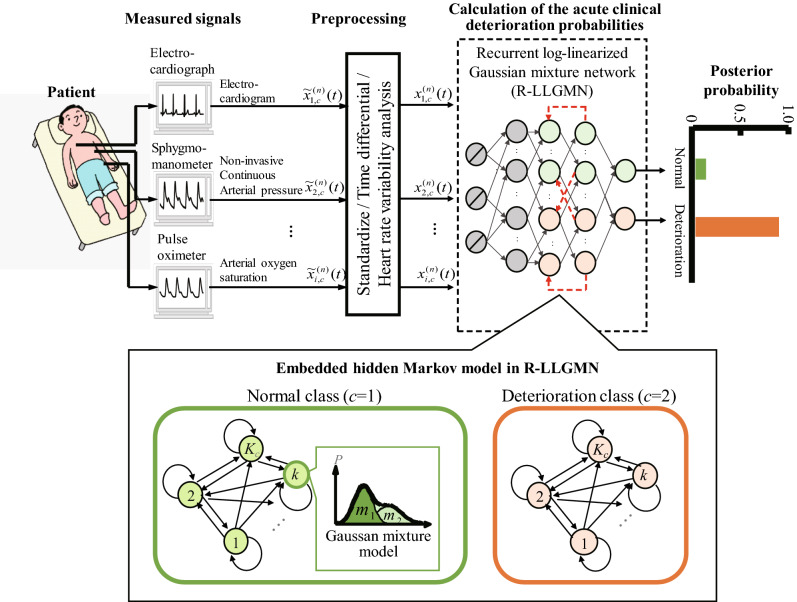
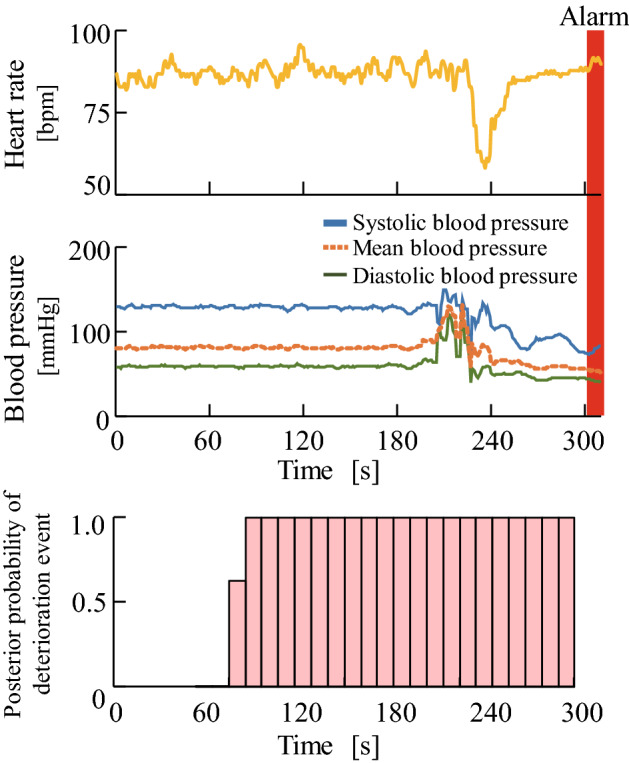
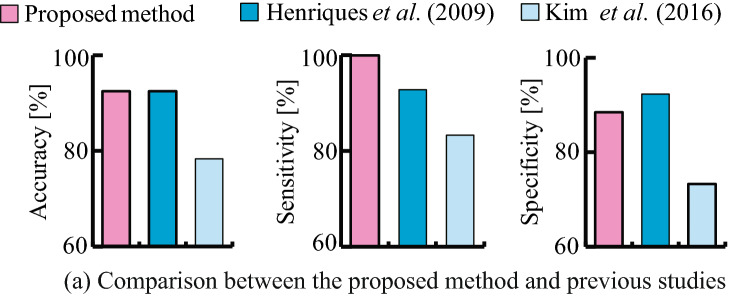
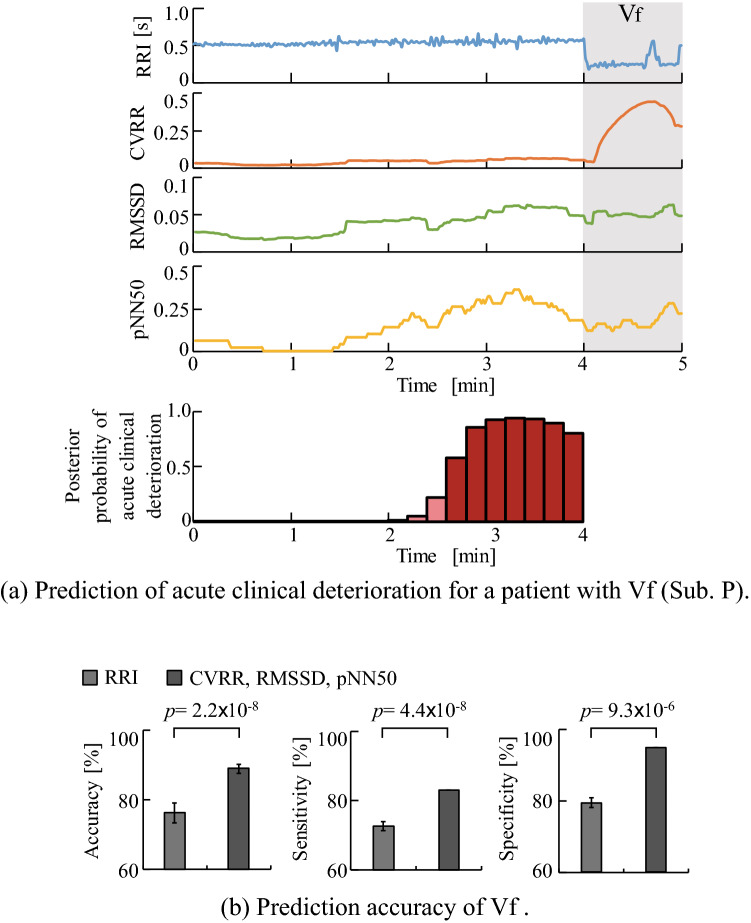
In this paper, we propose a novel method for predicting acute clinical deterioration triggered by hypotension, ventricular fibrillation, and an undiagnosed multiple disease condition using biological signals, such as heart rate, RR interval, and blood pressure. Efforts trying to predict such acute clinical deterioration events have received much attention from researchers lately, but most of them are targeted to a single symptom. The distinctive feature of the proposed method is that the occurrence of the event is manifested as a probability by applying a recurrent probabilistic neural network, which is embedded with a hidden Markov model and a Gaussian mixture model. Additionally, its machine learning scheme allows it to learn from the sample data and apply it to a wide range of symptoms. The performance of the proposed method was tested using a dataset provided by Physionet and the University of Tokyo Hospital. The results show that the proposed method has a prediction accuracy of 92.5% for patients with acute hypotension and can predict the occurrence of ventricular fibrillation 5 min before it occurs with an accuracy of 82.5%. In addition, a multiple disease condition can be predicted 7 min before they occur, with an accuracy of over 90%.
在本文中,我们提出了一种使用心率、RR 间隔和血压等生物信号预测低血压、心室颤动和未诊断的多种疾病状况引发的急性临床恶化的新方法。最近,研究人员对预测此类急性临床恶化事件的方法给予了极大的关注,但大多数方法都针对单一症状。该方法的独特之处在于,通过应用具有隐马尔可夫模型和高斯混合模型的递归概率神经网络,将事件的发生表现为一种概率。此外,它的机器学习方案允许它从样本数据中学习,并将其应用于广泛的症状。我们使用 Physionet 和东京大学医院提供的数据集对所提出的方法进行了性能测试。结果表明,对于急性低血压患者,所提出的方法的预测准确率为 92.5%,可以在心室颤动发生前 5 分钟以 82.5%的准确率预测其发生。此外,对于多种疾病状况,可以在发生前 7 分钟预测,准确率超过 90%。