Department of Neurosurgery, Geisinger, Danville, Pennsylvania, USA,
Research Institute of Neurointervention, Paracelsus Medical University, Salzburg, Austria,
Cerebrovasc Dis. 2020;49(4):419-426. doi: 10.1159/000509071. Epub 2020 Jul 21.
White matter hyperintensity (WMH) burden is a critically important cerebrovascular phenotype related to the diagnosis and prognosis of acute ischemic stroke. The effect of WMH burden on functional outcome in large vessel occlusion (LVO) stroke has only been sparsely assessed, and direct LVO and non-LVO comparisons are currently lacking.
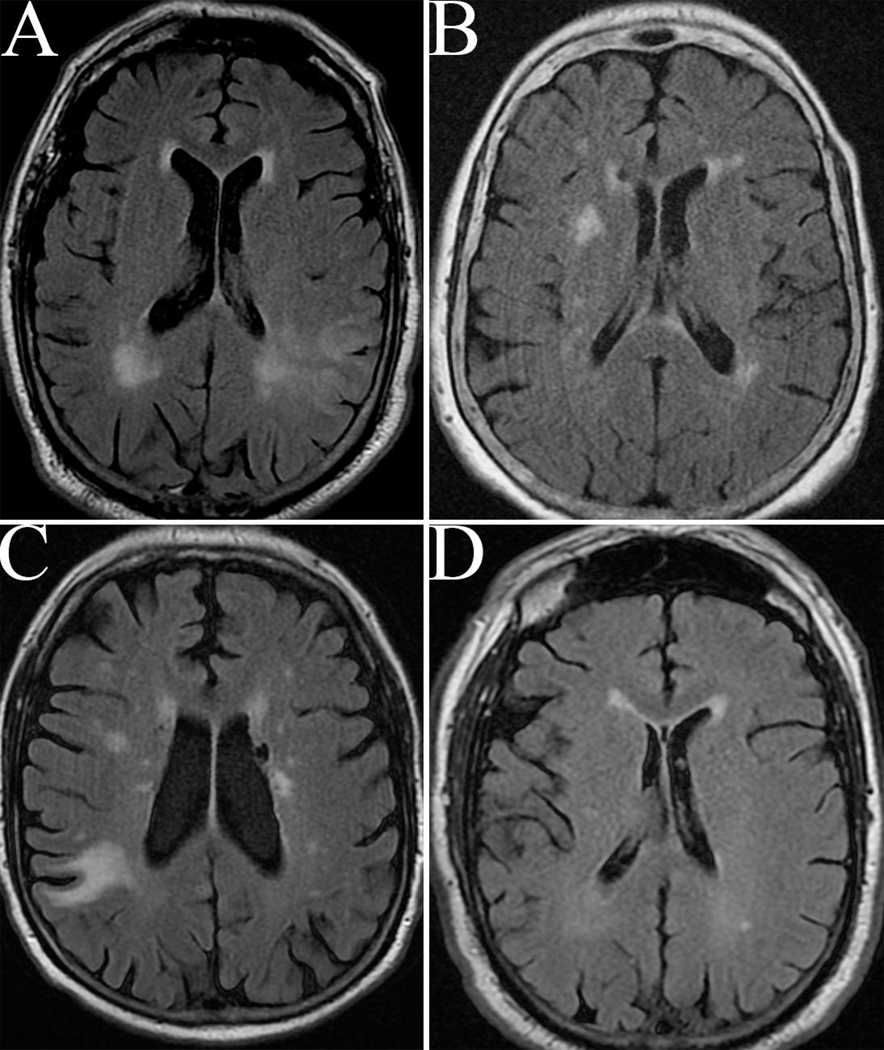
We reviewed acute ischemic stroke patients admitted between 2009 and 2017 at a large healthcare system in the USA. Patients with LVO were identified and clinical characteristics, including 90-day functional outcomes, were assessed. Clinical brain MRIs obtained at the time of the stroke underwent quantification of WMH using a fully automated algorithm. The pipeline incorporated automated brain extraction, intensity normalization, and WMH segmentation.
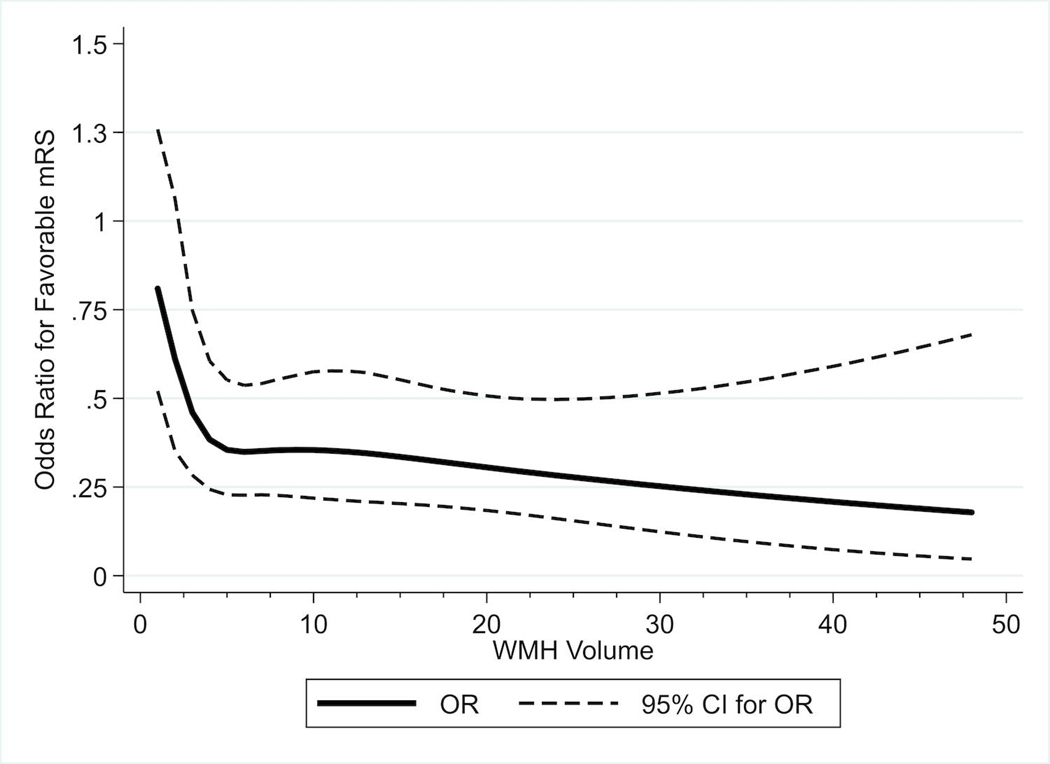
A total of 1,601 acute ischemic strokes with documented 90-day mRS were identified, including 353 (22%) with LVO. Among those strokes, WMH volume was available in 1,285 (80.3%) who had a brain MRI suitable for WMH quantification. Increasing WMH volume from 0 to 4 mL, age, female gender, a number of stroke risk factors, presence of LVO, and higher NIHSS at presentation all decreased the odds for a favorable outcome. Increasing WMH above 4 mL, however, was not associated with decreasing odds of favorable outcome. While WMH volume was associated with functional outcome in non-LVO stroke (p = 0.0009), this association between WMH and functional status was not statistically significant in the complete case multivariable model of LVO stroke (p = 0.0637).
The burden of WMH has effects on 90-day functional outcome after LVO and non-LVO strokes. Particularly, increases from no measurable WMH to 4 mL of WMH correlate strongly with the outcome. Whether this relationship of increasing WMH to worse outcome is more pronounced in non-LVO than LVO strokes deserves additional investigation.
脑白质高信号(WMH)负担是与急性缺血性卒中的诊断和预后密切相关的重要脑血管表型。WMH 负担对大血管闭塞(LVO)卒中的功能结局的影响仅得到了稀疏的评估,并且目前缺乏直接的 LVO 和非-LVO 比较。
我们回顾了美国一家大型医疗保健系统在 2009 年至 2017 年期间收治的急性缺血性卒中患者。确定了 LVO 患者,并评估了包括 90 天功能结局在内的临床特征。卒中时获得的临床脑部 MRI 使用全自动算法对 WMH 进行量化。该流水线包括自动脑提取、强度归一化和 WMH 分割。
共确定了 1601 例有记录的 90 天 mRS 的急性缺血性卒中,其中 353 例(22%)为 LVO。在这些卒中中,1285 例(80.3%)有适合 WMH 量化的脑部 MRI,有 WMH 容积。WMH 容积从 0 增加到 4 mL,年龄、女性性别、多种卒中危险因素、LVO 存在以及入院时更高的 NIHSS,都会降低预后良好的几率。然而,WMH 增加超过 4 mL 与预后良好的几率降低无关。虽然 WMH 容积与非 LVO 卒中的功能结局相关(p = 0.0009),但在 LVO 卒中的完整病例多变量模型中,WMH 与功能状态之间的这种关联在统计学上并不显著(p = 0.0637)。
WMH 负担对 LVO 和非 LVO 卒中后 90 天的功能结局有影响。特别是,从无可测量的 WMH 到 4 mL 的 WMH 增加与结局密切相关。这种 WMH 增加与预后不良的关系在非 LVO 卒中比 LVO 卒中更明显,值得进一步研究。