Cason Errol D, Mahlomaholo Bokang J, Taole Matšepo M, Abong George Ooko, Vermeulen Jan-G, de Smidt Olga, Vermeulen Marcele, Steyn Laurinda, Valverde Angel, Viljoen Bennie
Department of Microbial, Biochemical and Food Biotechnology, University of the Free State, Bloemfontein, South Africa.
Department of Animal, Wildlife, and Grassland Sciences, University of the Free State, Bloemfontein, South Africa.
Front Microbiol. 2020 Jun 30;11:1451. doi: 10.3389/fmicb.2020.01451. eCollection 2020.
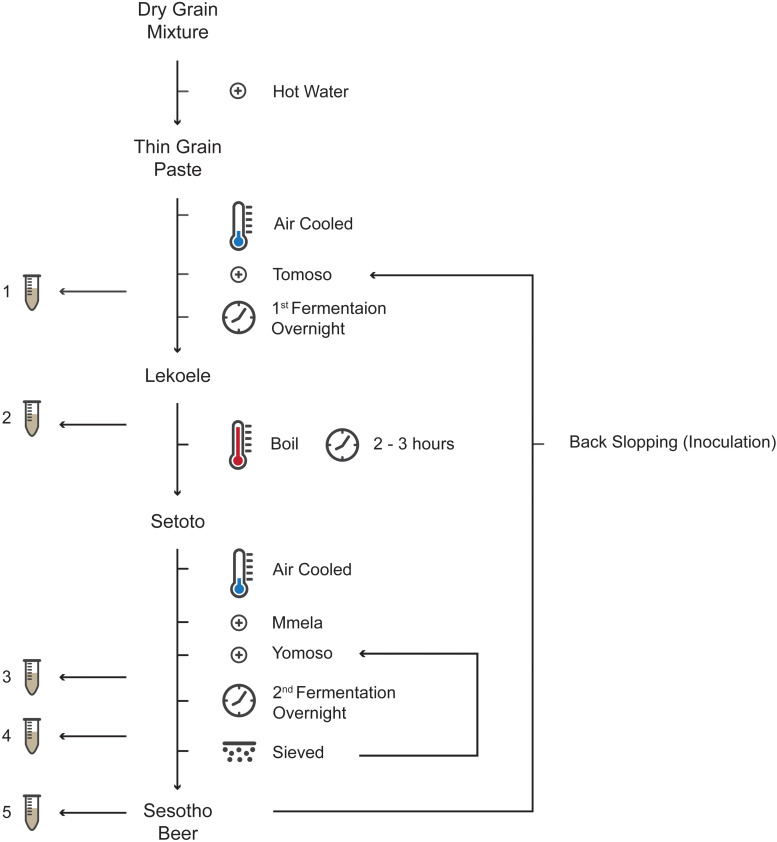
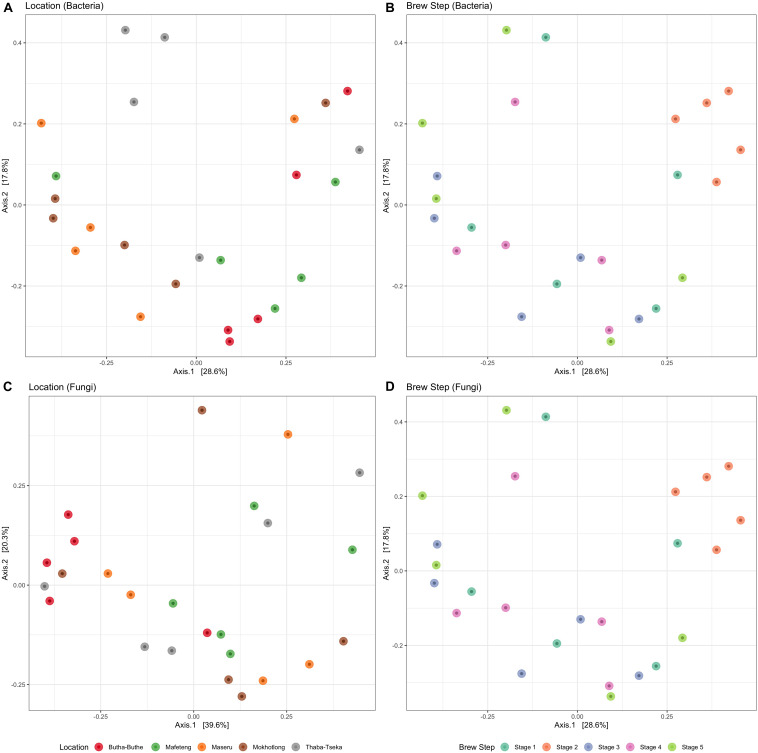
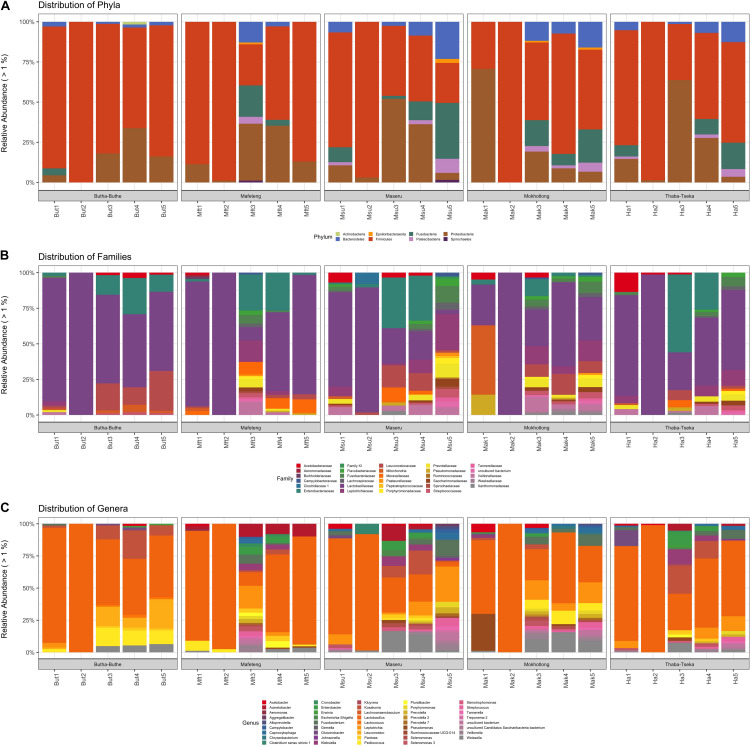
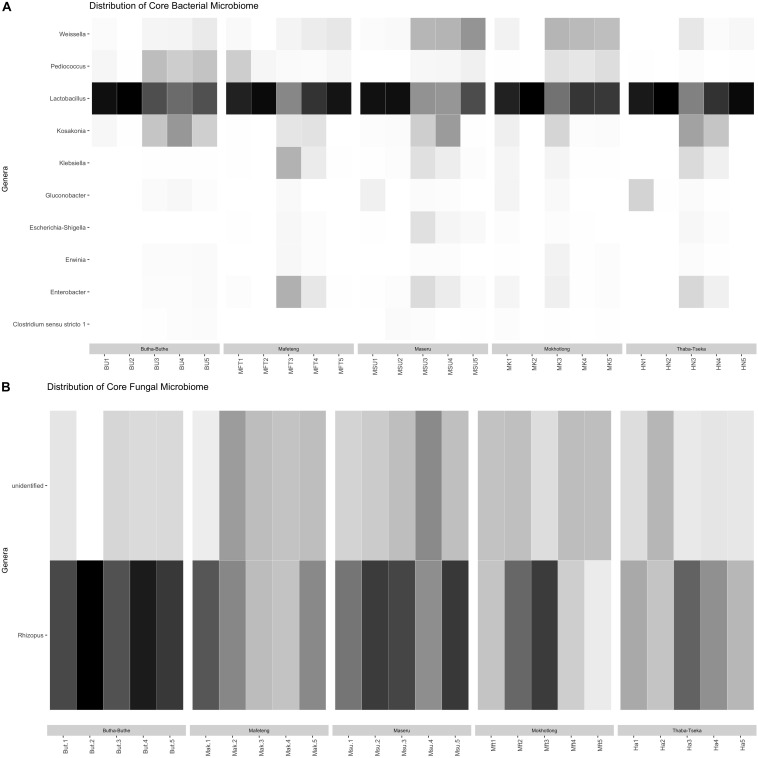
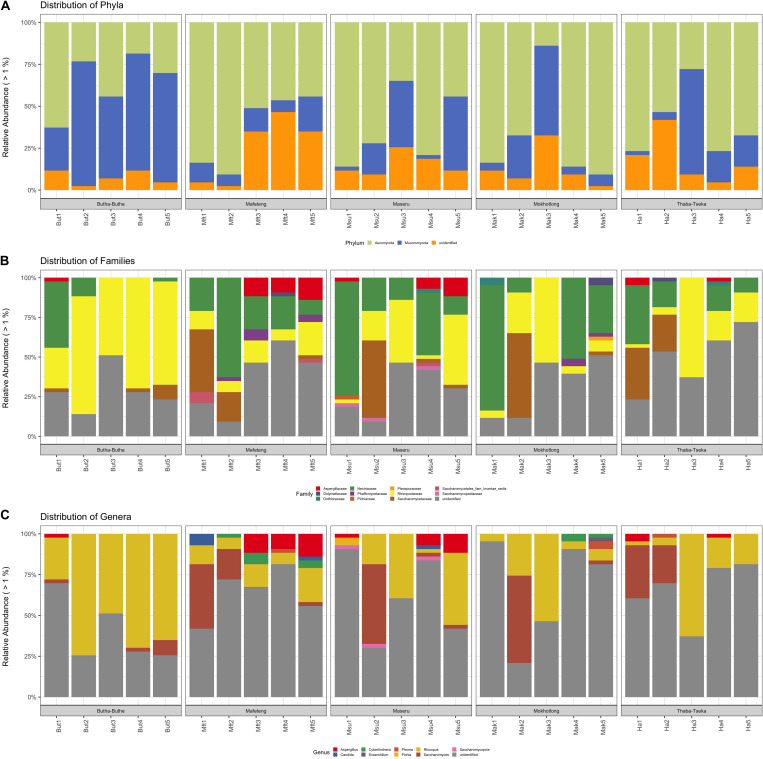
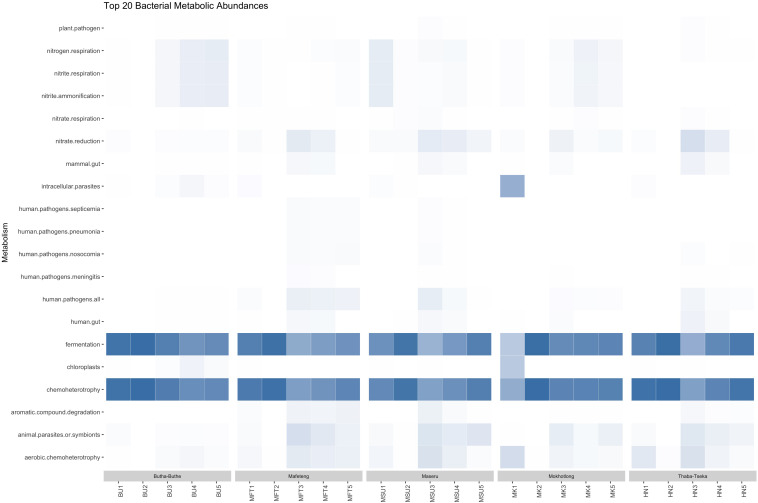
is an indigenous cereal-based fermented drink traditionally produced in the mountain kingdom of Lesotho, Southern Africa. The present study sought to examine the microbial (bacterial and fungal) community composition of at five fermentation stages in five different locations. Using culture-independent (Illumina sequencing) techniques it was found that the bacterial communities followed similar successional patterns during the fermentation processes, regardless of geographical location and recipe variation between breweries. The most abundant bacterial taxa belonged to the phyla Firmicutes (66.2% of the reads on average) and Proteobacteria (22.1%); the families Lactobacillaceae (54.9%), Enterobacteriaceae (14.4%) and Leoconostrocaceae (8.1%); and the genera (54%), (10.7%), (8.5%), and (5.5%). Most fungal taxa were from the phyla Ascomycota (60.7%) and Mucoromycota (25.3%); the families Rhizopodaceae (25.3%), Nectriaceae (24.2%), Saccharomycetaceae (16%) and Aspergillaceae (6.7%); and the genera (25.3%), (9.6%), and (2.5%). Lactic acid bacteria (LAB) such as , , , , and ; as well as yeasts belonging to the genus , were dominant in all breweries during the production of . Several pathogenic and food spoilage microorganisms (e.g., , , , etc.) were also present, but the study demonstrated the safety potential of the fermentation process, as these microbial groups decline throughout production. The functional profiles of the different brewing steps showed that the process is dominated by chemoheterotrophic and fermentative metabolisms. This study reveals, for the first time, the complex microbial dynamics that occur during production.
是一种传统上在非洲南部莱索托山区王国生产的以谷物为原料的本土发酵饮料。本研究旨在考察五个不同地点的五个发酵阶段的微生物(细菌和真菌)群落组成。使用非培养(Illumina测序)技术发现,在发酵过程中,细菌群落遵循相似的演替模式,无论地理位置和酿酒厂之间的配方差异如何。最丰富的细菌类群属于厚壁菌门(平均占读数的66.2%)和变形菌门(22.1%);乳杆菌科(54.9%)、肠杆菌科(14.4%)和明串珠菌科(8.1%);以及属(54%)、属(10.7%)、属(8.5%)和属(5.5%)。大多数真菌类群来自子囊菌门(60.7%)和毛霉门(25.3%);根足菌科(25.3%)、丛赤壳科(24.2%)、酵母科(16%)和曲霉科(6.7%);以及属(25.3%)、属(9.6%)和属(2.5%)。乳酸菌(LAB)如、、、、和;以及属的酵母在所有酿酒厂生产期间均占主导地位。还存在几种致病和食品腐败微生物(如、、等),但该研究证明了发酵过程的安全潜力,因为这些微生物群落在生产过程中会减少。不同酿造步骤的功能概况表明,该过程以化学异养和发酵代谢为主。本研究首次揭示了生产过程中发生的复杂微生物动态。