Sillapachaiyaporn Chanin, Chuchawankul Siriporn
Program in Clinical Biochemistry and Molecular Medicine, Department of Clinical Chemistry, Faculty of Allied Health Sciences, Chulalongkorn University, Bangkok 10330, Thailand.
Department of Transfusion Medicine and Clinical Microbiology, Faculty of Allied Health Sciences, Chulalongkorn University, Bangkok 10330, Thailand.
J Tradit Complement Med. 2019 Aug 1;10(4):396-404. doi: 10.1016/j.jtcme.2019.08.002. eCollection 2020 Jul.
(LR) is an edible mushroom with a variety of medicinal properties such as neurostimulation, immunomodulation, anti-inflammation, anti-oxidation, anti-proliferation, anti-diabetes and especially antiviral activity. Human immunodeficiency virus type-1 (HIV-1) needs the HIV-1 protease (PR) and reverse transcriptase (RT) for its replication. Therefore, both HIV-1 PR and RT are important targets for antiretroviral drug development.
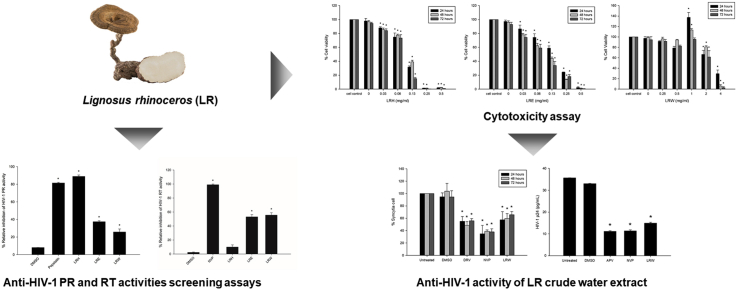
The crude hexane (LRH), ethanol (LRE) and water (LRW) extracts of LR were screened for inhibitory activity against HIV-1 PR and RT, then anti-HIV-1 activity on the infected MOLT-4 cells were determined. Chemical constituents of the extracts were identified by gas chromatography-mass spectrometry (GC-MS) and liquid chromatography (LC)-MS. The identified compounds were analysed for drug-likeness property and molecular modelling.
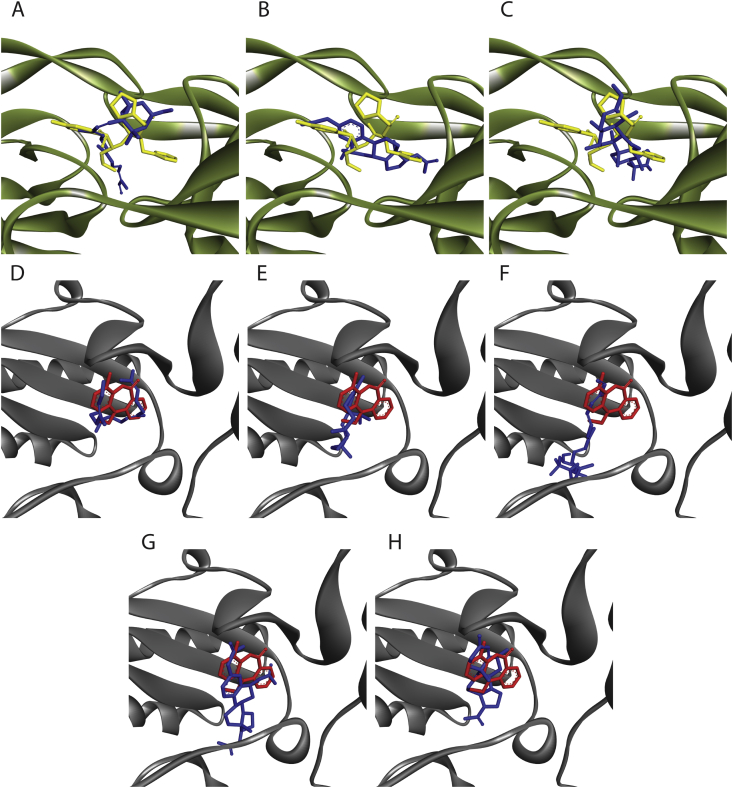
According to our screening assays, LRE and LRW significantly inhibited both enzymes (25-55%), while LRH suppressed only the HIV-1 PR activity (88.97%). At 0.5 mg/ml of LRW showed significant inhibition of HIV-1 induced syncytial formation and p24 production in the infected MOLT-4 cells. Investigation of chemical analysis revealed that major groups of identified constituents found in the extracts were fatty acids, peptides and terpenoids. analysis showed that heliantriol F and 6 alpha-fluoroprogesterone displayed great binding energies with HIV-1 PR and HIV-1 RT, respectively. These findings suggest that LR could be a potential source of compounds to inhibit HIV-1 PR and/or RT activities . Furthermore, our results provide beneficial data for the development of novel HIV-1 PR and RT inhibitors.
香菇是一种具有多种药用特性的食用菌,如神经刺激、免疫调节、抗炎、抗氧化、抗增殖、抗糖尿病,尤其是抗病毒活性。1型人类免疫缺陷病毒(HIV-1)的复制需要HIV-1蛋白酶(PR)和逆转录酶(RT)。因此,HIV-1 PR和RT都是抗逆转录病毒药物开发的重要靶点。
对香菇的粗己烷提取物(LRH)、乙醇提取物(LRE)和水提取物(LRW)进行HIV-1 PR和RT抑制活性筛选,然后测定其对感染的MOLT-4细胞的抗HIV-1活性。通过气相色谱-质谱联用(GC-MS)和液相色谱(LC)-MS鉴定提取物的化学成分。对鉴定出的化合物进行类药性分析和分子模拟。
根据我们的筛选试验,LRE和LRW对两种酶均有显著抑制作用(25%-55%),而LRH仅抑制HIV-1 PR活性(88.97%)。在0.5mg/ml时,LRW对感染的MOLT-4细胞中HIV-1诱导的合胞体形成和p24产生有显著抑制作用。化学分析研究表明,提取物中鉴定出的主要成分是脂肪酸、肽和萜类化合物。分析表明,半日花三醇F和6α-氟孕酮分别与HIV-1 PR和HIV-1 RT具有很强的结合能。这些发现表明,香菇可能是抑制HIV-1 PR和/或RT活性的潜在化合物来源。此外,我们的结果为新型HIV-1 PR和RT抑制剂的开发提供了有益的数据。