Center for Translational Research on Autoimmune & Allergic Diseases-CAAD, 28100, Novara, Italy.
Tissuegraft srl, 28100, Novara, Italy.
J Mater Sci Mater Med. 2020 Jul 21;31(8):64. doi: 10.1007/s10856-020-06401-w.
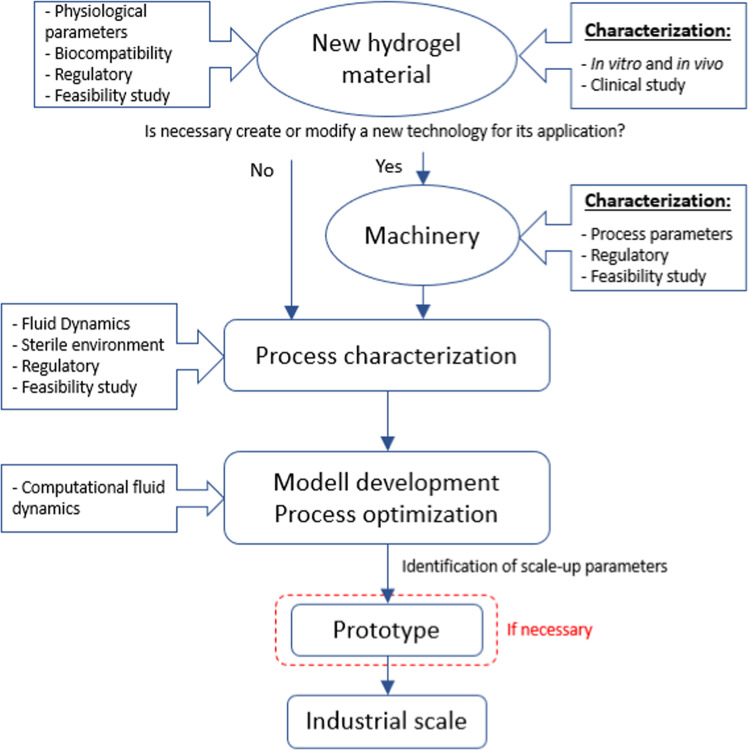
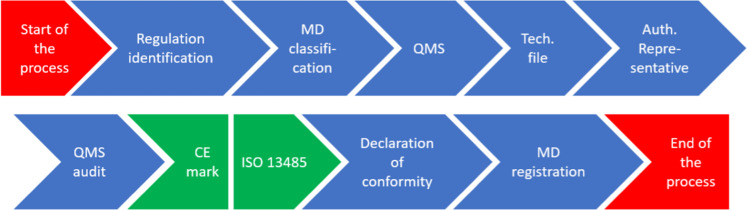
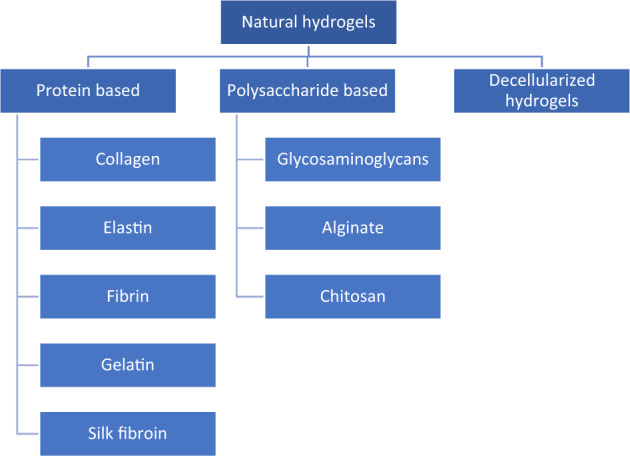
Since hydrogel therapies have been introduced into clinic treatment procedures, the biomedical industry has to face the technology transfer and the scale-up of the processes. This will be key in the roadmap of the new technology implementation. Transfer technology and scale-up are already known for some applications but other applications, such as 3D printing, are still challenging. Decellularized tissues offer a lot of advantages when compared to other natural gels, for example they display enhanced biological properties, due to their ability to preserve natural molecules. For this reason, even though their use as a source for bioinks represents a challenge for the scale-up process, it is very important to consider the advantages that originate with overcoming this challenge. Therefore, many aspects that influence the scaling of the industrial process should be considered, like the addition of drugs or cells to the hydrogel, also, the gelling process is important to determine the chemical and physical parameters that must be controlled in order to guarantee a successful process. Legal aspects are also crucial when carrying out the scale-up of the process since they determine the industrial implementation success from the regulatory point of view. In this context, the new law Regulation (EU) 2017/745 on biomedical devices will be considered. This review summarizes the different aspects, including the legal ones, that should be considered when scaling up hydrogels of natural origin, in order to balance these different aspects and to optimize the costs in terms of raw materials and engine.
自从水凝胶疗法被引入临床治疗程序以来,生物医学行业必须面对技术转让和工艺放大的问题。这将是新技术实施路线图中的关键。一些应用已经知道转移技术和放大,但其他应用,如 3D 打印,仍然具有挑战性。与其他天然凝胶相比,脱细胞组织具有很多优势,例如由于能够保留天然分子,因此显示出增强的生物学特性。出于这个原因,即使它们作为生物墨水的来源在放大过程中代表了挑战,但考虑克服这一挑战所带来的优势非常重要。因此,许多影响工业过程放大的方面都应该被考虑,例如向水凝胶中添加药物或细胞,此外,凝胶化过程对于确定必须控制的化学和物理参数以保证成功的过程也很重要。在进行放大过程时,法律方面也至关重要,因为它们从监管角度决定了工业实施的成功。在这种情况下,将考虑新的法规 (EU) 2017/745 关于生物医学设备。这篇综述总结了不同方面,包括法律方面,在放大天然来源的水凝胶时应考虑这些方面,以平衡这些不同方面并优化原材料和引擎的成本。