Mind, Brain Imaging and Neuroethics Unit, Institute of Mental Health Research, University of Ottawa, Ottawa, Ontario, Canada.
Department of Psychology, Programme Group Psychological Methods, University of Amsterdam, Amsterdam, The Netherlands.
Hum Brain Mapp. 2020 Oct 15;41(15):4355-4374. doi: 10.1002/hbm.25129. Epub 2020 Jul 22.
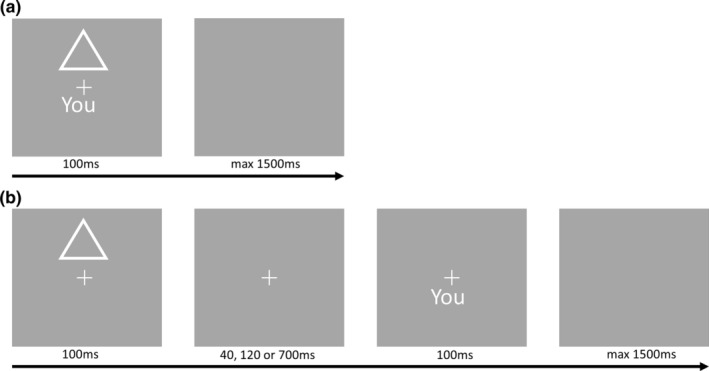
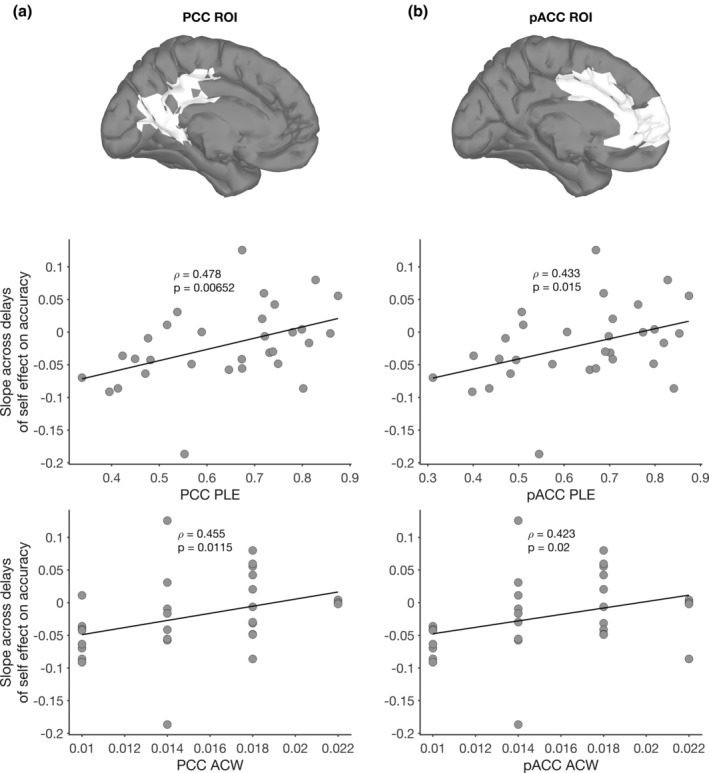
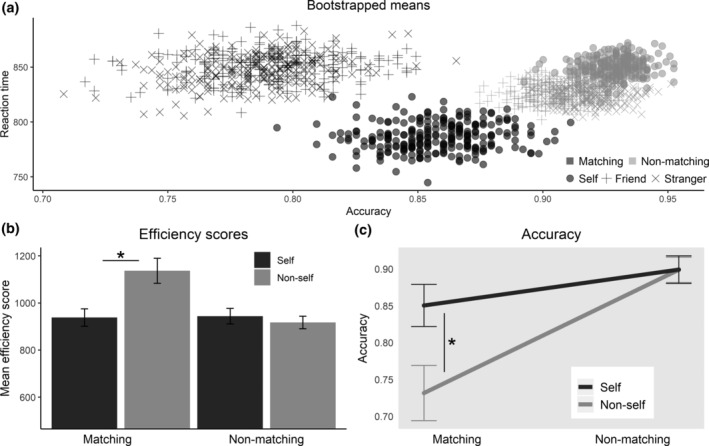
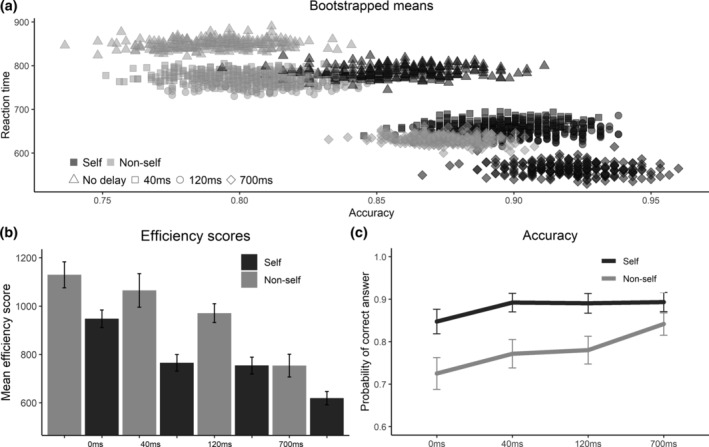
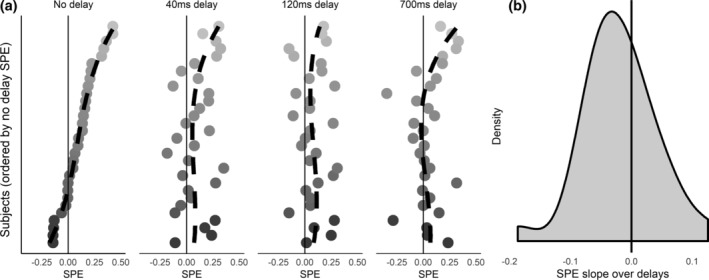
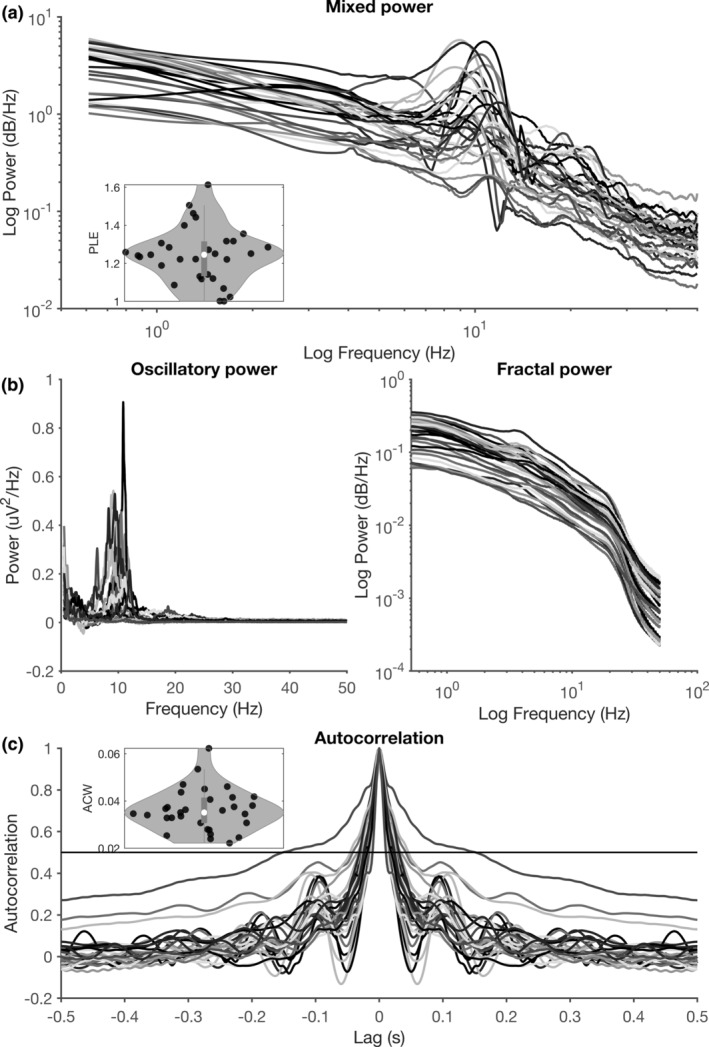
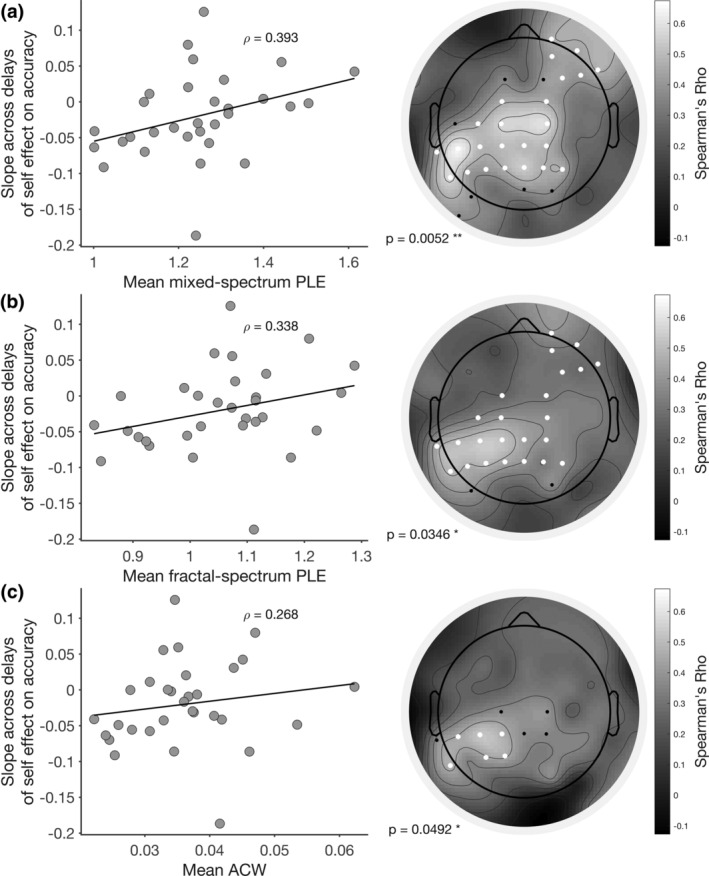
The self is a multifaceted phenomenon that integrates information and experience across multiple time scales. How temporal integration on the psychological level of the self is related to temporal integration on the neuronal level remains unclear. To investigate temporal integration on the psychological level, we modified a well-established self-matching paradigm by inserting temporal delays. On the neuronal level, we indexed temporal integration in resting-state EEG by two related measures of scale-free dynamics, the power law exponent and autocorrelation window. We hypothesized that the previously established self-prioritization effect, measured as decreased response times or increased accuracy for self-related stimuli, would change with the insertion of different temporal delays between the paired stimuli, and that these changes would be related to temporal integration on the neuronal level. We found a significant self-prioritization effect on accuracy in all conditions with delays, indicating stronger temporal integration of self-related stimuli. Further, we observed a relationship between temporal integration on psychological and neuronal levels: higher degrees of neuronal integration, that is, higher power-law exponent and longer autocorrelation window, during resting-state EEG were related to a stronger increase in the self-prioritization effect across longer temporal delays. We conclude that temporal integration on the neuronal level serves as a template for temporal integration of the self on the psychological level. Temporal integration can thus be conceived as the "common currency" of neuronal and psychological levels of self.
自我是一种多方面的现象,它整合了多个时间尺度上的信息和经验。心理层面上的自我的时间整合与神经元层面上的时间整合如何相关尚不清楚。为了研究心理层面上的时间整合,我们通过插入时间延迟来修改一个成熟的自我匹配范式。在神经元层面上,我们通过两个与无标度动力学相关的度量来索引静息状态 EEG 中的时间整合,即幂律指数和自相关窗口。我们假设,以前建立的自我优先效应,即自我相关刺激的反应时间减少或准确性提高,将随着配对刺激之间不同时间延迟的插入而改变,并且这些变化将与神经元层面上的时间整合有关。我们发现,在所有有延迟的条件下,准确性都有显著的自我优先效应,这表明自我相关刺激的时间整合更强。此外,我们观察到心理和神经元层面上的时间整合之间存在关系:静息状态 EEG 中更高程度的神经元整合,即更高的幂律指数和更长的自相关窗口,与更长时间延迟下自我优先效应的更强增加有关。我们的结论是,神经元层面上的时间整合是心理层面上自我时间整合的模板。因此,时间整合可以被视为自我的神经元和心理层面的“共同货币”。