Department of Cell and Molecular Biology, Karolinska Institute, SE-171 77 Stockholm, Sweden.
Lund Stem Cell Center, University Hospital, SE-221 84 Lund, Sweden.
Cells. 2020 Jul 20;9(7):1732. doi: 10.3390/cells9071732.
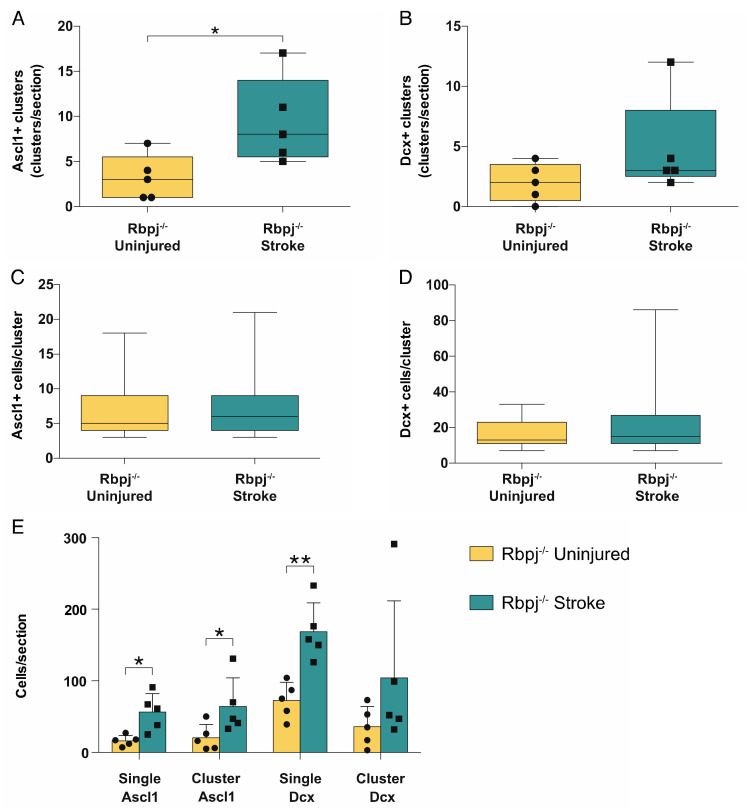
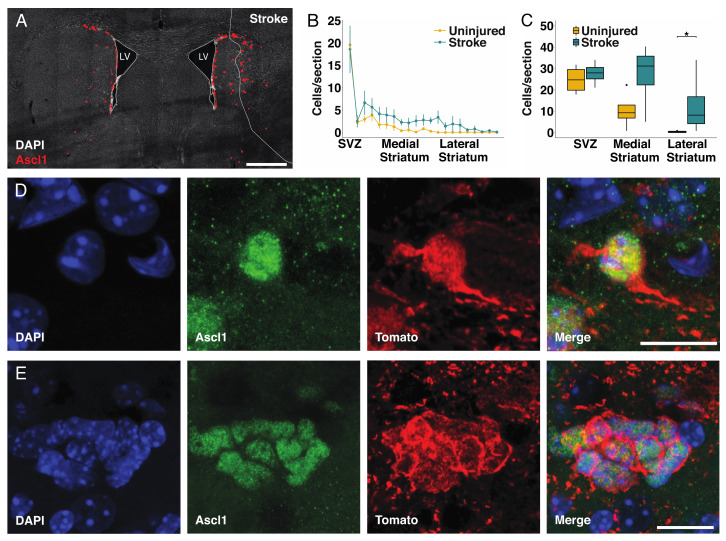
Stroke triggers neurogenesis in the striatum in mice, with new neurons deriving in part from the nearby subventricular zone and in part from parenchymal astrocytes. The initiation of neurogenesis by astrocytes within the striatum is triggered by reduced Notch-signaling, and blocking this signaling pathway by deletion of the gene encoding the obligate Notch coactivator Rbpj is sufficient to activate neurogenesis by striatal astrocytes in the absence of an injury. Here we report that blocking Notch-signaling in stroke increases the neurogenic response to stroke 3.5-fold in mice. Deletion of Rbpj results in the recruitment of a larger number of parenchymal astrocytes to neurogenesis and over larger areas of the striatum. These data suggest inhibition of Notch-signaling as a potential translational strategy to promote neuronal regeneration after stroke.
中风会在老鼠的纹状体中引发神经发生,新的神经元部分来源于附近的侧脑室下区,部分来源于实质星形胶质细胞。星形胶质细胞在纹状体中引发神经发生是由 Notch 信号转导减少触发的,通过删除编码必需的 Notch 共激活因子 Rbpj 的基因阻断该信号通路足以在没有损伤的情况下激活纹状体星形胶质细胞的神经发生。在这里,我们报告在中风中阻断 Notch 信号会使中风后的神经发生反应增加 3.5 倍。Rbpj 的缺失导致更多的实质星形胶质细胞被招募到神经发生中,并在纹状体的更大区域内。这些数据表明,抑制 Notch 信号转导可能是一种促进中风后神经元再生的转化策略。