Department of Plant and Soil Sciences, Oklahoma State University, 371 Agricultural Hall, Stillwater, OK, 74078, USA.
USDA-ARS, Grazinglands Research Laboratory, 7207 W. Cheyenne St., El Reno, OK, 73036, USA.
Sci Rep. 2020 Jul 22;10(1):12233. doi: 10.1038/s41598-020-69209-2.
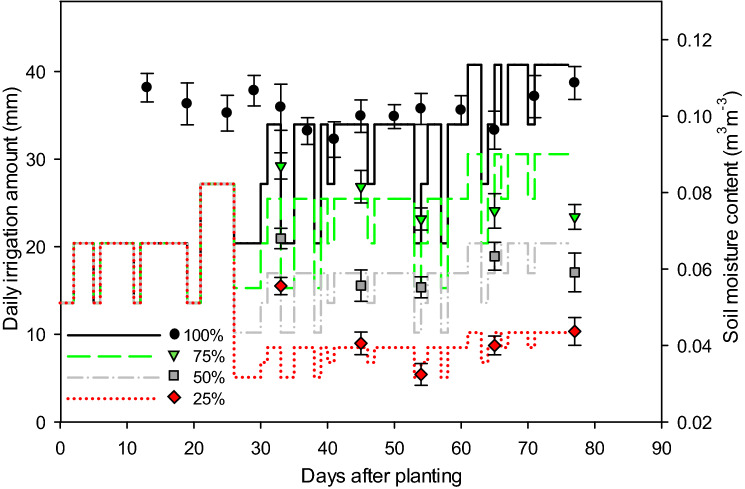
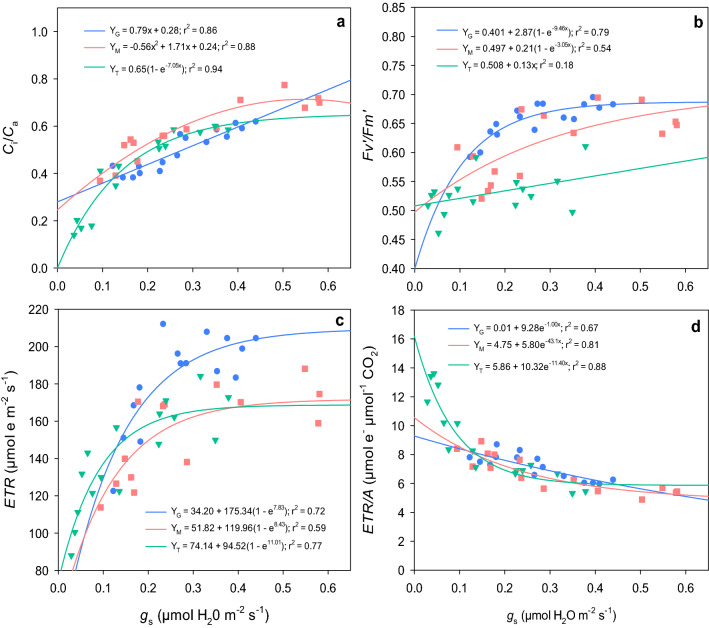
Novel drought-tolerant grain legumes like mothbean (Vigna acontifolia), tepary bean (Phaseolus acutifolius), and guar (Cyamopsis tetragonoloba) may also serve as summer forages, and add resilience to agricultural systems in the Southern Great Plains (SGP). However, limited information on the comparative response of these species to different water regimes prevents identification of the most reliable option. This study was conducted to compare mothbean, tepary bean and guar for their vegetative growth and physiological responses to four different water regimes: 100% (control), and 75%, 50% and 25% of control, applied from 27 to 77 days after planting (DAP). Tepary bean showed the lowest stomatal conductance (g) and photosynthetic rate (A), but also maintained the highest instantaneous water use efficiency (WUE) among species at 0.06 and 0.042 m m soil moisture levels. Despite maintaining higher A, rates of vegetative growth by guar and mothbean were lower than tepary bean due to their limited leaf sink activity. At final harvest (77 DAP), biomass yield of tepary bean was 38-60% and 41-56% greater than guar and mothbean, respectively, across water deficits. Tepary bean was the most drought-tolerant legume under greenhouse conditions, and hence future research should focus on evaluating this species in extensive production settings.
新型抗旱豆类作物,如兵豆(Vigna aconitifolia)、利马豆(Phaseolus acutifolius)和胍(Cyamopsis tetragonoloba),也可用作夏季饲料,并为大平原南部(SGP)的农业系统增加弹性。然而,关于这些物种对不同水分条件的相对反应的信息有限,无法确定最可靠的选择。本研究旨在比较兵豆、利马豆和胍在不同水分条件下的营养生长和生理反应,水分条件分别为:100%(对照)和 75%、50%和 25%,从种植后 27 至 77 天(DAP)开始施加水分。利马豆的气孔导度(g)和光合速率(A)最低,但在 0.06 和 0.042 m m 土壤水分水平下,瞬时水分利用效率(WUE)最高。尽管胍和兵豆的 A 较高,但由于叶片库容量有限,其营养生长速度仍低于利马豆。在最终收获(77 DAP)时,利马豆的生物量产量比胍和兵豆分别高出 38-60%和 41-56%,这是由于水分亏缺造成的。在温室条件下,利马豆是最耐旱的豆科植物,因此未来的研究应集中在评估该物种在广泛的生产环境中的表现。