Hernández José Luis, Lozano Francisco S, Riambau Vincent, Almendro-Delia Manuel, Cosín-Sales Juan, Bellmunt-Montoya Sergi, Garcia-Alegria Javier, Garcia-Moll Xavier, Gomez-Doblas Juan José, Gonzalez-Juanatey José R, Suarez Fernández Carmen
Internal Medicine Department, Hospital Marqués de Valdecilla-IDIVAL, Universidad de Cantabria, Santander, Spain.
Department of Vascular Surgery, Hospital Clínico de Salamanca, Salamanca, Spain.
Drugs Context. 2020 Jul 6;9. doi: 10.7573/dic.2020-5-5. eCollection 2020.
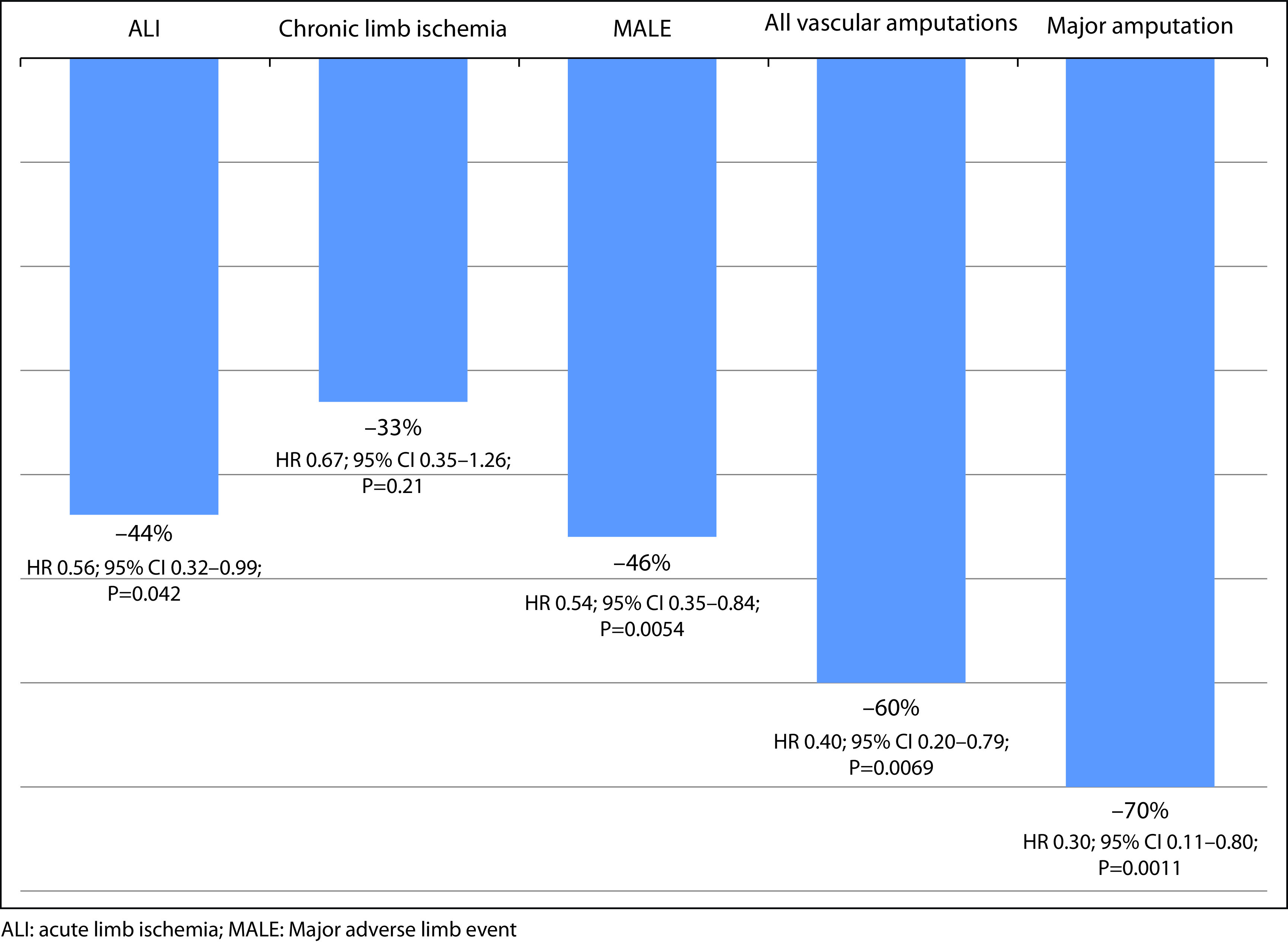
Patients with peripheral artery disease (PAD) are at a high risk not only for the classical cardiovascular (CV) outcomes (major adverse cardiovascular events; MACE) but also for vascular limb events (major adverse limb events; MALE). Therefore, a comprehensive approach for these patients should include both goals. However, the traditional antithrombotic approach with only antiplatelet agents (single or dual antiplatelet therapy) does not sufficiently reduce the risk of recurrent thrombotic events. Importantly, the underlying cause of atherosclerosis in patients with PAD implies both platelet activation and the initiation and promotion of coagulation cascade, in which Factor Xa plays a key role. Therefore, to reduce residual vascular risk, it is necessary to address both targets. In the Cardiovascular Outcomes for People Using Anticoagulation Strategies (COMPASS) trial that included patients with stable atherosclerotic vascular disease, the rivaroxaban plus aspirin strategy ( aspirin) markedly reduced the risk of both CV and limb outcomes, and related complications, with a good safety profile. In fact, the net clinical benefit outcome composed of MACE; MALE, including major amputation, and fatal or critical organ bleeding was significantly reduced by 28% with the COMPASS strategy, (hazard ratio: 0.72; 95% confidence interval: 0.59-0.87). Therefore, the rivaroxaban plus aspirin approach provides comprehensive protection and should be considered for most patients with PAD at high risk of such events.
外周动脉疾病(PAD)患者不仅面临经典心血管(CV)结局(主要不良心血管事件;MACE)的高风险,还面临肢体血管事件(主要不良肢体事件;MALE)的高风险。因此,针对这些患者的综合治疗方法应兼顾这两个目标。然而,仅使用抗血小板药物的传统抗栓方法(单药或双联抗血小板治疗)并不能充分降低复发性血栓事件的风险。重要的是,PAD患者动脉粥样硬化的潜在病因意味着血小板活化以及凝血级联反应的启动和促进,其中因子Xa起关键作用。因此,为降低残余血管风险,有必要兼顾这两个靶点。在纳入稳定型动脉粥样硬化性血管疾病患者的心血管抗凝策略结局研究(COMPASS)试验中,利伐沙班联合阿司匹林策略(阿司匹林)显著降低了CV和肢体结局以及相关并发症的风险,且安全性良好。事实上,COMPASS策略使由MACE、MALE(包括大截肢)以及致命或严重器官出血组成的净临床获益结局显著降低了28%(风险比:0.72;95%置信区间:0.59 - 0.87)。因此,利伐沙班联合阿司匹林治疗方法提供了全面保护,对于大多数有此类事件高风险的PAD患者应予以考虑。