Department of Biology, High Point University, High Point, NC 27268, USA.
Genes (Basel). 2020 Jul 22;11(8):835. doi: 10.3390/genes11080835.
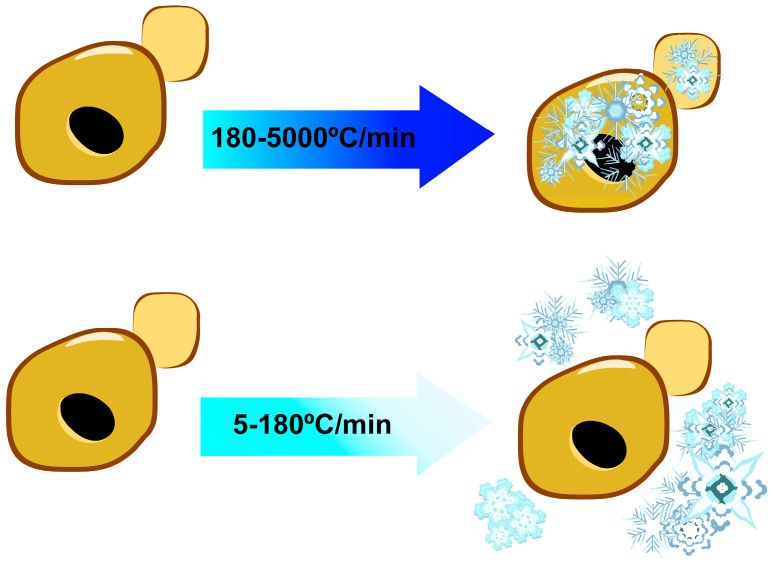
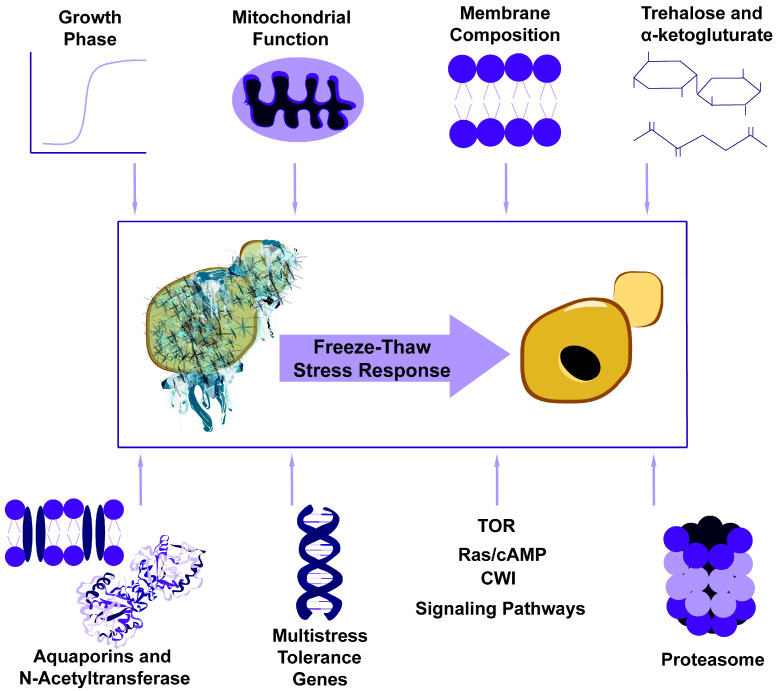
The ability of yeast to survive freezing and thawing is most frequently considered in the context of cryopreservation, a practical step in both industrial and research applications of these organisms. However, it also relates to an evolved ability to withstand freeze-thaw stress that is integrated with a larger network of survival responses. These responses vary between different strains and species of yeast according to the environments to which they are adapted, and the basis of this adaptation appears to be both conditioned and genetic in origin. This review article briefly touches upon common yeast cryopreservation methods and describes in detail what is known about the biochemical and genetic determinants of cell viability following freeze-thaw stress. While we focus on the budding yeast , in which the freeze-thaw stress response is best understood, we also highlight the emerging diversity of yeast freeze-thaw responses as a manifestation of biodiversity among these organisms.
酵母的抗冻和解冻能力在冷冻保存中经常被考虑,这是这些生物在工业和研究应用中的一个实际步骤。然而,它也与一种进化而来的能力有关,即能够承受冻融胁迫,这种能力与更大的生存反应网络相整合。这些反应因适应的环境而异,存在于不同的酵母菌株和物种之间,这种适应的基础似乎既有条件的,也有遗传的起源。这篇综述文章简要地提到了常见的酵母冷冻保存方法,并详细描述了在经历冻融胁迫后,细胞活力的生化和遗传决定因素。虽然我们专注于冻融应激反应理解得最好的出芽酵母,但我们也强调了酵母冻融应激反应的多样性,这是这些生物之间生物多样性的表现。