Krafsur Alyssa M, Ghosh Arnab, Brelsfoard Corey L
Department of Biological Sciences, Texas Tech University, 2901 Main St., Lubbock, TX 79409, USA.
Microorganisms. 2020 Jul 16;8(7):1060. doi: 10.3390/microorganisms8071060.
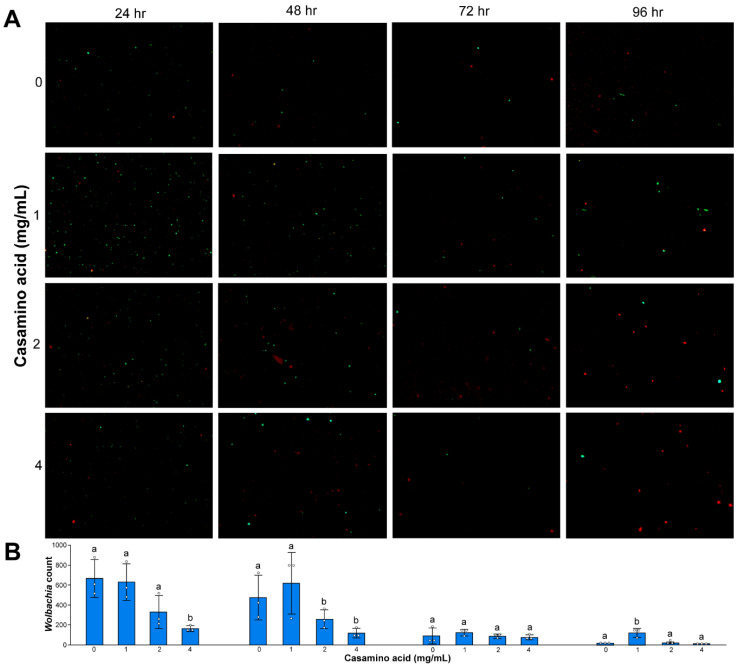
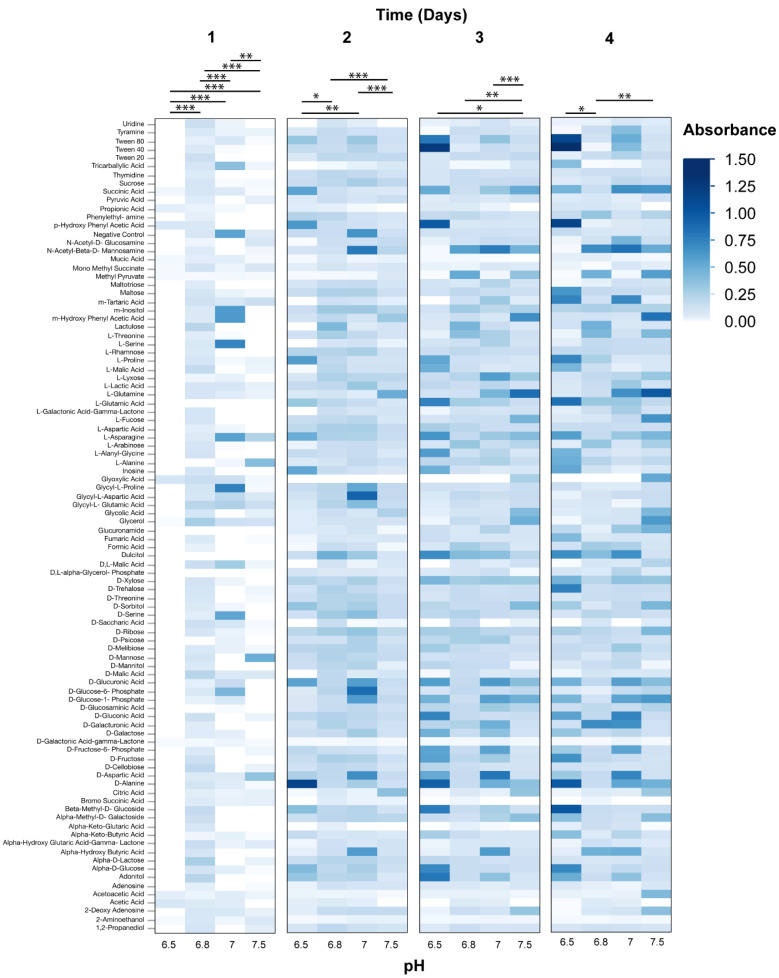
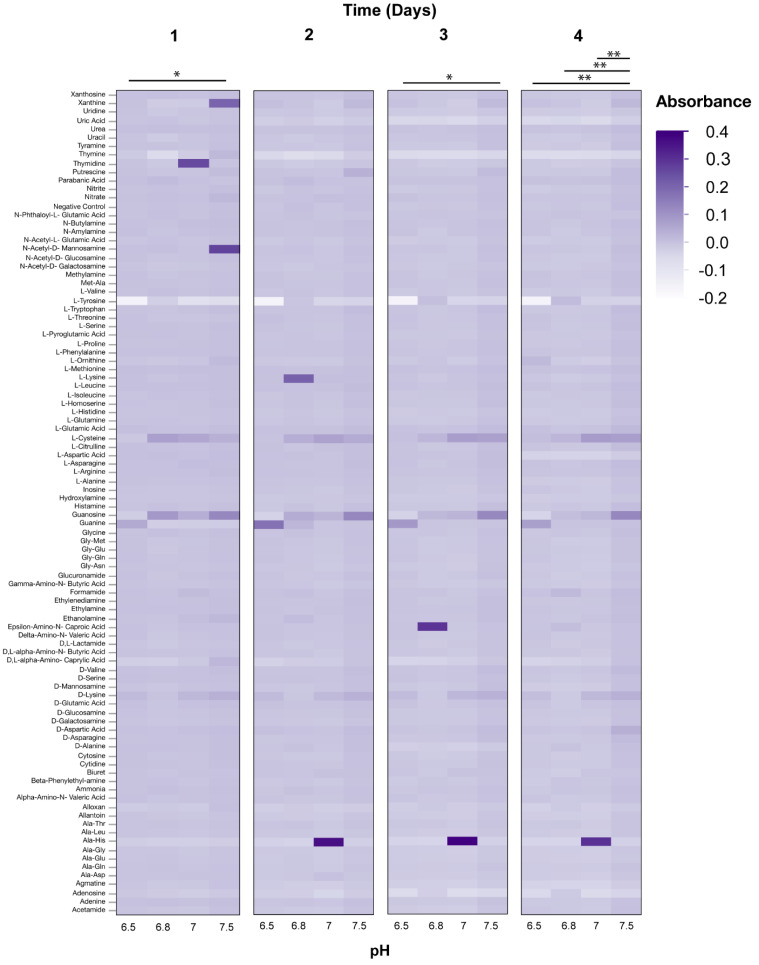
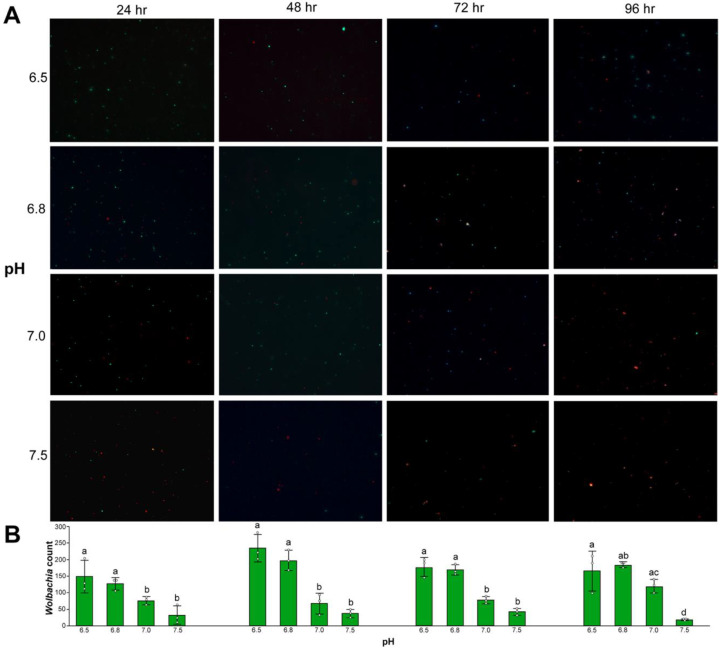
, an obligate intracellular bacterium estimated to infect millions of arthropod species worldwide, is currently being utilized in novel control strategies to limit the transmission of Dengue and Zika viruses. A limitation for -based control approaches is the difficulty of transferring to novel hosts and the lack of tools for the genetic transformation of due to the inability to culture outside the insect host cell in an axenic media. Here, we applied extracellular to phenotypic microarrays to measure the metabolic response of in media formulations with different pH levels and supplementation with Casamino acids. Results suggested a pH of 6.5-6.8 and showed that the supplementation of 1 mg/mL casamino acids increased the survival and longevity of in an axenic medium. In addition, phenotypic microarrays are a useful tool to measure the phenotypic response of under different media conditions, as well as determine specific components that may be required for an axenic medium. This study is an initial step toward the development of a potential axenic culture system.
一种专性细胞内细菌,估计在全球感染数百万种节肢动物物种,目前正被用于新型控制策略以限制登革热病毒和寨卡病毒的传播。基于该细菌的控制方法的一个局限是难以将其转移到新宿主,并且由于无法在无菌培养基中于昆虫宿主细胞外培养该细菌,缺乏用于其基因转化的工具。在此,我们将胞外该细菌应用于表型微阵列,以测量在不同pH水平且添加酪蛋白氨基酸的培养基配方中该细菌的代谢反应。结果表明pH为6.5 - 6.8,并显示添加1mg/mL酪蛋白氨基酸可提高该细菌在无菌培养基中的存活率和寿命。此外,表型微阵列是一种有用的工具,可用于测量该细菌在不同培养基条件下的表型反应,以及确定无菌培养基可能所需的特定成分。本研究是朝着开发潜在的该细菌无菌培养系统迈出的第一步。