Single Molecule Imaging of Genome Duplication and Maintenance Laboratory, The Francis Crick Institute, NW1 1AT, London, UK.
Nat Commun. 2020 Jul 24;11(1):3713. doi: 10.1038/s41467-020-17443-7.
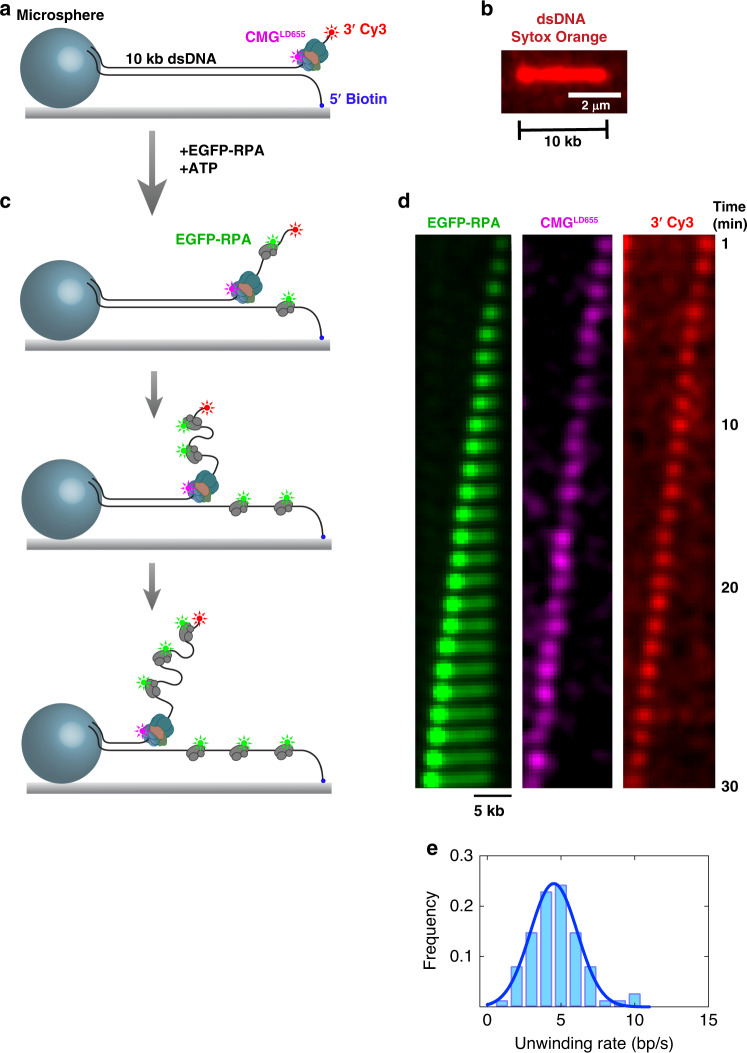
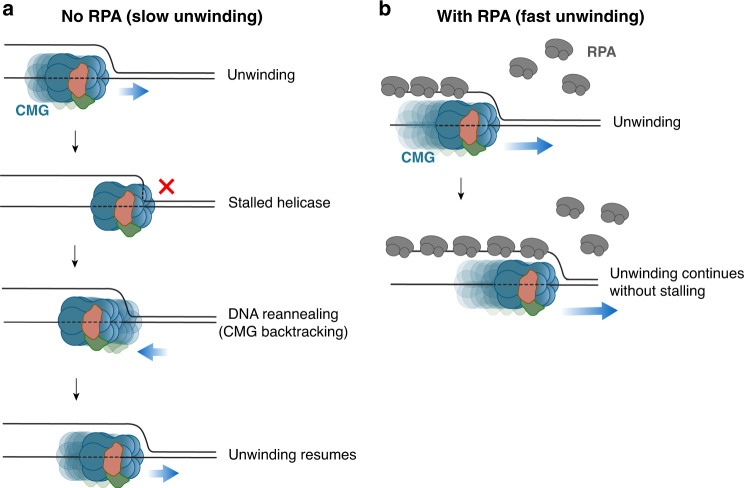
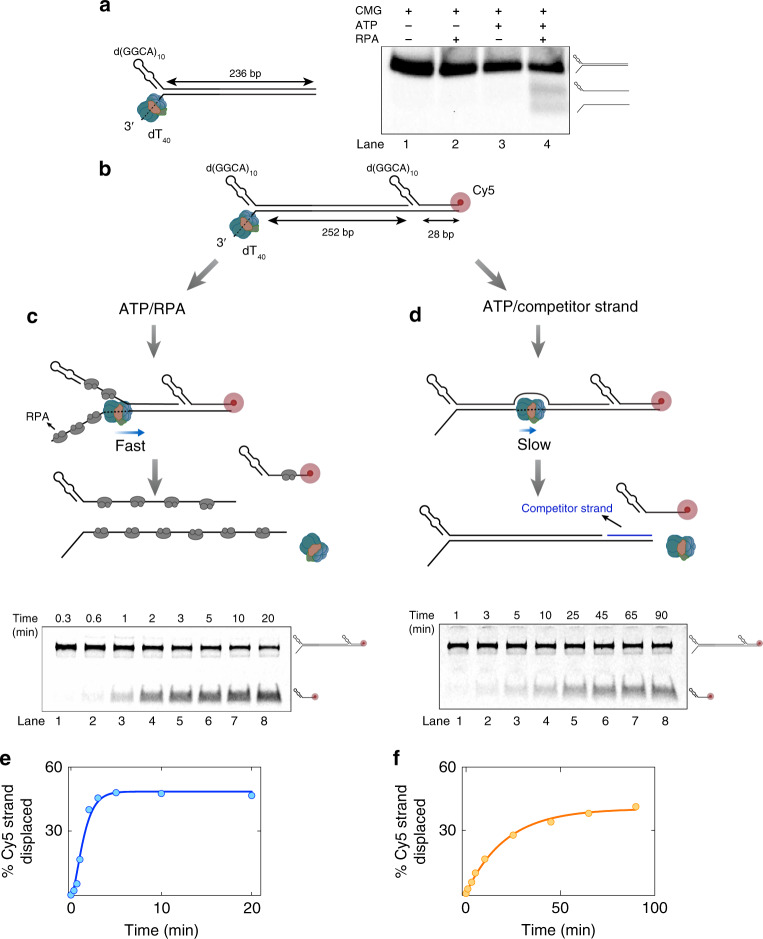
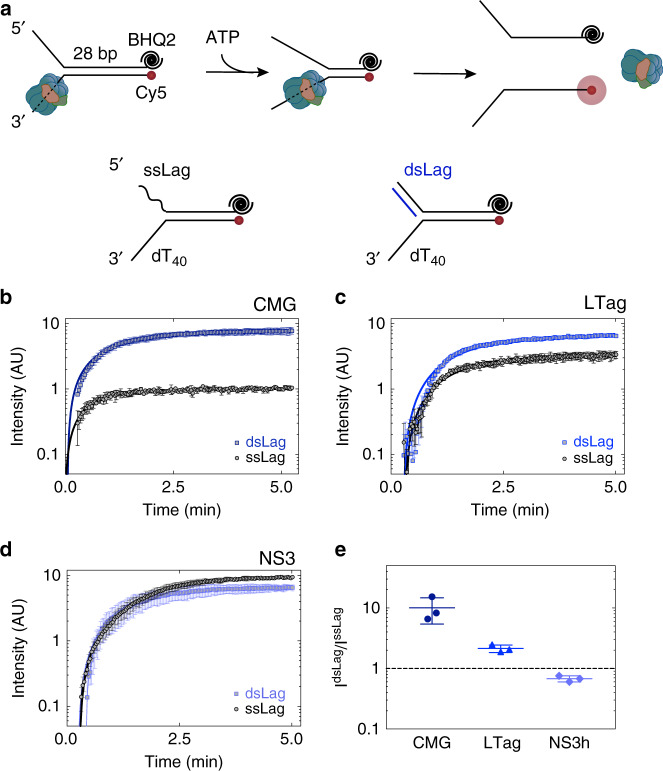
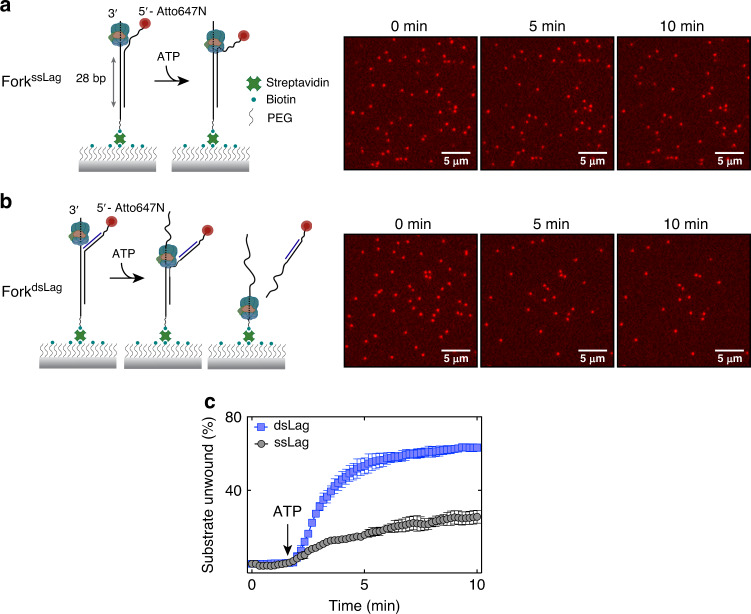
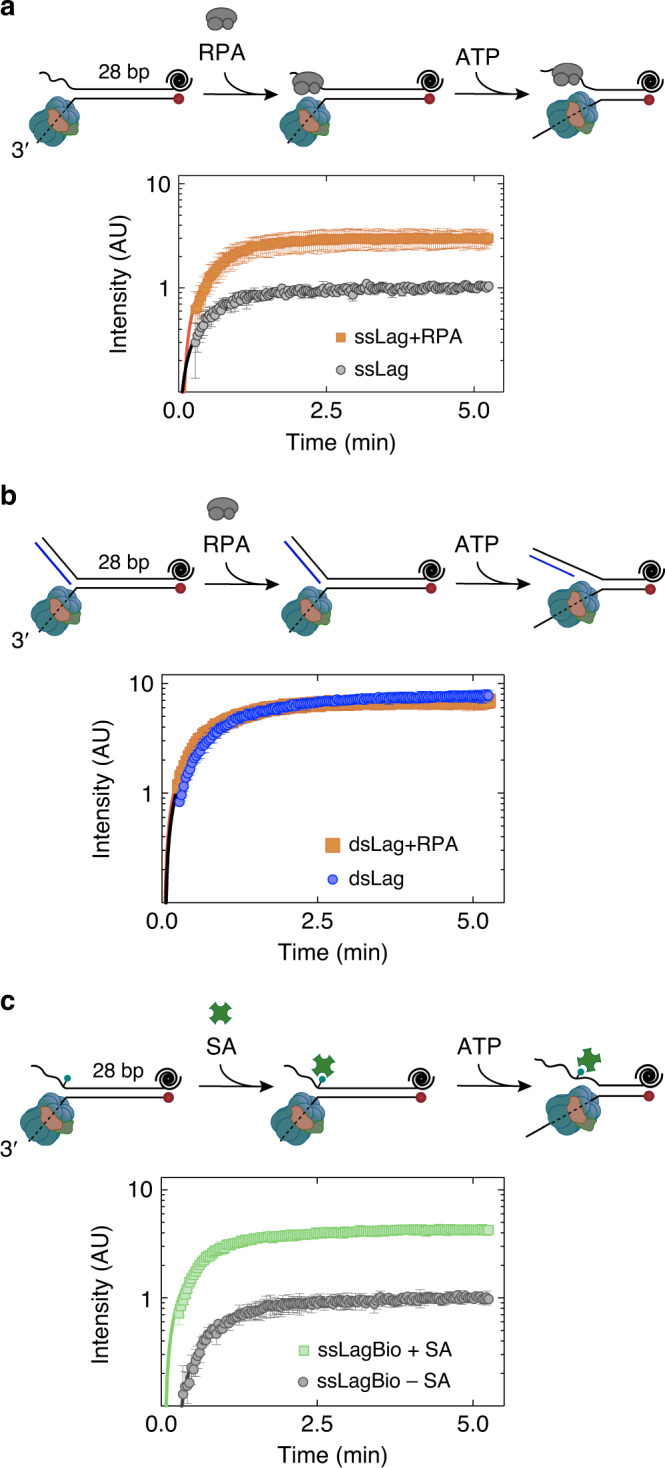
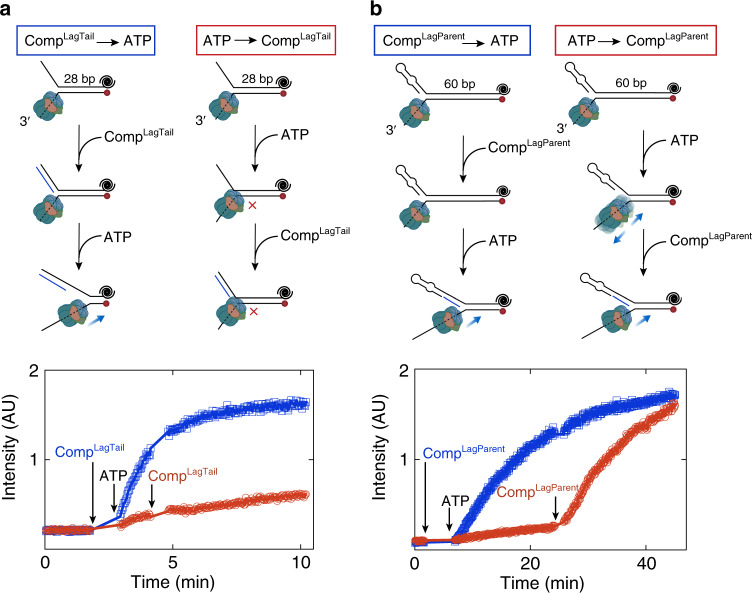
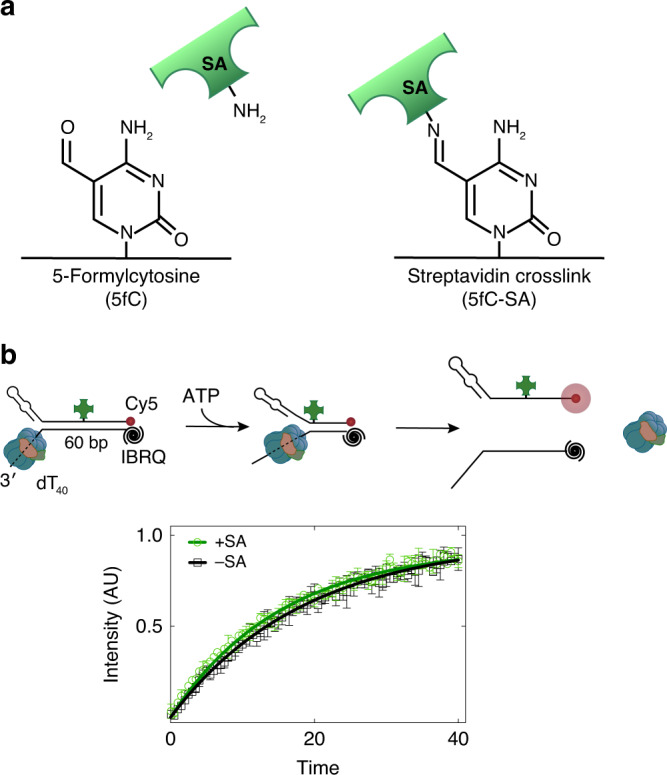
A ring-shaped helicase unwinds DNA during chromosome replication in all organisms. Replicative helicases generally unwind duplex DNA an order of magnitude slower compared to their in vivo replication fork rates. However, the origin of slow DNA unwinding rates by replicative helicases and the mechanism by which other replication components increase helicase speed are unclear. Here, we demonstrate that engagement of the eukaryotic CMG helicase with template DNA at the replication fork impairs its helicase activity, which is alleviated by binding of the single-stranded DNA binding protein, RPA, to the excluded DNA strand. Intriguingly, we found that, when stalled due to interaction with the parental duplex, DNA rezipping-induced helicase backtracking reestablishes productive helicase-fork engagement, underscoring the significance of plasticity in helicase action. Our work provides a mechanistic basis for relatively slow duplex unwinding by replicative helicases and explains how replisome components that interact with the excluded DNA strand stimulate fork rates.
在所有生物体的染色体复制过程中,环状解旋酶会使 DNA 解旋。与体内复制叉速率相比,复制解旋酶通常会使双链 DNA 的解旋速度慢一个数量级。然而,复制解旋酶缓慢解旋 DNA 的起源以及其他复制成分增加解旋酶速度的机制尚不清楚。在这里,我们证明了真核 CMG 解旋酶与复制叉处模板 DNA 的结合会损害其解旋酶活性,而单链 DNA 结合蛋白 RPA 与被排除的 DNA 链结合则可以缓解这种活性的抑制。有趣的是,我们发现,当由于与亲本双链体的相互作用而停滞时,DNA 重新拉链诱导的解旋酶回溯重新建立了有生产力的解旋酶-叉结合,这突显了解旋酶作用的可塑性的重要性。我们的工作为复制解旋酶相对较慢的双链体解旋提供了一种机制基础,并解释了与被排除的 DNA 链相互作用的复制体成分如何刺激叉的速度。