• 文献检索
  • 文档翻译
  • 深度研究
  • 学术资讯
  • Suppr Zotero 插件Zotero 插件
  • 邀请有礼
  • 套餐&价格
  • 历史记录
应用&插件
Suppr Zotero 插件Zotero 插件浏览器插件Mac 客户端Windows 客户端微信小程序
定价
高级版会员购买积分包购买API积分包
服务
文献检索文档翻译深度研究API 文档MCP 服务
关于我们
关于 Suppr公司介绍联系我们用户协议隐私条款
关注我们

Suppr 超能文献

核心技术专利:CN118964589B侵权必究
粤ICP备2023148730 号-1Suppr @ 2026

文献检索

告别复杂PubMed语法,用中文像聊天一样搜索,搜遍4000万医学文献。AI智能推荐,让科研检索更轻松。

立即免费搜索

文件翻译

保留排版,准确专业,支持PDF/Word/PPT等文件格式,支持 12+语言互译。

免费翻译文档

深度研究

AI帮你快速写综述,25分钟生成高质量综述,智能提取关键信息,辅助科研写作。

立即免费体验

用于软辅助下肢外骨骼的气动准被动驱动

Pneumatic Quasi-Passive Actuation for Soft Assistive Lower Limbs Exoskeleton.

作者信息

Di Natali Christian, Sadeghi Ali, Mondini Alessio, Bottenberg Eliza, Hartigan Bernard, De Eyto Adam, O'Sullivan Leonard, Rocon Eduardo, Stadler Konrad, Mazzolai Barbara, Caldwell Darwin G, Ortiz Jesús

机构信息

XoLab, Department of ADVR-IIT Advanced Robotics, Istituto Italiano di Tecnologia, Genoa, Italy.

Department of Biomechanical Engineering, University of Twente, Enschede, Netherlands.

出版信息

Front Neurorobot. 2020 Jun 30;14:31. doi: 10.3389/fnbot.2020.00031. eCollection 2020.

DOI:10.3389/fnbot.2020.00031
PMID:32714175
原文链接:https://pmc.ncbi.nlm.nih.gov/articles/PMC7344163/
Abstract

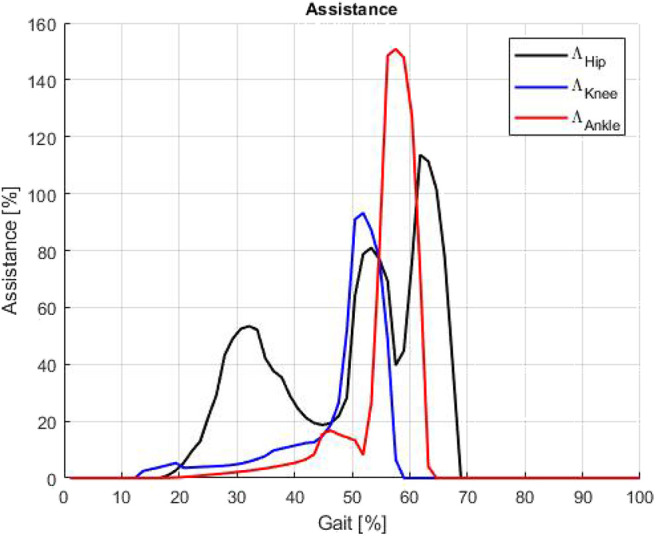
There is a growing international interest in developing soft wearable robotic devices to improve mobility and daily life autonomy as well as for rehabilitation purposes. Usability, comfort and acceptance of such devices will affect their uptakes in mainstream daily life. The XoSoft EU project developed a modular soft lower-limb exoskeleton to assist people with low mobility impairments. This paper presents the bio-inspired design of a soft, modular exoskeleton for lower limb assistance based on pneumatic quasi-passive actuation. The design of a modular reconfigurable prototype and its performance are presented. This actuation centers on an active mechanical element to modulate the assistance generated by a traditional passive component, in this case an elastic belt. This study assesses the feasibility of this type of assistive device by evaluating the energetic outcomes on a healthy subject during a walking task. Human-exoskeleton interaction in relation to task-based biological power assistance and kinematics variations of the gait are evaluated. The resultant assistance, in terms of overall power ratio (Λ) between the exoskeleton and the assisted joint, was 26.6% for hip actuation, 9.3% for the knee and 12.6% for the ankle. The released maximum power supplied on each articulation, was 113.6% for the hip, 93.2% for the knee, and 150.8% for the ankle.

摘要

开发可穿戴软机器人设备以改善行动能力和日常生活自主性以及用于康复目的,在国际上越来越受到关注。此类设备的可用性、舒适性和接受度将影响其在主流日常生活中的应用。XoSoft欧盟项目开发了一种模块化软下肢外骨骼,以帮助行动能力低下的人。本文介绍了一种基于气动准被动驱动的用于下肢辅助的软模块化外骨骼的仿生设计。介绍了模块化可重构原型的设计及其性能。这种驱动以一个主动机械元件为中心,来调节由传统被动部件(在这种情况下是一条弹性带)产生的辅助力。本研究通过评估健康受试者在步行任务期间的能量输出,来评估这种类型辅助设备的可行性。评估了与基于任务的生物动力辅助和步态运动学变化相关的人机外骨骼相互作用。就外骨骼与被辅助关节之间的总功率比(Λ)而言,髋关节驱动的合力为26.6%,膝关节为9.3%,踝关节为12.6%。每个关节释放的最大功率,髋关节为113.6%,膝关节为93.2%,踝关节为150.8%。
https://cdn.ncbi.nlm.nih.gov/pmc/blobs/48ce/7344163/5b7996112594/fnbot-14-00031-g0015.jpg
https://cdn.ncbi.nlm.nih.gov/pmc/blobs/48ce/7344163/291abb48119a/fnbot-14-00031-g0001.jpg
https://cdn.ncbi.nlm.nih.gov/pmc/blobs/48ce/7344163/76e29235ded8/fnbot-14-00031-g0002.jpg
https://cdn.ncbi.nlm.nih.gov/pmc/blobs/48ce/7344163/e98c1c0fdfa7/fnbot-14-00031-g0003.jpg
https://cdn.ncbi.nlm.nih.gov/pmc/blobs/48ce/7344163/023038926f7a/fnbot-14-00031-g0004.jpg
https://cdn.ncbi.nlm.nih.gov/pmc/blobs/48ce/7344163/45952a6f012a/fnbot-14-00031-g0005.jpg
https://cdn.ncbi.nlm.nih.gov/pmc/blobs/48ce/7344163/f6dc283da5aa/fnbot-14-00031-g0006.jpg
https://cdn.ncbi.nlm.nih.gov/pmc/blobs/48ce/7344163/7fe8f27fc713/fnbot-14-00031-g0007.jpg
https://cdn.ncbi.nlm.nih.gov/pmc/blobs/48ce/7344163/896030a17f4b/fnbot-14-00031-g0008.jpg
https://cdn.ncbi.nlm.nih.gov/pmc/blobs/48ce/7344163/c654f73991a7/fnbot-14-00031-g0009.jpg
https://cdn.ncbi.nlm.nih.gov/pmc/blobs/48ce/7344163/52bf5e36fd17/fnbot-14-00031-g0010.jpg
https://cdn.ncbi.nlm.nih.gov/pmc/blobs/48ce/7344163/674b9a9e9a33/fnbot-14-00031-g0011.jpg
https://cdn.ncbi.nlm.nih.gov/pmc/blobs/48ce/7344163/0817f60028b5/fnbot-14-00031-g0012.jpg
https://cdn.ncbi.nlm.nih.gov/pmc/blobs/48ce/7344163/325158e44fc8/fnbot-14-00031-g0013.jpg
https://cdn.ncbi.nlm.nih.gov/pmc/blobs/48ce/7344163/7a6867524c6f/fnbot-14-00031-g0014.jpg
https://cdn.ncbi.nlm.nih.gov/pmc/blobs/48ce/7344163/5b7996112594/fnbot-14-00031-g0015.jpg
https://cdn.ncbi.nlm.nih.gov/pmc/blobs/48ce/7344163/291abb48119a/fnbot-14-00031-g0001.jpg
https://cdn.ncbi.nlm.nih.gov/pmc/blobs/48ce/7344163/76e29235ded8/fnbot-14-00031-g0002.jpg
https://cdn.ncbi.nlm.nih.gov/pmc/blobs/48ce/7344163/e98c1c0fdfa7/fnbot-14-00031-g0003.jpg
https://cdn.ncbi.nlm.nih.gov/pmc/blobs/48ce/7344163/023038926f7a/fnbot-14-00031-g0004.jpg
https://cdn.ncbi.nlm.nih.gov/pmc/blobs/48ce/7344163/45952a6f012a/fnbot-14-00031-g0005.jpg
https://cdn.ncbi.nlm.nih.gov/pmc/blobs/48ce/7344163/f6dc283da5aa/fnbot-14-00031-g0006.jpg
https://cdn.ncbi.nlm.nih.gov/pmc/blobs/48ce/7344163/7fe8f27fc713/fnbot-14-00031-g0007.jpg
https://cdn.ncbi.nlm.nih.gov/pmc/blobs/48ce/7344163/896030a17f4b/fnbot-14-00031-g0008.jpg
https://cdn.ncbi.nlm.nih.gov/pmc/blobs/48ce/7344163/c654f73991a7/fnbot-14-00031-g0009.jpg
https://cdn.ncbi.nlm.nih.gov/pmc/blobs/48ce/7344163/52bf5e36fd17/fnbot-14-00031-g0010.jpg
https://cdn.ncbi.nlm.nih.gov/pmc/blobs/48ce/7344163/674b9a9e9a33/fnbot-14-00031-g0011.jpg
https://cdn.ncbi.nlm.nih.gov/pmc/blobs/48ce/7344163/0817f60028b5/fnbot-14-00031-g0012.jpg
https://cdn.ncbi.nlm.nih.gov/pmc/blobs/48ce/7344163/325158e44fc8/fnbot-14-00031-g0013.jpg
https://cdn.ncbi.nlm.nih.gov/pmc/blobs/48ce/7344163/7a6867524c6f/fnbot-14-00031-g0014.jpg
https://cdn.ncbi.nlm.nih.gov/pmc/blobs/48ce/7344163/5b7996112594/fnbot-14-00031-g0015.jpg

相似文献

1
Pneumatic Quasi-Passive Actuation for Soft Assistive Lower Limbs Exoskeleton.用于软辅助下肢外骨骼的气动准被动驱动
Front Neurorobot. 2020 Jun 30;14:31. doi: 10.3389/fnbot.2020.00031. eCollection 2020.
2
Quasi-passive lower limbs exosuit: an in-depth assessment of fatigue, kinematic and muscular patterns while comparing assistive strategies on an expert subject's gait analysis.准被动式下肢外骨骼:在对一名专家受试者的步态分析中比较辅助策略时,对疲劳、运动学和肌肉模式的深入评估。
Front Neurorobot. 2023 May 11;17:1127694. doi: 10.3389/fnbot.2023.1127694. eCollection 2023.
3
Autonomous multi-joint soft exosuit with augmentation-power-based control parameter tuning reduces energy cost of loaded walking.自主多关节软体外骨骼,具有基于增强功率的控制参数调整功能,可降低负重行走的能量消耗。
J Neuroeng Rehabil. 2018 Jul 13;15(1):66. doi: 10.1186/s12984-018-0410-y.
4
Development of an unpowered ankle exoskeleton for walking assist.用于行走辅助的无动力脚踝外骨骼的研发。
Disabil Rehabil Assist Technol. 2020 Jan;15(1):1-13. doi: 10.1080/17483107.2018.1494218. Epub 2018 Aug 22.
5
Effect of timing of hip extension assistance during loaded walking with a soft exosuit.穿着柔软外骨骼负重行走时髋关节伸展辅助时机的影响
J Neuroeng Rehabil. 2016 Oct 3;13(1):87. doi: 10.1186/s12984-016-0196-8.
6
A passive exoskeleton can assist split-belt adaptation.被动式外骨骼可辅助分带适应。
Exp Brain Res. 2022 Apr;240(4):1159-1176. doi: 10.1007/s00221-022-06314-w. Epub 2022 Feb 14.
7
Biomechanical and Physiological Evaluation of Multi-Joint Assistance With Soft Exosuits.软质外骨骼套装多关节辅助的生物力学与生理学评估
IEEE Trans Neural Syst Rehabil Eng. 2017 Feb;25(2):119-130. doi: 10.1109/TNSRE.2016.2523250. Epub 2016 Jan 28.
8
Single-Actuator-Based Lower-Limb Soft Exoskeleton for Preswing Gait Assistance.基于单驱动器的下肢软外骨骼用于摆动前期步态辅助
Appl Bionics Biomech. 2020 Jul 9;2020:5927657. doi: 10.1155/2020/5927657. eCollection 2020.
9
The Actuation System of the Ankle Exoskeleton T-FLEX: First Use Experimental Validation in People with Stroke.脚踝外骨骼T-FLEX的驱动系统:在中风患者中的首次使用实验验证
Brain Sci. 2021 Mar 24;11(4):412. doi: 10.3390/brainsci11040412.
10
Force and Torque Characterization in the Actuation of a Walking-Assistance, Cable-Driven Exosuit.在步行辅助、缆索驱动外骨骼的驱动中进行力和转矩特性分析。
Sensors (Basel). 2022 Jun 6;22(11):4309. doi: 10.3390/s22114309.

引用本文的文献

1
Biomimetic Robotics and Sensing for Healthcare Applications and Rehabilitation: A Systematic Review.用于医疗保健应用和康复的仿生机器人技术与传感:一项系统综述。
Biomimetics (Basel). 2025 Jul 16;10(7):466. doi: 10.3390/biomimetics10070466.
2
Knowledge, attitudes and practices regarding pulmonary rehabilitation among patients with chronic respiratory diseases: a cross-sectional questionnaire-based study in a tertiary hospital in China.慢性呼吸道疾病患者对肺康复的认知、态度及实践:中国一家三级医院基于问卷调查的横断面研究
BMJ Open. 2025 Jan 21;15(1):e085944. doi: 10.1136/bmjopen-2024-085944.
3
Evaluation of a machine-learning-driven active-passive upper-limb exoskeleton robot: Experimental human-in-the-loop study.

本文引用的文献

1
The Myosuit: Bi-articular Anti-gravity Exosuit That Reduces Hip Extensor Activity in Sitting Transfers.Myosuit:一种双关节抗重力外骨骼套装,可减少坐姿转移时的髋伸肌活动。
Front Neurorobot. 2017 Oct 27;11:57. doi: 10.3389/fnbot.2017.00057. eCollection 2017.
2
Soft Smart Garments for Lower Limb Joint Position Analysis.用于下肢关节位置分析的软智能服装。
Sensors (Basel). 2017 Oct 12;17(10):2314. doi: 10.3390/s17102314.
3
A soft robotic exosuit improves walking in patients after stroke.软性机器人外骨骼可改善中风后患者的行走能力。
基于机器学习的主动-被动上肢外骨骼机器人评估:人体在环实验研究
Wearable Technol. 2023 May 15;4:e13. doi: 10.1017/wtc.2023.9. eCollection 2023.
4
Quasi-passive lower limbs exosuit: an in-depth assessment of fatigue, kinematic and muscular patterns while comparing assistive strategies on an expert subject's gait analysis.准被动式下肢外骨骼:在对一名专家受试者的步态分析中比较辅助策略时,对疲劳、运动学和肌肉模式的深入评估。
Front Neurorobot. 2023 May 11;17:1127694. doi: 10.3389/fnbot.2023.1127694. eCollection 2023.
5
A length-adjustable vacuum-powered artificial muscle for wearable physiotherapy assistance in infants.一种用于婴儿可穿戴物理治疗辅助的长度可调式真空驱动人工肌肉。
Front Robot AI. 2023 May 4;10:1190387. doi: 10.3389/frobt.2023.1190387. eCollection 2023.
6
Soft robotics towards sustainable development goals and climate actions.面向可持续发展目标和气候行动的软体机器人技术。
Front Robot AI. 2023 Mar 17;10:1116005. doi: 10.3389/frobt.2023.1116005. eCollection 2023.
7
A Critical Review on Factors Affecting the User Adoption of Wearable and Soft Robotics.关于影响可穿戴和软机器人用户采用因素的综述评论。
Sensors (Basel). 2023 Mar 20;23(6):3263. doi: 10.3390/s23063263.
8
Assessment methodology for human-exoskeleton interactions: Kinetic analysis based on muscle activation.人机外骨骼交互的评估方法:基于肌肉激活的动力学分析
Front Neurorobot. 2022 Oct 26;16:982950. doi: 10.3389/fnbot.2022.982950. eCollection 2022.
9
Soft Wearable Robots: Development Status and Technical Challenges.软可穿戴机器人:发展现状与技术挑战。
Sensors (Basel). 2022 Oct 6;22(19):7584. doi: 10.3390/s22197584.
10
A Wearable Lower Limb Exoskeleton: Reducing the Energy Cost of Human Movement.一种可穿戴下肢外骨骼:降低人体运动的能量消耗
Micromachines (Basel). 2022 Jun 6;13(6):900. doi: 10.3390/mi13060900.
Sci Transl Med. 2017 Jul 26;9(400). doi: 10.1126/scitranslmed.aai9084.
4
Experimental Evaluation of Energy Efficiency for a Soft Wearable Robotic Suit.软质可穿戴机器人套装能源效率的实验评估
IEEE Trans Neural Syst Rehabil Eng. 2017 Aug;25(8):1192-1201. doi: 10.1109/TNSRE.2016.2613886. Epub 2016 Oct 12.
5
An assistive controller for a lower-limb exoskeleton for rehabilitation after stroke, and preliminary assessment thereof.一种用于中风后康复的下肢外骨骼辅助控制器及其初步评估。
Annu Int Conf IEEE Eng Med Biol Soc. 2014;2014:4083-6. doi: 10.1109/EMBC.2014.6944521.
6
A passive exoskeleton with artificial tendons: design and experimental evaluation.一种带有人工肌腱的被动外骨骼:设计与实验评估。
IEEE Int Conf Rehabil Robot. 2011;2011:5975470. doi: 10.1109/ICORR.2011.5975470.
7
Development of closed-fitting-type walking assistance device for legs and evaluation of muscle activity.用于腿部的贴合式步行辅助装置的开发及肌肉活动评估。
IEEE Int Conf Rehabil Robot. 2011;2011:5975449. doi: 10.1109/ICORR.2011.5975449.
8
Variable Stiffness Structure for limb attachment.用于肢体附着的可变刚度结构。
IEEE Int Conf Rehabil Robot. 2011;2011:5975350. doi: 10.1109/ICORR.2011.5975350.
9
Robotic orthosis lokomat: a rehabilitation and research tool.机器人矫形器 lokomat:一种康复和研究工具。
Neuromodulation. 2003 Apr;6(2):108-15. doi: 10.1046/j.1525-1403.2003.03017.x. Epub 2003 Jun 16.
10
Preliminary evaluation of a powered lower limb orthosis to aid walking in paraplegic individuals.动力下肢矫形器辅助截瘫患者行走的初步评估。
IEEE Trans Neural Syst Rehabil Eng. 2011 Dec;19(6):652-9. doi: 10.1109/TNSRE.2011.2163083. Epub 2011 Oct 3.