Hegarty Shane V, Sullivan Aideen M, O'Keeffe Gerard W
Department of Anatomy and Neuroscience and Cork Neuroscience Centre, Western Gateway Building, University College Cork (UCC), Cork, Ireland.
APC Microbiome Institute, UCC, Cork, Ireland.
Neuronal Signal. 2018 Jan 26;2(1):NS20170181. doi: 10.1042/NS20170181. eCollection 2018 Mar.
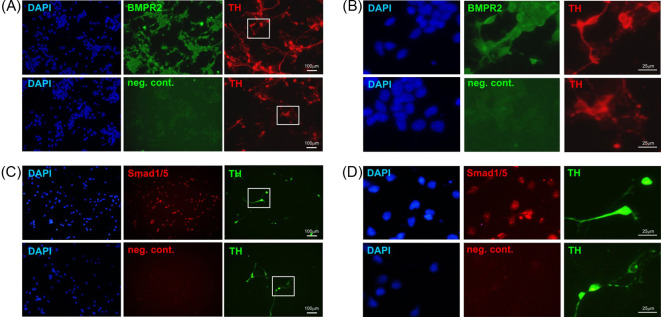
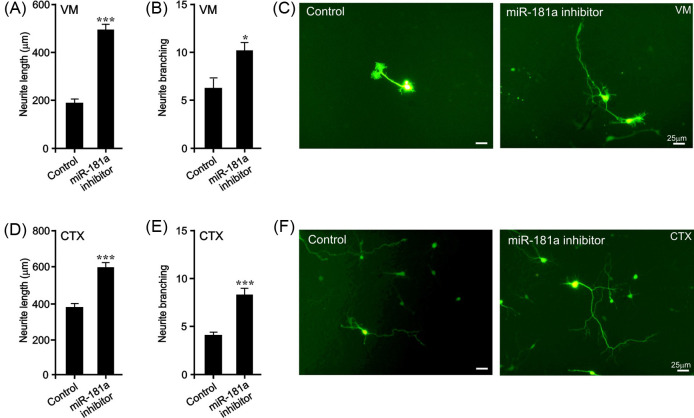
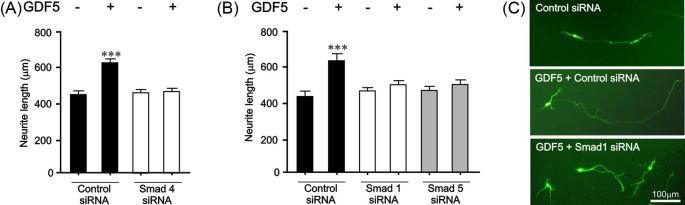
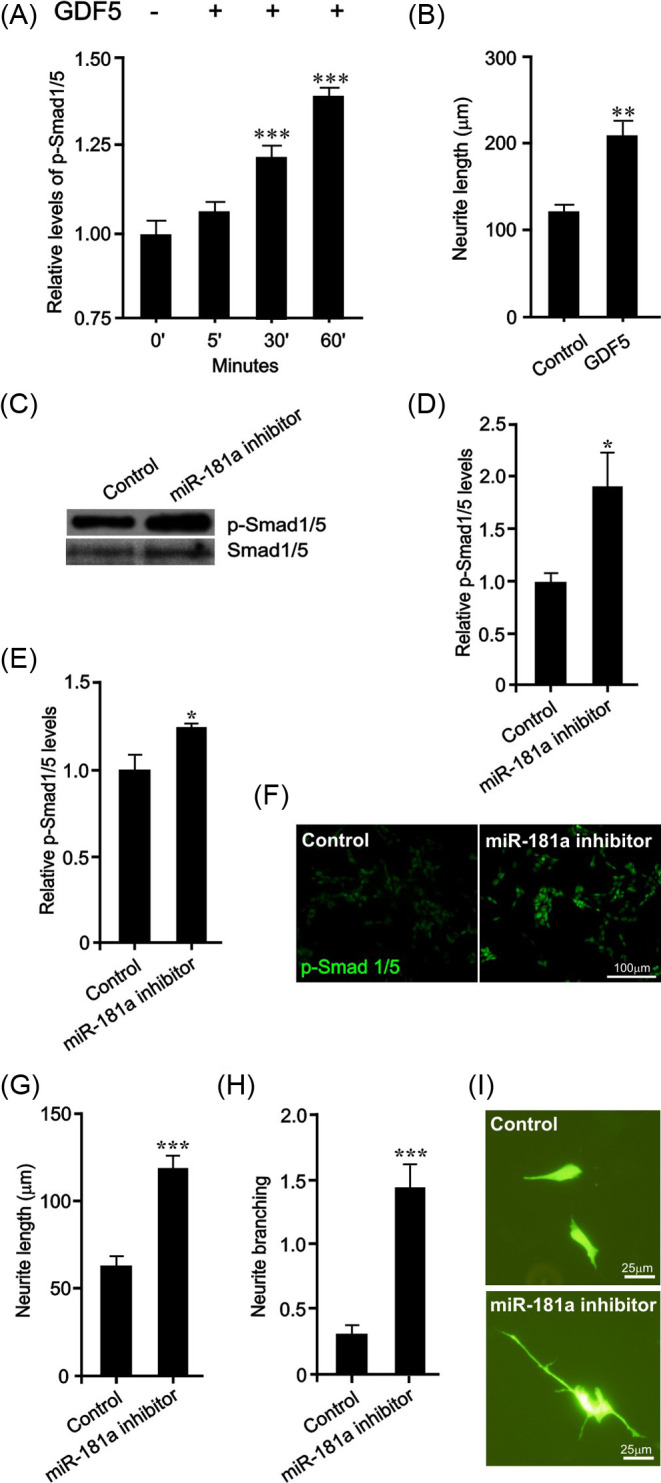
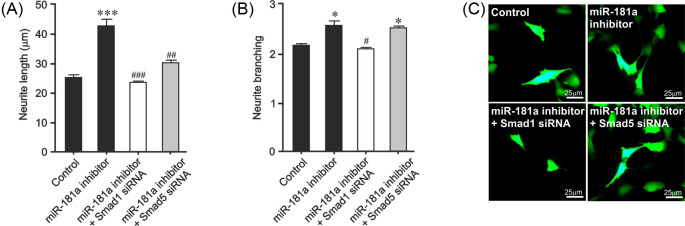
Parkinson's disease (PD) is the second most common neurodegenerative disease, and is characterized by the progressive degeneration of nigrostriatal dopaminergic (DA) neurons. Current PD treatments are symptomatic, wear off over time and do not protect against DA neuronal loss. Finding a way to re-grow midbrain DA (mDA) neurons is a promising disease-modifying therapeutic strategy for PD. However, reliable biomarkers are required to allow such growth-promoting approaches to be applied early in the disease progression. has been shown to be dysregulated in PD patients, and has been identified as a potential biomarker for PD. Despite studies demonstrating the enrichment of in the brain, specifically in neurites of postmitotic neurons, the role of in mDA neurons remains unknown. Herein, we used cell culture models of human mDA neurons to investigate a potential role for in mDA neurons. We used a bioninformatics analysis to identify that targets components of the bone morphogenetic protein (BMP) signalling pathway, including the transcription factors Smad1 and Smad5, which we find are expressed by rat mDA neurons and are required for BMP-induced neurite growth. We also found that inhibition of neuronal , resulted in increased Smad signalling, and induced neurite growth in SH-SY5Y cells. Finally, using embryonic rat cultures, we demonstrated that inhibition induces ventral midbrain (VM) and cortical neuronal growth. These data describe a new role for in mDA neurons, and provide proof of principle that dysresgulation in PD may alter the activation state of signalling pathways important for neuronal growth in neurons affected in PD.
帕金森病(PD)是第二常见的神经退行性疾病,其特征是黑质纹状体多巴胺能(DA)神经元进行性退化。目前的帕金森病治疗是对症治疗,随着时间推移会失效,且无法防止DA神经元丢失。找到使中脑DA(mDA)神经元再生的方法是一种有前景的针对帕金森病的疾病修饰治疗策略。然而,需要可靠的生物标志物以便在疾病进展早期应用这种促进生长的方法。已证明其在帕金森病患者中失调,并已被确定为帕金森病的潜在生物标志物。尽管有研究表明其在大脑中富集,特别是在有丝分裂后神经元的神经突中,但它在mDA神经元中的作用仍不清楚。在此,我们使用人类mDA神经元的细胞培养模型来研究其在mDA神经元中的潜在作用。我们使用生物信息学分析来确定它靶向骨形态发生蛋白(BMP)信号通路的成分,包括转录因子Smad1和Smad5,我们发现这些因子由大鼠mDA神经元表达,并且是BMP诱导神经突生长所必需的。我们还发现抑制神经元中的它会导致Smad信号增加,并在SH - SY5Y细胞中诱导神经突生长。最后,使用胚胎大鼠培养物,我们证明抑制它会诱导腹侧中脑(VM)和皮质神经元生长。这些数据描述了它在mDA神经元中的新作用,并提供了原理证明,即帕金森病中的失调可能会改变对帕金森病中受影响神经元的神经生长重要的信号通路的激活状态。