Contessi Negrini Nicola, Toffoletto Nadia, Farè Silvia, Altomare Lina
Department of Chemistry, Materials and Chemical Engineering "G. Natta", Politecnico di Milano, Milan, Italy.
National Interuniversity Consortium of Materials Science and Technology, Local Unit Politecnico di Milano, Milan, Italy.
Front Bioeng Biotechnol. 2020 Jun 30;8:723. doi: 10.3389/fbioe.2020.00723. eCollection 2020.
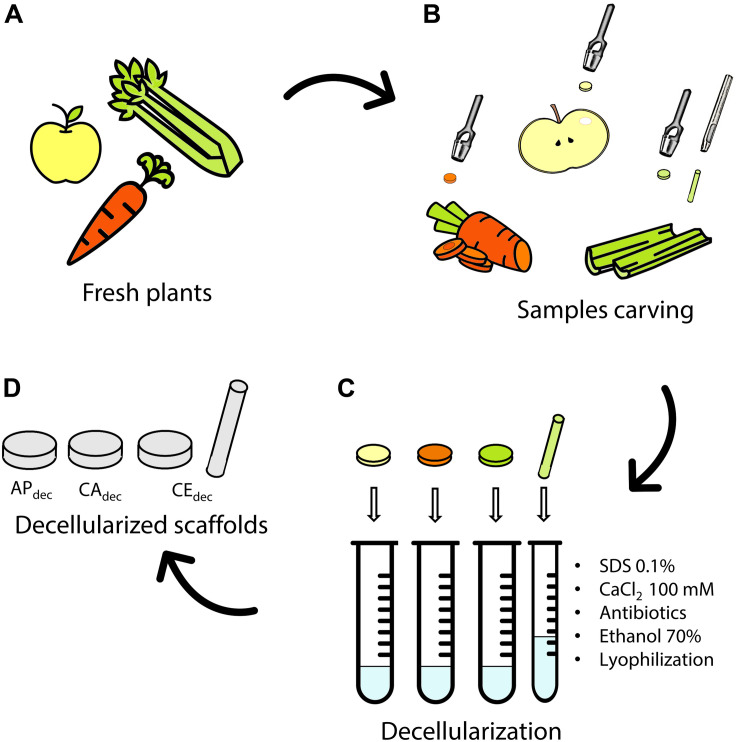
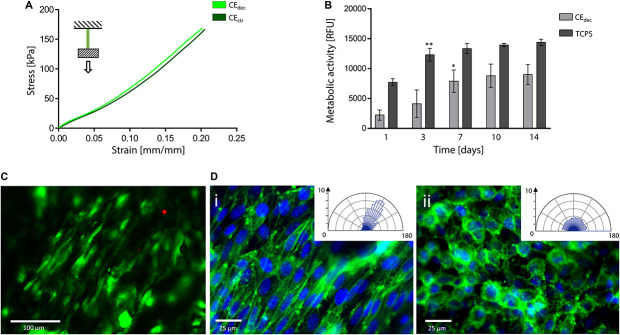
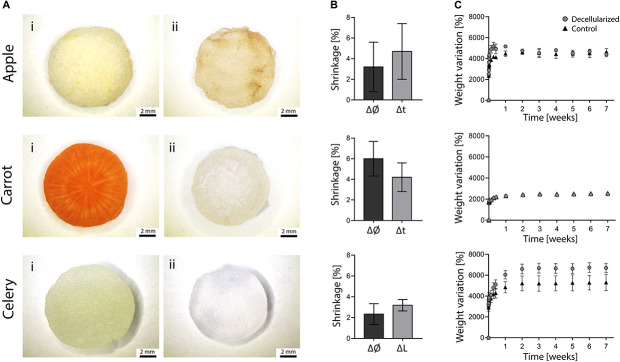
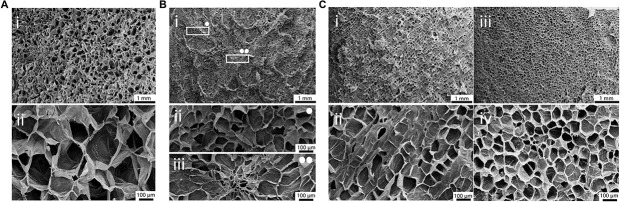
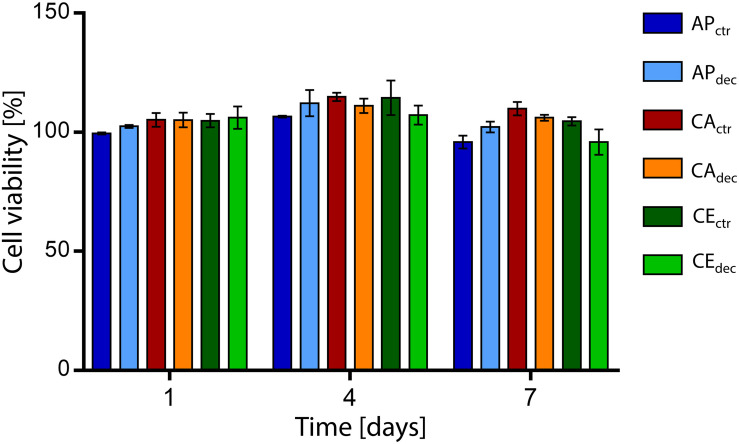
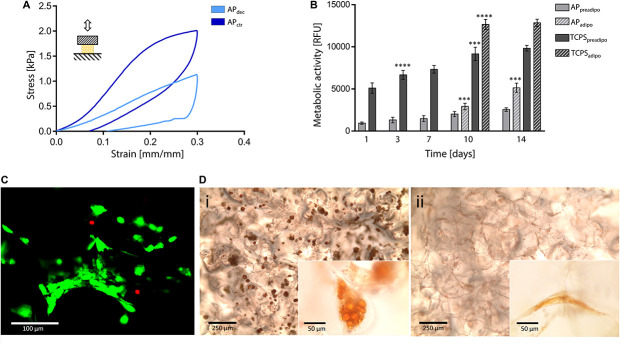
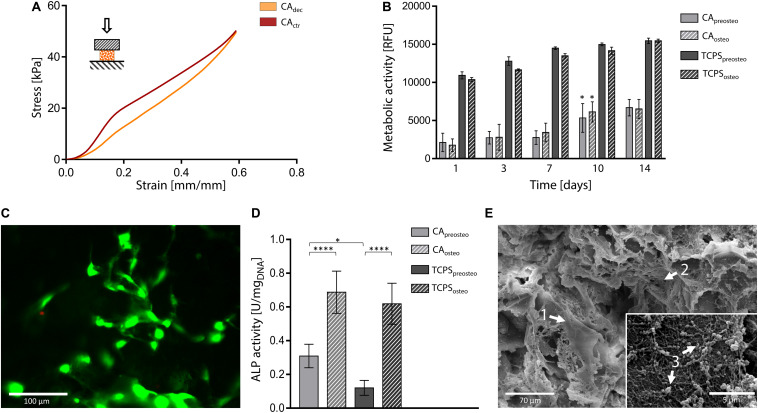
Decellularized tissues are a valid alternative as tissue engineering scaffolds, thanks to the three-dimensional structure that mimics native tissues to be regenerated and the biomimetic microenvironment for cells and tissues growth. Despite decellularized animal tissues have long been used, plant tissue decellularized scaffolds might overcome availability issues, high costs and ethical concerns related to the use of animal sources. The wide range of features covered by different plants offers a unique opportunity for the development of tissue-specific scaffolds, depending on the morphological, physical and mechanical peculiarities of each plant. Herein, three different plant tissues (i.e., apple, carrot, and celery) were decellularized and, according to their peculiar properties (i.e., porosity, mechanical properties), addressed to regeneration of adipose tissue, bone tissue and tendons, respectively. Decellularized apple, carrot and celery maintained their porous structure, with pores ranging from 70 to 420 μm, depending on the plant source, and were stable in PBS at 37°C up to 7 weeks. Different mechanical properties (i.e., E = 4 kPa, E = 43 kPa, E = 590 kPa) were measured and no indirect cytotoxic effects were demonstrated after plants decellularization. After coating with poly-L-lysine, apples supported 3T3-L1 preadipocytes adhesion, proliferation and adipogenic differentiation; carrots supported MC3T3-E1 pre-osteoblasts adhesion, proliferation and osteogenic differentiation; celery supported L929 cells adhesion, proliferation and guided anisotropic cells orientation. The versatile features of decellularized plant tissues and their potential for the regeneration of different tissues are proved in this work.
脱细胞组织作为组织工程支架是一种有效的替代方案,这得益于其三维结构能够模拟待再生的天然组织,以及为细胞和组织生长提供的仿生微环境。尽管脱细胞动物组织早已被使用,但植物组织脱细胞支架可能会克服与动物来源使用相关的可用性问题、高成本和伦理问题。不同植物所涵盖的广泛特性为开发组织特异性支架提供了独特的机会,这取决于每种植物的形态、物理和机械特性。在此,三种不同的植物组织(即苹果、胡萝卜和芹菜)被脱细胞处理,并根据它们的特殊性质(即孔隙率、机械性能),分别用于脂肪组织、骨组织和肌腱的再生。脱细胞后的苹果、胡萝卜和芹菜保持了它们的多孔结构,孔隙大小从70到420μm不等,这取决于植物来源,并且在37°C的PBS中可稳定保存长达7周。测量了不同的机械性能(即E = 4 kPa、E = 43 kPa、E = 590 kPa),并且在植物脱细胞后未显示出间接细胞毒性作用。在用聚-L-赖氨酸包被后,苹果支持3T3-L1前脂肪细胞的黏附、增殖和成脂分化;胡萝卜支持MC3T3-E1前成骨细胞的黏附、增殖和成骨分化;芹菜支持L929细胞的黏附、增殖并引导各向异性细胞定向。这项工作证明了脱细胞植物组织的多功能特性及其在不同组织再生中的潜力。