Department of Radiation Oncology, Jeonbuk National University Hospital-Jeonbuk National University Medical School, Jeonju, Jeonbuk, Republic of Korea.
Research Institute of Clinical Medicine of Jeonbuk National University-Biomedical Research Institute of Jeonbuk National University Hospital, Jeonju, Republic of Korea.
BMC Cancer. 2020 Jul 27;20(1):694. doi: 10.1186/s12885-020-07161-0.
Early diagnosis and continuous monitoring are necessary for an efficient management of cervical cancers (CC). Liquid biopsy, such as detecting circulating tumor DNA (ctDNA) from blood, is a simple, non-invasive method for testing and monitoring cancer markers. However, tumor-specific alterations in ctDNA have not been extensively investigated or compared to other circulating biomarkers in the diagnosis and monitoring of the CC. Therfore, Next-generation sequencing (NGS) analysis with blood samples can be a new approach for highly accurate diagnosis and monitoring of the CC.
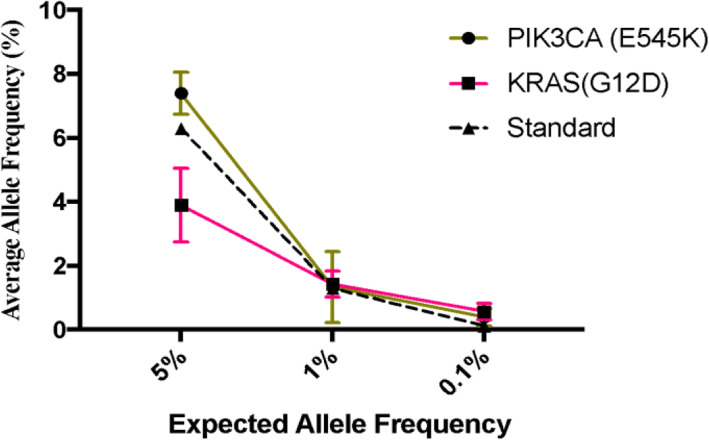
Using a bioinformatics approach, we designed a panel of 24 genes associated with CC to detect and characterize patterns of somatic single-nucleotide variations, indels, and copy number variations. Our NGS CC panel covers most of the genes in The Cancer Genome Atlas (TCGA) as well as additional cancer driver and tumor suppressor genes. We profiled the variants in ctDNA from 24 CC patients who were being treated with systemic chemotherapy and local radiotherapy at the Jeonbuk National University Hospital, Korea.
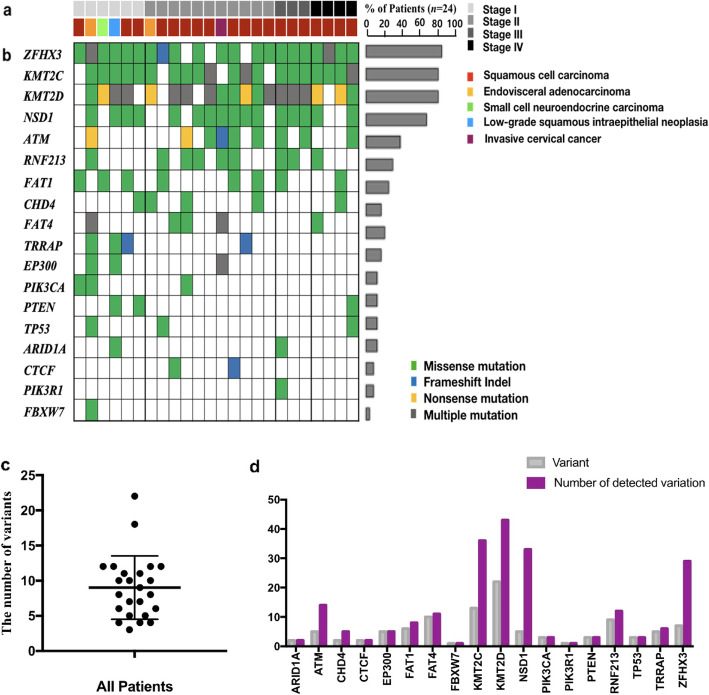
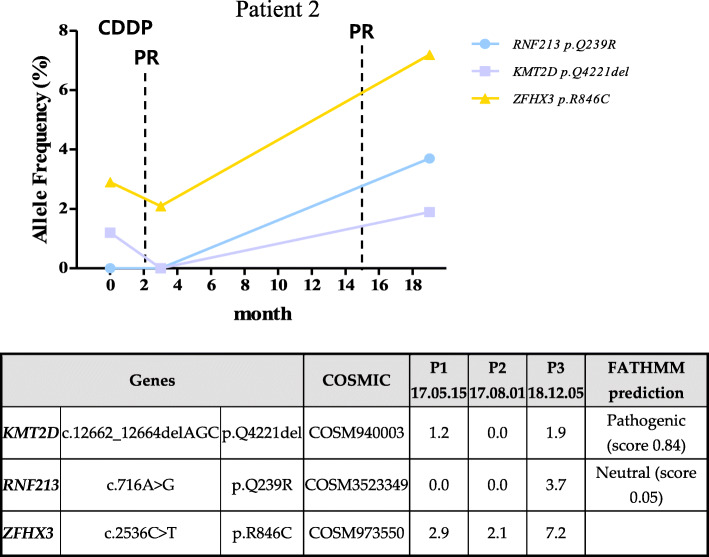
Eighteen out of 24 genes in our NGS CC panel had mutations across the 24 CC patients, including somatic alterations of mutated genes (ZFHX3-83%, KMT2C-79%, KMT2D-79%, NSD1-67%, ATM-38% and RNF213-27%). We demonstrated that the RNF213 mutation could be used potentially used as a monitoring marker for response to chemo- and radiotherapy.
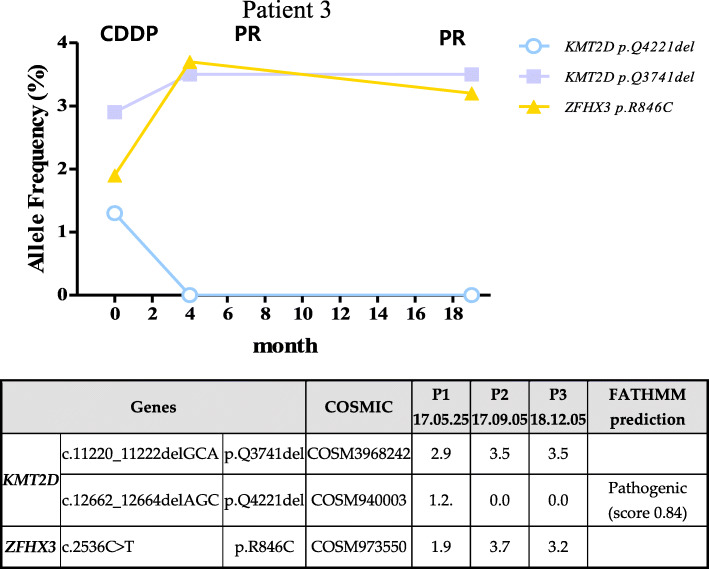
We developed our NGS CC panel and demostrated that our NGS panel can be useful for the diagnosis and monitoring of the CC, since the panel detected the common somatic variations in CC patients and we observed how these genetic variations change according to the treatment pattern of the patient.
早期诊断和持续监测对于宫颈癌 (CC) 的有效管理是必要的。液体活检,如从血液中检测循环肿瘤 DNA (ctDNA),是一种简单、非侵入性的检测和监测癌症标志物的方法。然而,ctDNA 中的肿瘤特异性改变尚未得到广泛研究,也未与其他循环生物标志物在 CC 的诊断和监测中进行比较。因此,使用血液样本进行下一代测序 (NGS) 分析可能是一种高度准确诊断和监测 CC 的新方法。
我们使用生物信息学方法设计了一个与 CC 相关的 24 个基因的panel,用于检测和表征体细胞单核苷酸变异、插入缺失和拷贝数变异的模式。我们的 NGS CC panel 涵盖了大多数癌症基因组图谱 (TCGA) 中的基因以及其他癌症驱动基因和肿瘤抑制基因。我们对在韩国全州国立大学医院接受全身化疗和局部放疗的 24 名 CC 患者的 ctDNA 中的变体进行了分析。
我们的 NGS CC panel 中的 24 个基因中有 18 个在 24 名 CC 患者中发生了突变,包括突变基因的体细胞改变(ZFHX3-83%、KMT2C-79%、KMT2D-79%、NSD1-67%、ATM-38%和 RNF213-27%)。我们证明 RNF213 突变可潜在用作对化疗和放疗反应的监测标志物。
我们开发了我们的 NGS CC panel,并证明我们的 NGS panel 可用于 CC 的诊断和监测,因为该 panel 检测到 CC 患者常见的体细胞变异,并且我们观察到这些遗传变异如何根据患者的治疗模式而变化。