Section of Immunology, Vetsuisse Faculty, University of Zürich, Winterthurerstrasse 266a, CH-8057, Zürich, Switzerland.
Institute of Experimental Immunology, University of Zürich, Winterthurerstrasse 190, CH-8057, Zürich, Switzerland.
Mucosal Immunol. 2021 Mar;14(2):455-467. doi: 10.1038/s41385-020-0327-1. Epub 2020 Jul 27.
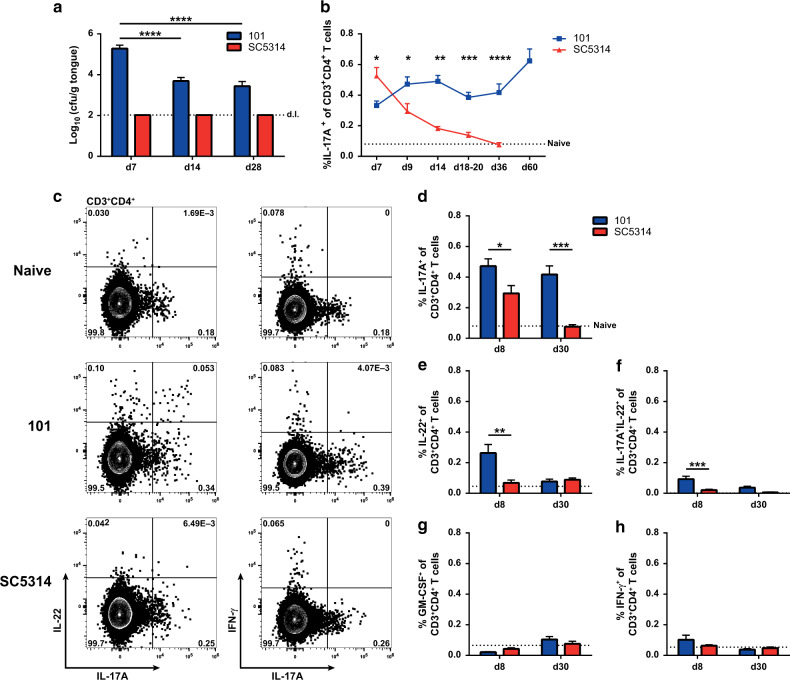
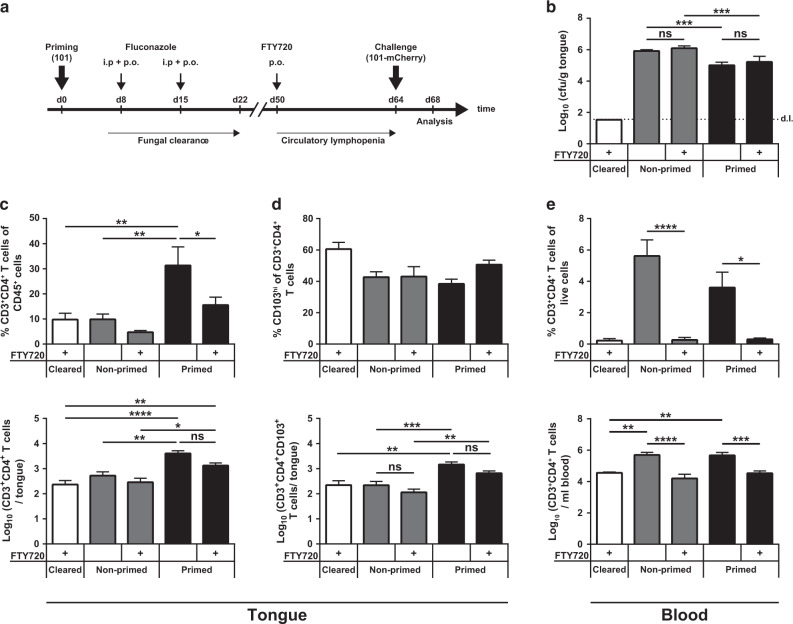
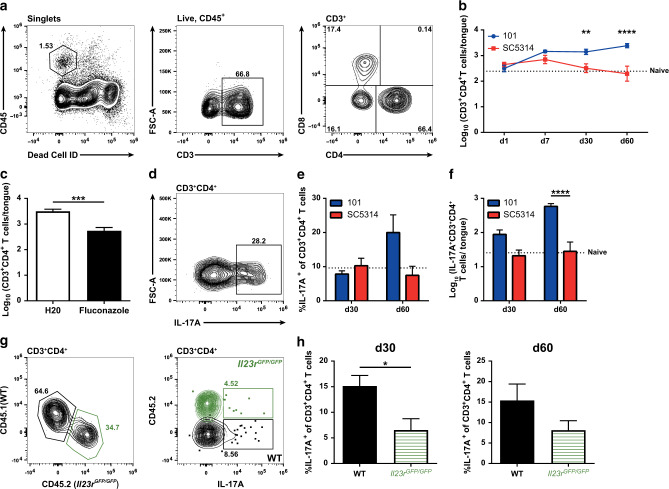
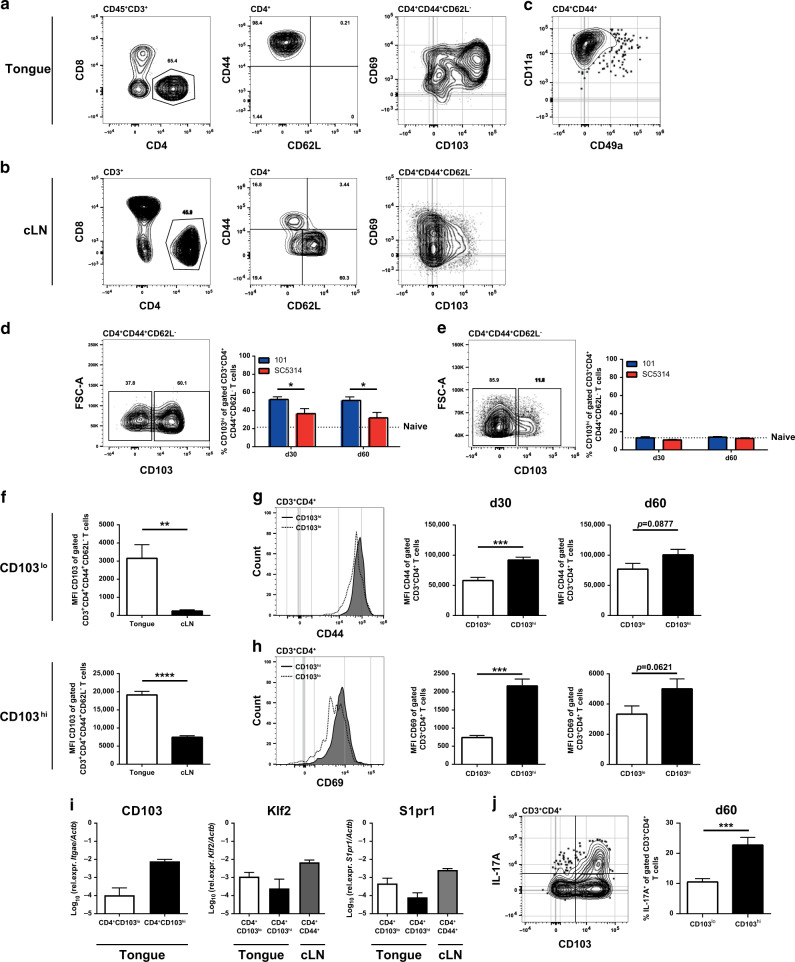
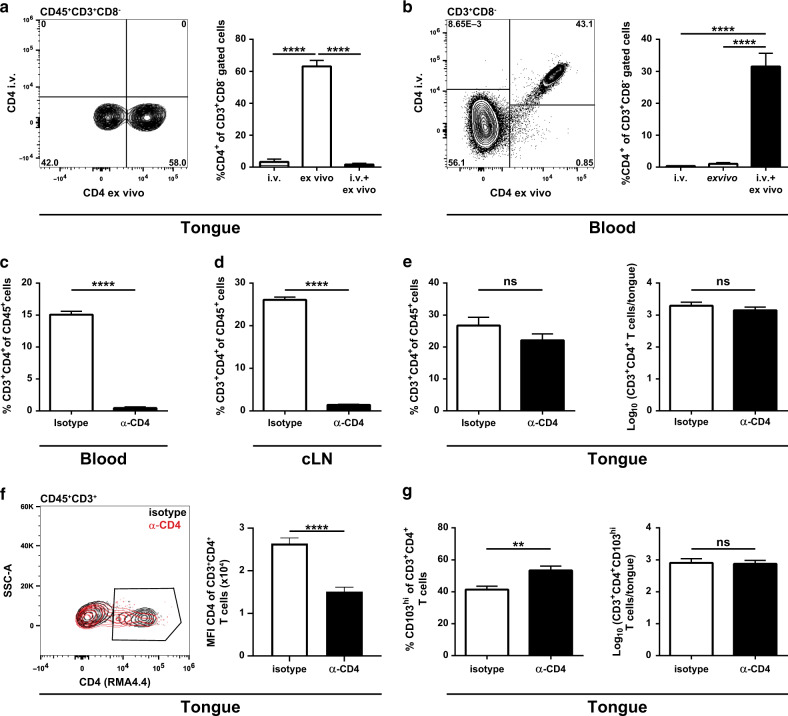
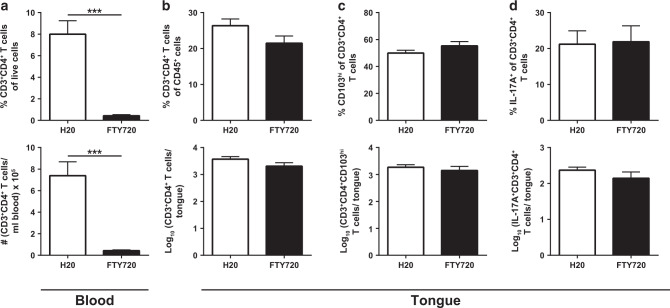
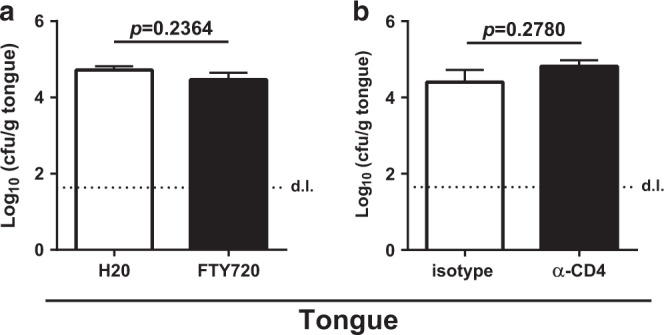
Keeping a stable equilibrium between the host and commensal microbes to which we are constantly exposed, poses a major challenge for the immune system. The host mechanisms that regulate homeostasis of the microbiota to prevent infection and inflammatory disorders are not fully understood. Here, we provide evidence that CD4 tissue-resident memory T (T) cells act as central players in this process. Using a murine model of C. albicans commensalism we show that IL-17 producing CD69CD103CD4 memory T cells persist in the colonized tissue long-term and independently of circulatory supplies. Consistent with the requirement of Th17 cells for limiting fungal growth, IL-17-producing T cells in the mucosa were sufficient to maintain prolonged colonization, while circulatory T cells were dispensable. Although T cells were first proposed to protect from pathogens causing recurrent acute infections, our results support a central function of T cells in the maintenance of commensalism.
维持宿主与我们不断接触的共生微生物之间的稳定平衡,对免疫系统构成了重大挑战。宿主调节微生物组稳态以预防感染和炎症性疾病的机制尚未完全阐明。在这里,我们提供的证据表明,CD4 组织驻留记忆 T(T)细胞在这个过程中起着核心作用。我们使用白色念珠菌共生的小鼠模型表明,产生 IL-17 的 CD69CD103CD4 记忆 T 细胞在定植组织中长期存在,且不依赖于循环供应。与 Th17 细胞限制真菌生长的要求一致,黏膜中产生 IL-17 的 T 细胞足以维持长期定植,而循环 T 细胞则可有可无。尽管 T 细胞最初被提议用于保护免受导致反复急性感染的病原体的侵害,但我们的结果支持 T 细胞在维持共生中的核心功能。