Spampinato Simona Federica, Merlo Sara, Fagone Evelina, Fruciano Mary, Sano Yasuteru, Kanda Takashi, Sortino Maria Angela
Section of Pharmacology, Department of Biomedical and Biotechnological Sciences, University of Catania, Catania, Italy.
Department of Clinical and Experimental Medicine, University of Catania, Catania, Italy.
Front Mol Neurosci. 2020 Jul 3;13:120. doi: 10.3389/fnmol.2020.00120. eCollection 2020.
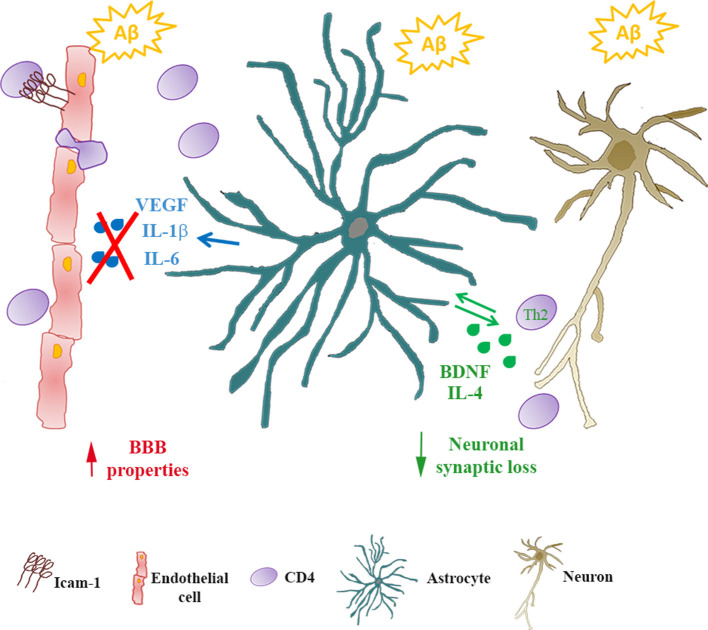
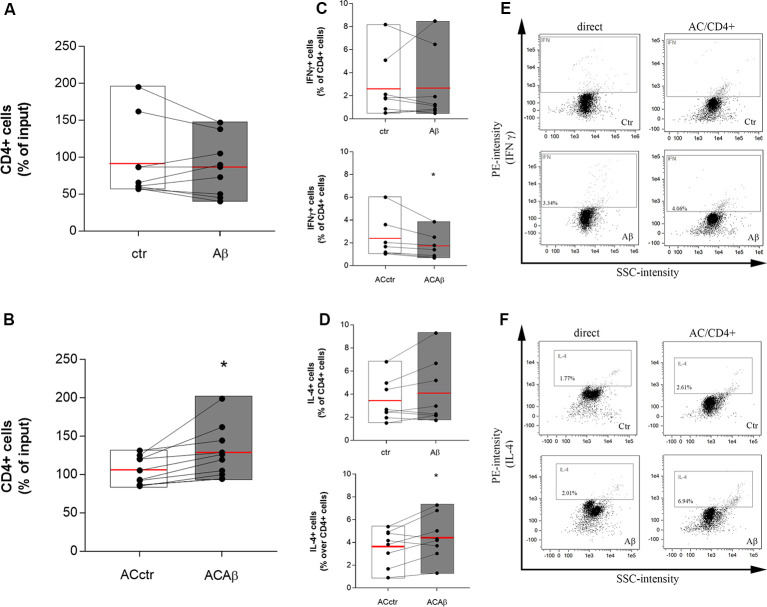
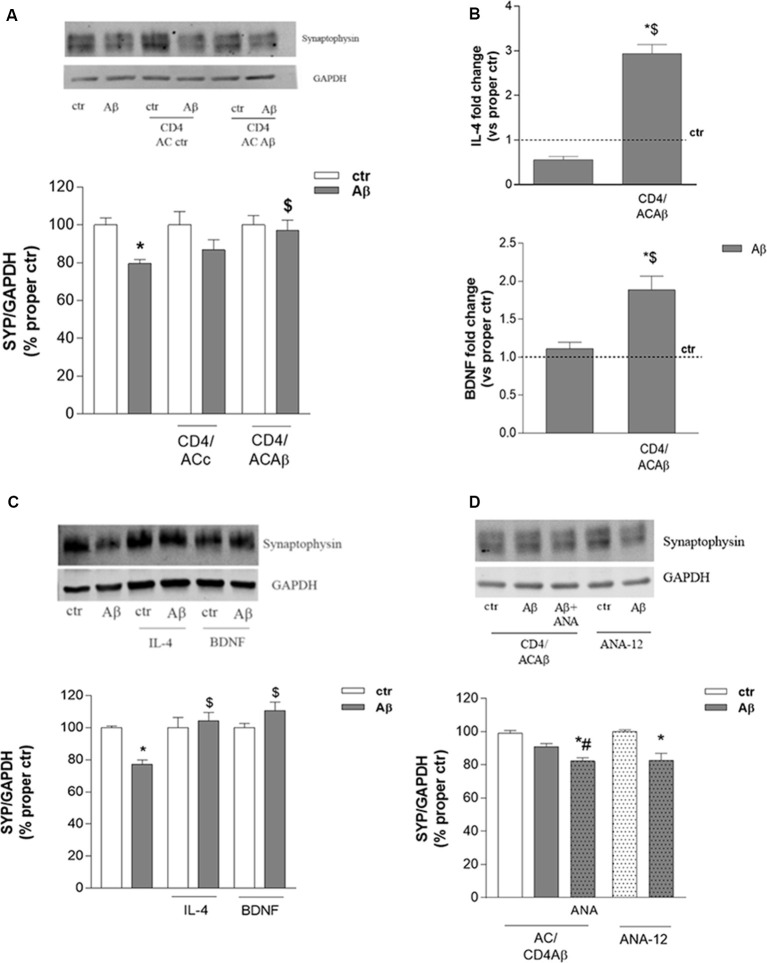
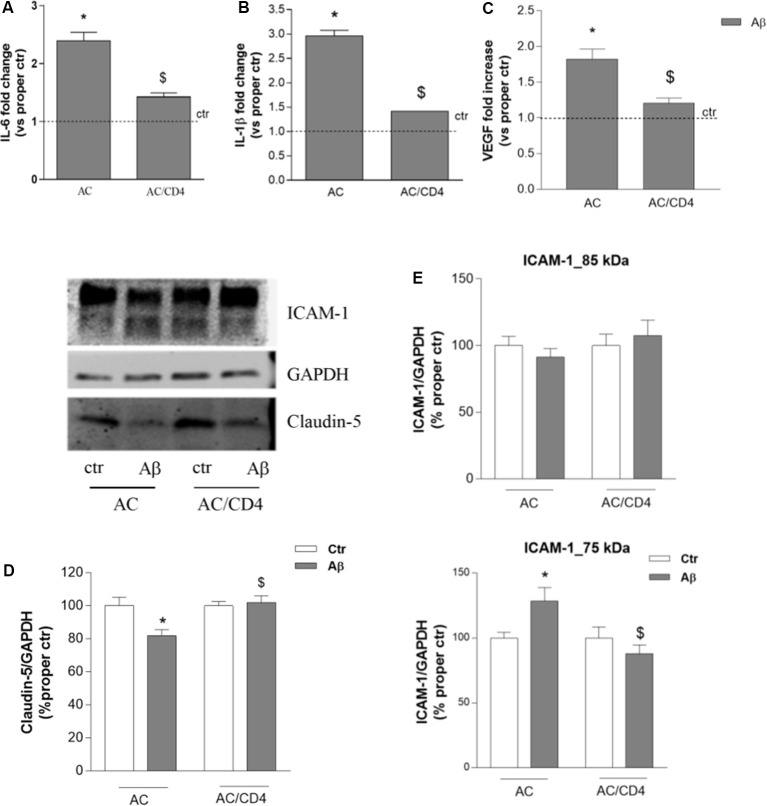
: In Alzheimer's disease (AD) neuronal degeneration is associated with gliosis and infiltration of peripheral blood mononuclear cells (PBMCs), which participate in neuroinflammation. Defects at the blood-brain barrier (BBB) facilitate PBMCs migration towards the central nervous system (CNS) and in particular CD4+ T cells have been found in areas severely affected in AD. However, the role of T cells, once they migrate into the CNS, is not well defined. CD4+ cells interact with astrocytes able to release several factors and cytokines that can modulate T cell polarization; similarly, astrocytic properties are modulated after interaction with T cells. : In models, astrocytes were primed with β-amyloid (Aβ; 2.5 μM, 5 h) and then co-cultured with magnetically isolated CD4+ cells. Cytokines expression was evaluated both in co-cultured CD4+ cells and astrocytes. The effects of this crosstalk were further evaluated by co-culturing CD4+ cells with the neuronal-like SH-SY5Y cell line and astrocytes with endothelial cells. : The pattern of cytokines and trophic factors expressed by CD4+ cells were strongly modulated in the presence of Aβ-primed astrocytes. Specifically, the percentage of IL-4+ and IFNγ+ CD4+ cells was significantly increased and reduced, respectively. Further, increased BDNF mRNA levels were observed in CD4+ cells. When SH-SY5Y cells were co-cultured with astrocyte-conditioned CD4+ cells and exposed to Aβ, the reduction of the presynaptic protein synaptophysin was prevented with a BDNF-dependent mechanism. In astrocytes co-cultured with CD4+ cells, reduced mRNA levels of inflammatory cytokines and VEGF were observed. This was paralleled by the prevention of the reduction of claudin-5 when astrocytes were co-cultured with endothelial cells. : Following Aβ exposure, there exists reciprocal crosstalk between infiltrating peripheral cells and astrocytes that in turn affects not only endothelial function and thus BBB properties, but also neuronal behavior. Since astrocytes are the first cells that lymphocytes interact with and are among the principal players in neuroinflammation occurring in AD, understanding this crosstalk may disclose new potential targets of intervention in the treatment of neurodegeneration.
在阿尔茨海默病(AD)中,神经元变性与胶质增生以及外周血单核细胞(PBMC)浸润有关,这些细胞参与神经炎症反应。血脑屏障(BBB)的缺陷促进PBMC向中枢神经系统(CNS)迁移,特别是在AD严重受累区域发现了CD4 + T细胞。然而,T细胞一旦迁移到CNS中的作用尚不清楚。CD4 +细胞与能够释放多种因子和细胞因子的星形胶质细胞相互作用,这些因子和细胞因子可调节T细胞极化;同样,星形胶质细胞的特性在与T细胞相互作用后也会受到调节。
在模型中,用β-淀粉样蛋白(Aβ;2.5 μM,5小时)预处理星形胶质细胞,然后与磁性分离的CD4 +细胞共培养。评估共培养的CD4 +细胞和星形胶质细胞中细胞因子的表达。通过将CD4 +细胞与神经元样SH-SY5Y细胞系共培养以及将星形胶质细胞与内皮细胞共培养,进一步评估这种相互作用的影响。
在Aβ预处理的星形胶质细胞存在的情况下,CD4 +细胞表达的细胞因子和营养因子模式受到强烈调节。具体而言,IL-4 +和IFNγ+ CD4 +细胞的百分比分别显著增加和降低。此外,在CD4 +细胞中观察到BDNF mRNA水平升高。当SH-SY5Y细胞与星形胶质细胞条件化的CD4 +细胞共培养并暴露于Aβ时,通过BDNF依赖性机制可防止突触前蛋白突触素的减少。在与CD4 +细胞共培养的星形胶质细胞中,观察到炎性细胞因子和VEGF的mRNA水平降低。当星形胶质细胞与内皮细胞共培养时,这与紧密连接蛋白-5减少的预防同时发生。
在Aβ暴露后,浸润的外周细胞与星形胶质细胞之间存在相互作用,这反过来不仅影响内皮功能以及BBB特性,还影响神经元行为。由于星形胶质细胞是淋巴细胞与之相互作用的首批细胞,并且是AD中发生的神经炎症的主要参与者之一,了解这种相互作用可能会揭示神经退行性疾病治疗中的新潜在干预靶点。