Department of Applied Biological Science, Tokyo University of Science, Noda, Chiba, 278-8510, Japan.
Laboratory for Behavioral Genetics, Center for Brain Science, Wako, Saitama, 351-0198, Japan.
Mol Brain. 2020 Jul 28;13(1):107. doi: 10.1186/s13041-020-00646-w.
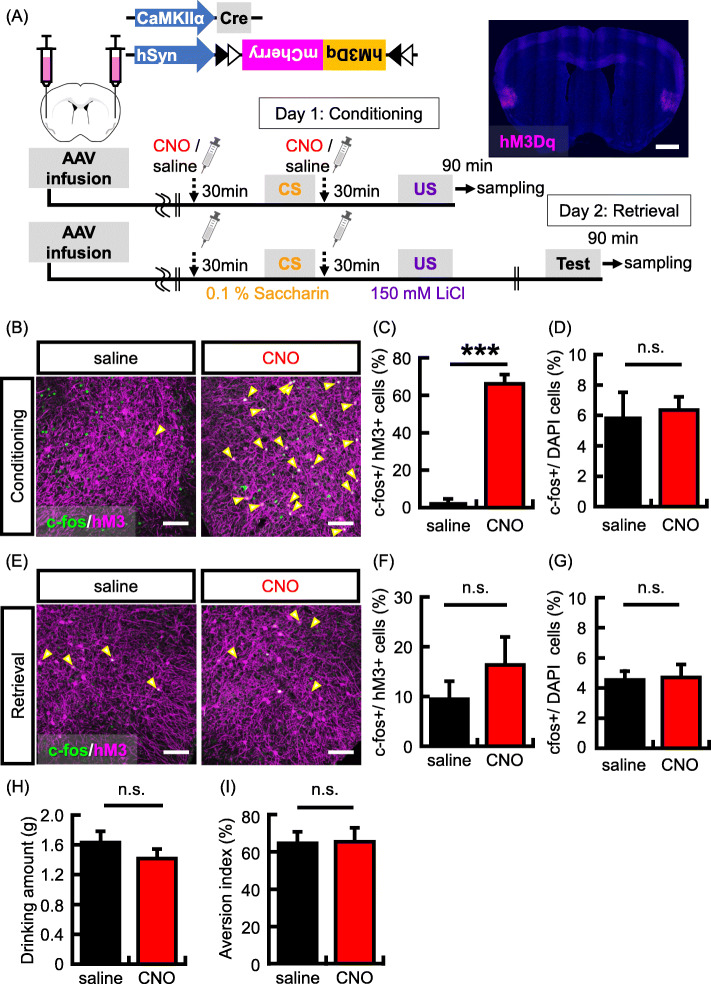
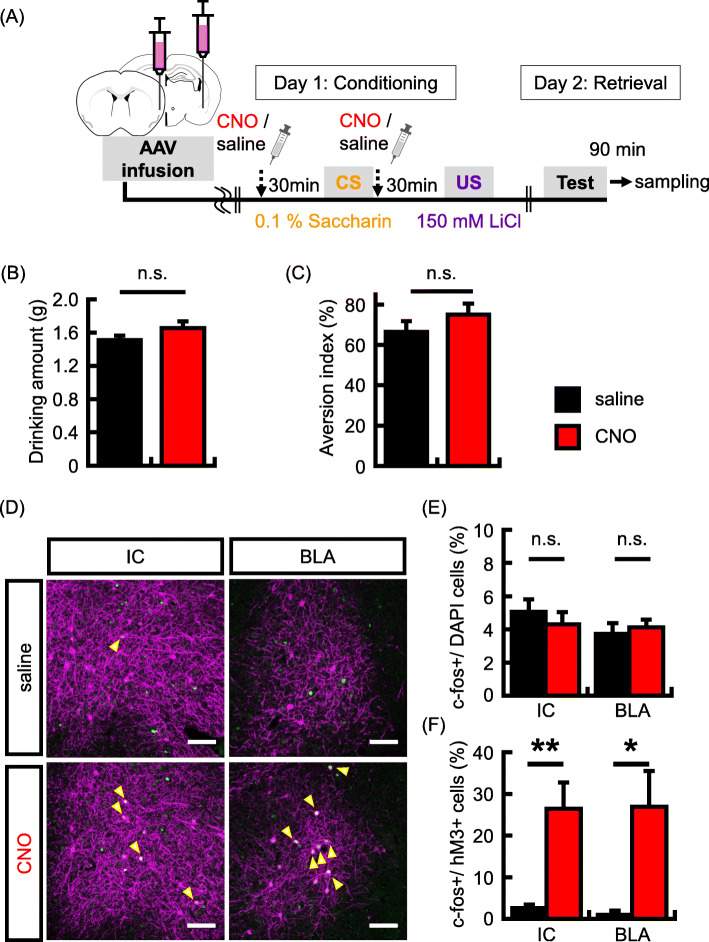
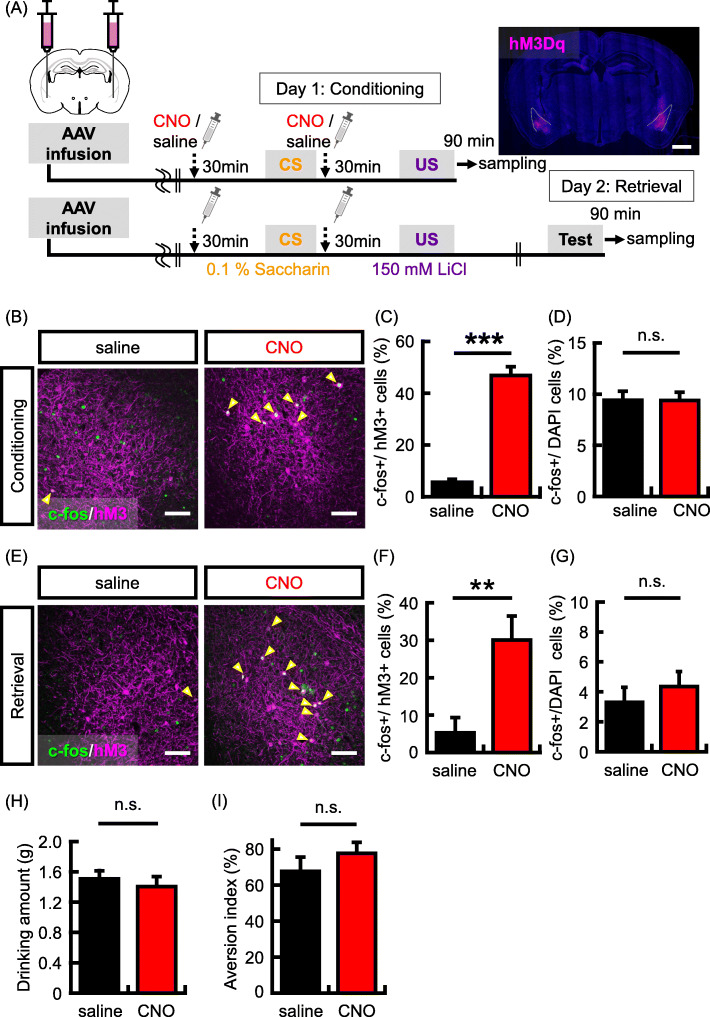
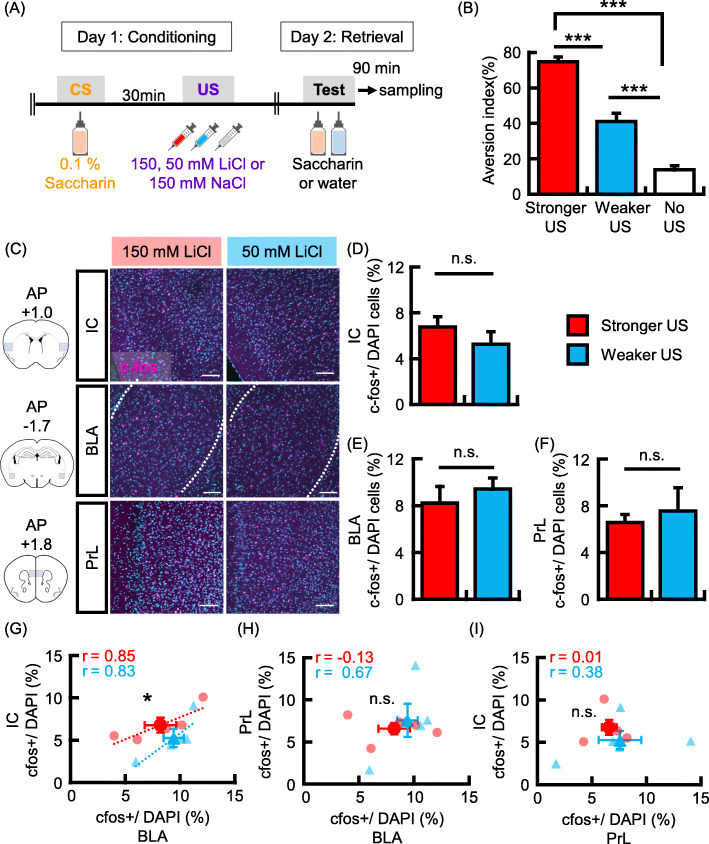
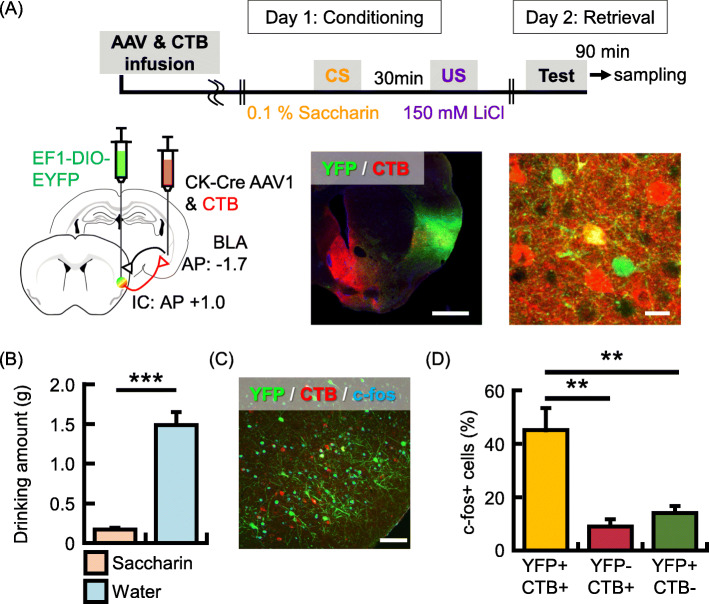
The insular cortex (IC) is the primary gustatory cortex, and it is a critical structure for encoding and retrieving the conditioned taste aversion (CTA) memory. In the CTA, consumption of an appetitive tastant is associated with aversive experience such as visceral malaise, which results in avoidance of consuming a learned tastant. Previously, we showed that levels of the cyclic-AMP-response-element-binding protein (CREB) determine the insular cortical neurons that proceed to encode a conditioned taste memory. In the amygdala and hippocampus, it is shown that CREB and neuronal activity regulate memory allocation and the neuronal mechanism that determines the specific neurons in a neural network that will store a given memory. However, cellular mechanism of memory allocation in the insular cortex is not fully understood. In the current study, we manipulated the neuronal activity in a subset of insular cortical and/or basolateral amygdala (BLA) neurons in mice, at the time of learning; for this purpose, we used an hM3Dq designer receptor exclusively activated by a designer drug system (DREADD). Subsequently, we examined whether the neuronal population whose activity is increased during learning, is reactivated by memory retrieval, using the expression of immediate early gene c-fos. When an hM3Dq receptor was activated only in a subset of IC neurons, c-fos expression following memory retrieval was not significantly observed in hM3Dq-positive neurons. Interestingly, the probability of c-fos expression in hM3Dq-positive IC neurons after retrieval was significantly increased when the IC and BLA were co-activated during conditioning. Our findings suggest that functional interactions between the IC and BLA regulates CTA memory allocation in the insular cortex, which shed light on understanding the mechanism of memory allocation regulated by interaction between relevant brain areas.
脑岛皮层(IC)是主要的味觉皮层,是编码和提取条件味觉厌恶(CTA)记忆的关键结构。在 CTA 中,消耗美味的味觉刺激物会引起内脏不适等厌恶体验,从而导致避免摄入已学习的味觉刺激物。以前,我们表明环磷酸腺苷反应元件结合蛋白(CREB)的水平决定了继续编码条件味觉记忆的脑岛皮质神经元。在杏仁核和海马体中,已经表明 CREB 和神经元活动调节记忆分配以及决定神经网络中特定神经元存储特定记忆的神经元机制。然而,脑岛皮层中记忆分配的细胞机制尚未完全理解。在当前的研究中,我们在学习时操纵了小鼠脑岛皮层和/或基底外侧杏仁核(BLA)神经元的子集的神经元活动;为此,我们使用了一种仅由设计药物系统(DREADD)激活的 hM3Dq 设计受体。随后,我们使用即时早期基因 c-fos 来检查在学习过程中活性增加的神经元群体是否通过记忆检索重新激活。当仅在一小部分 IC 神经元中激活 hM3Dq 受体时,在 hM3Dq 阳性神经元中未观察到记忆检索后的 c-fos 表达明显增加。有趣的是,当在条件反射期间同时激活 IC 和 BLA 时,hM3Dq 阳性 IC 神经元中 c-fos 表达的概率显著增加。我们的发现表明,IC 和 BLA 之间的功能相互作用调节了脑岛皮层中的 CTA 记忆分配,这为理解由相关脑区相互作用调节的记忆分配机制提供了线索。