Department of Biliary-Pancreatic Surgery, Ren Ji Hospital, School of Medicine, Shanghai Jiao Tong University, Shanghai 200217, P.R. China.
State Key Laboratory of Oncogenes and Related Genes, Shanghai Cancer Institute, Ren Ji Hospital, School of Medicine, Shanghai Jiao Tong University, Shanghai 200240, P.R. China.
Theranostics. 2020 Jul 9;10(18):8400-8414. doi: 10.7150/thno.45124. eCollection 2020.
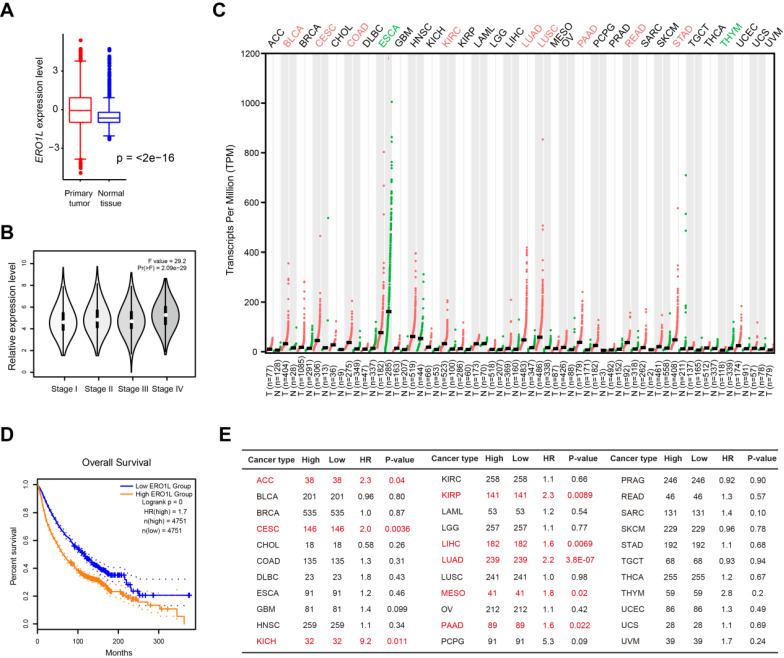
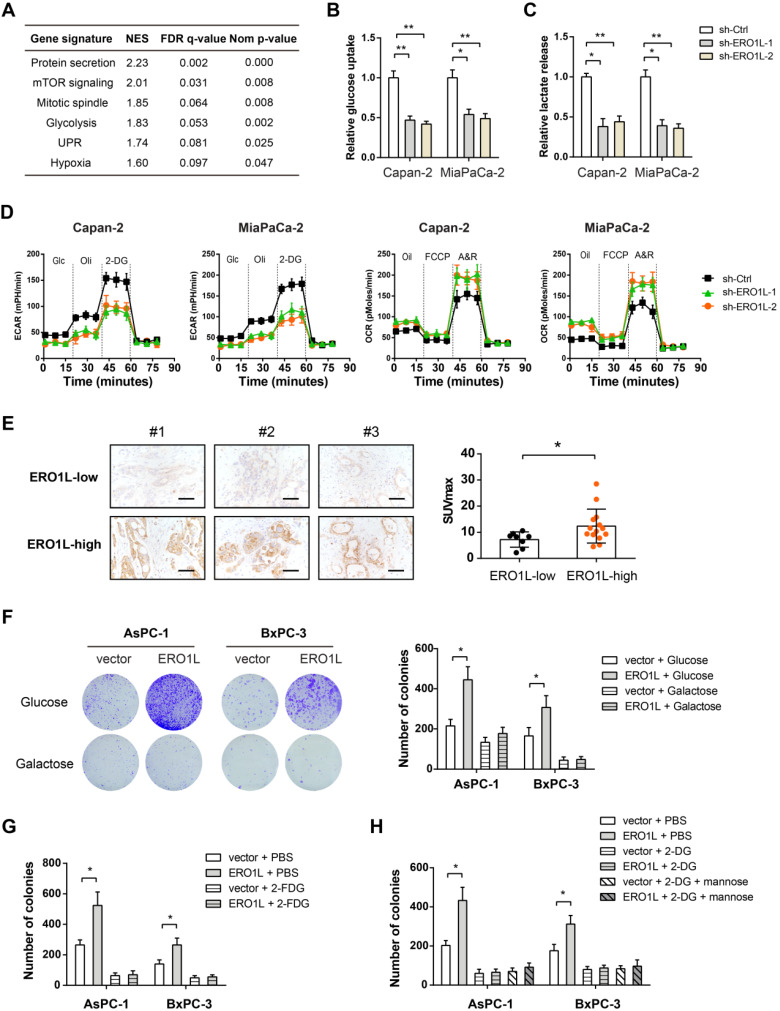
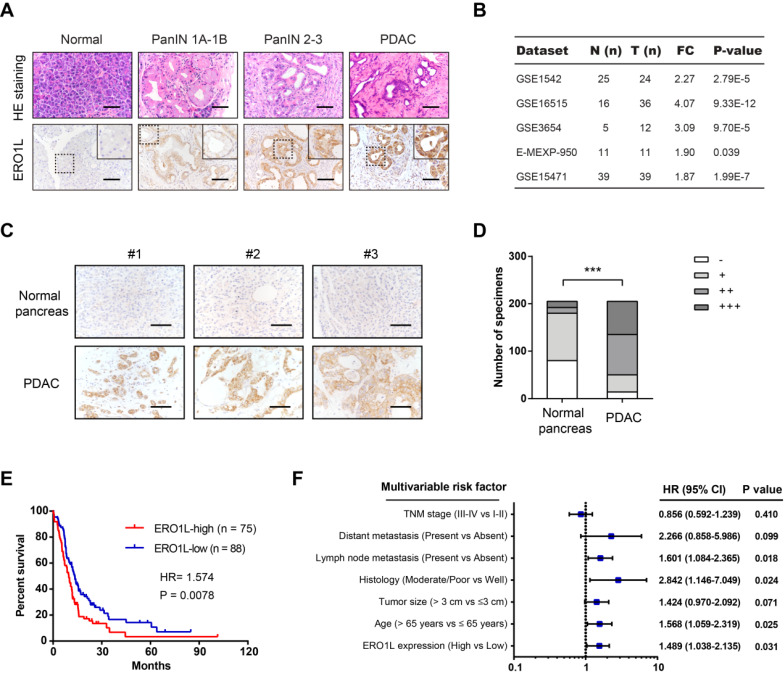
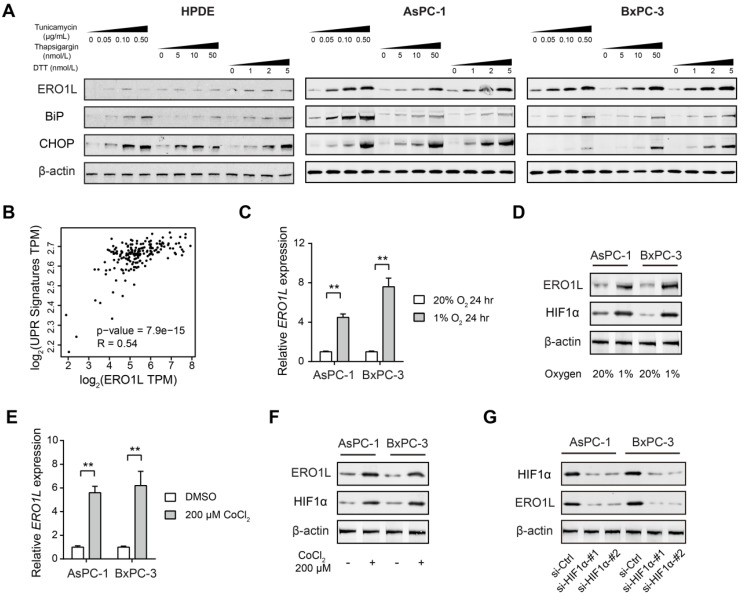
Endoplasmic reticulum oxidoreductase 1 alpha (ERO1L) is an endoplasmic reticulum (ER) luminal glycoprotein that has a role in the formation of disulfide bonds of secreted proteins and membrane proteins. Emerging data identify ERO1L as a tumor promoter in a wide spectrum of human malignancies. However, its molecular basis of oncogenic activities remains largely unknown. Pan-cancer analysis was performed to determine the expression profile and prognostic value of ERO1L in human cancers. The mechanism by which ERO1L promotes tumor growth and glycolysis in pancreatic ductal adenocarcinoma (PDAC) was investigated by cell biological, molecular, and biochemical approaches. ERO1L was highly expressed in PDAC and its precursor pancreatic intraepithelial neoplasia and acts as an independent prognostic factor for patient survival. Hypoxia and ER stress contributed to the overexpression pattern of ERO1L in PDAC. ERO1L knockdown or pharmacological inhibition with EN460 suppressed PDAC cell proliferation and slowed tumor growth . Ectopic expression of wild type ERO1L but not its inactive mutant form EROL-C394A promoted tumor growth. Bioinformatics analyses and functional analyses confirmed a regulatory role of ERO1L on the Warburg effect. Notably, inhibition of tumor glycolysis partially abrogated the growth-promoting activity of ERO1L. Mechanistically, ERO1L-mediated ROS generation was essential for its oncogenic activities. In clinical samples, ERO1L expression was correlated with the maximum standard uptake value (SUVmax) in PDAC patients who received F-FDG PET/CT imaging preoperatively. Analysis of TCGA cohort revealed a specific glycolysis gene expression signature that is highly correlated with unfolded protein response-related gene signature. Our findings uncover a key function for ERO1L in Warburg metabolism and indicate that targeting this pathway may offer alternative therapeutic strategies for PDAC.
内质网氧化还原酶 1 阿尔法(ERO1L)是内质网(ER)腔糖蛋白,在分泌蛋白和膜蛋白中二硫键的形成中发挥作用。新出现的数据将 ERO1L 确定为广泛的人类恶性肿瘤的肿瘤促进剂。然而,其致癌活性的分子基础在很大程度上仍然未知。进行了泛癌症分析,以确定 ERO1L 在人类癌症中的表达谱和预后价值。通过细胞生物学、分子和生化方法研究了 ERO1L 如何促进胰腺导管腺癌(PDAC)中的肿瘤生长和糖酵解。ERO1L 在 PDAC 及其前体胰腺上皮内瘤变中高度表达,并且是患者生存的独立预后因素。缺氧和 ER 应激导致 PDAC 中 ERO1L 的过表达模式。ERO1L 敲低或用 EN460 进行药理学抑制可抑制 PDAC 细胞增殖并减缓肿瘤生长。野生型 ERO1L 的异位表达而不是其无活性突变体 EROL-C394A 促进肿瘤生长。生物信息学分析和功能分析证实了 ERO1L 对瓦伯格效应的调节作用。值得注意的是,抑制肿瘤糖酵解部分削弱了 ERO1L 的促生长活性。从机制上讲,ERO1L 介导的 ROS 生成对于其致癌活性至关重要。在临床样本中,ERO1L 的表达与接受 F-FDG PET/CT 成像术前的 PDAC 患者的最大标准摄取值(SUVmax)相关。对 TCGA 队列的分析揭示了与未折叠蛋白反应相关基因谱高度相关的特定糖酵解基因表达特征。我们的研究结果揭示了 ERO1L 在瓦伯格代谢中的关键功能,并表明靶向该途径可能为 PDAC 提供替代治疗策略。