
桡骨定量超声对脆性骨折的鉴别能力:一项系统评价和荟萃分析。
Fragility fracture discriminative ability of radius quantitative ultrasound: a systematic review and meta-analysis.
作者信息
Fu Y, Li C, Luo W, Chen Z, Liu Z, Ding Y
机构信息
Department of Orthopaedic Surgery, Sun Yat-sen Memorial Hospital, Sun Yat-sen University, Guangzhou, China.
Bioland Laboratory (Guangzhou Regenerative Medicine and Health Guangdong Laboratory), Guangzhou, China.
出版信息
Osteoporos Int. 2021 Jan;32(1):23-38. doi: 10.1007/s00198-020-05559-x. Epub 2020 Jul 30.
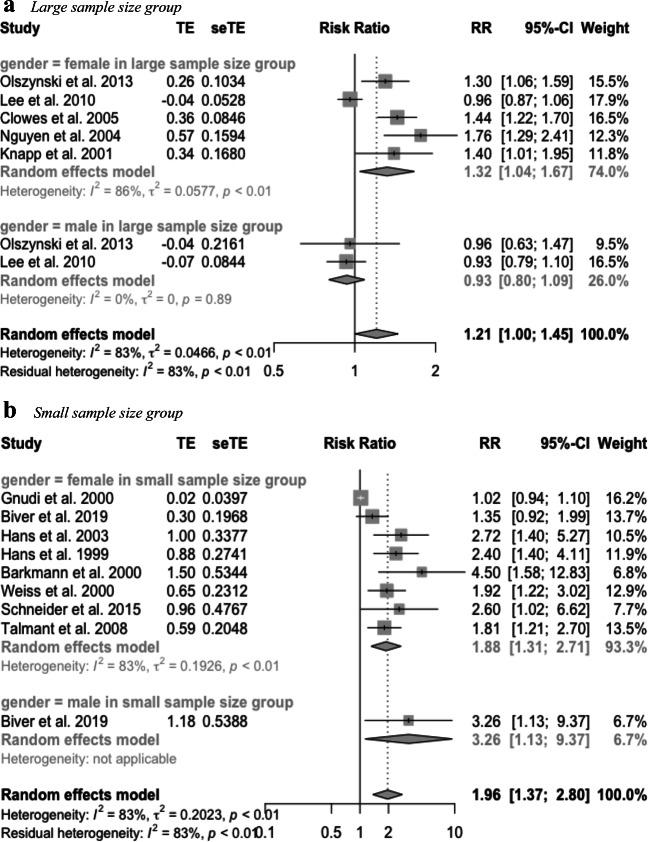
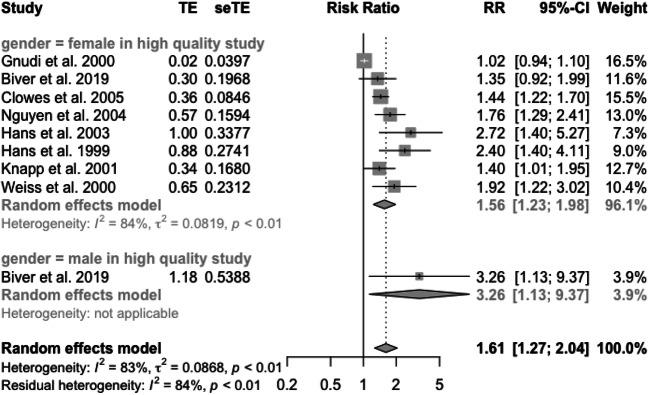
The fragility fracture discriminative ability of radius quantitative ultrasound (QUS) was evaluated in a systematic review of 13 studies, including 16,681 individuals and 1296 fractures. The radial speed of sound (SOS) per standard deviation (SD) decrease contributed to an increased risk of total and hip fracture by 32% and 66% in women. Osteoporotic fracture, as a devastating consequence of osteoporosis, brings severe socio-economic burden. The availability of dual-energy X-ray absorptiometry (DXA), as the gold standard of diagnosis, was quite limited in remote areas. Radius QUS measured by SOS shows potential in fracture discriminative ability where DXA equipment is not available. This study aimed to provide a comprehensive evaluation of the association between radius QUS and fracture risk. A detailed article search was carried out on PubMed, EMBASE, Cochrane Libraries, CNKI, Wan-Fang database, VIP, and SinoMed for studies published between January 1980 and February 2020. We determined the estimated relative risk (RR) for fracture per each radial SOS SD decrease. A meta-analysis of studies was performed under the random-effects model. A total of 16,681 individuals were included in this review. Among the participants, 5892 were male and 10,789 were female. A total of 1296 cases of fragility fracture were included. With each SD decrease in radial SOS, the risk of overall fragility fracture and hip fracture was increased by 21% and 55%, respectively. Particularly, the risk was increased by 32% and 66% for women. The association was even stronger for postmenopausal women. Radius QUS showed great potential as an effective tool for fracture risk evaluation, especially for women.
在一项对13项研究的系统评价中,评估了桡骨定量超声(QUS)对脆性骨折的鉴别能力,这些研究涵盖16681名个体和1296例骨折。在女性中,桡骨声速(SOS)每降低1个标准差(SD),全骨折和髋部骨折风险分别增加32%和66%。骨质疏松性骨折作为骨质疏松症的灾难性后果,带来了严重的社会经济负担。作为诊断金标准的双能X线吸收法(DXA)在偏远地区的可及性非常有限。在没有DXA设备的情况下,通过SOS测量的桡骨QUS在骨折鉴别能力方面显示出潜力。本研究旨在全面评估桡骨QUS与骨折风险之间的关联。在PubMed、EMBASE、Cochrane图书馆、中国知网、万方数据库、维普和中国生物医学文献数据库中,对1980年1月至2020年2月发表的研究进行了详细的文献检索。我们确定了桡骨SOS每降低1个SD时骨折的估计相对风险(RR)。在随机效应模型下对研究进行了荟萃分析。本评价共纳入16681名个体。参与者中,男性5892名,女性10789名。共纳入1296例脆性骨折病例。随着桡骨SOS每降低1个SD,总体脆性骨折和髋部骨折风险分别增加21%和55%。特别是,女性的风险分别增加32%和66%。绝经后女性的关联更强。桡骨QUS作为一种有效的骨折风险评估工具显示出巨大潜力,尤其是对女性而言。



 Zotero 插件