Yang Hong-Jie, Kong Bin, Shuai Wei, Zhang Jing-Jing, Huang He
Department of Cardiology, Renmin Hospital of Wuhan University, Wuhan, China.
Cardiovascular Research Institute, Wuhan University, Wuhan, China.
Front Pharmacol. 2020 Jul 9;11:993. doi: 10.3389/fphar.2020.00993. eCollection 2020.
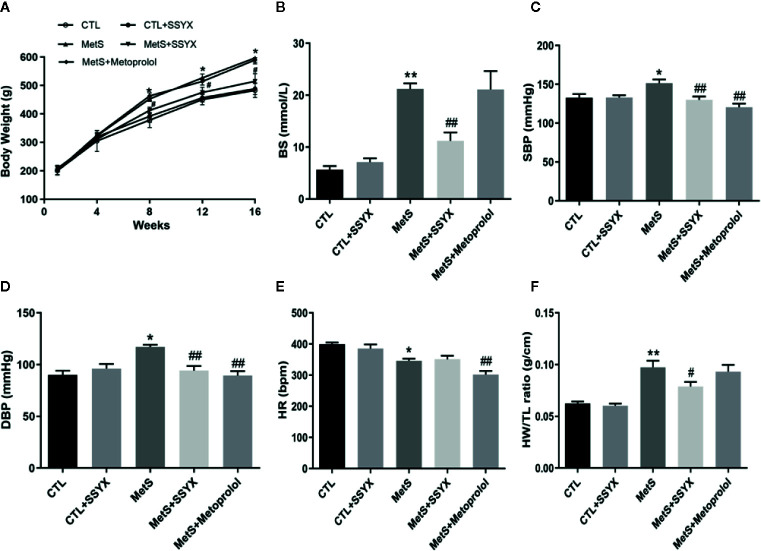
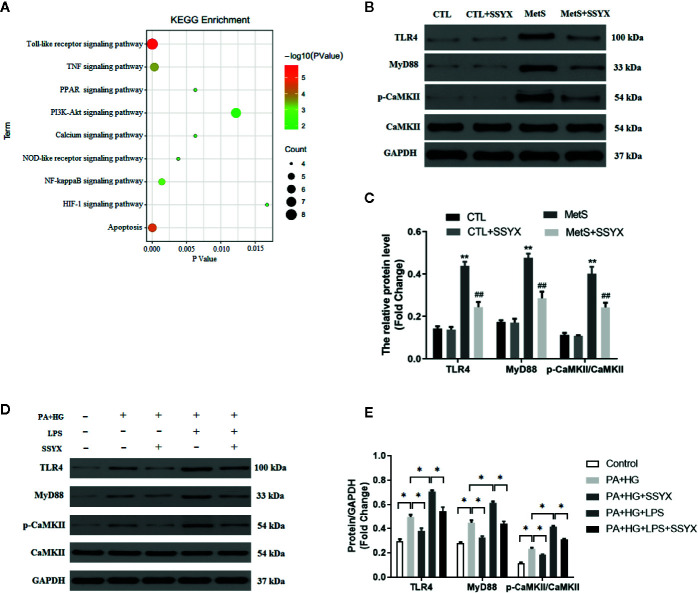
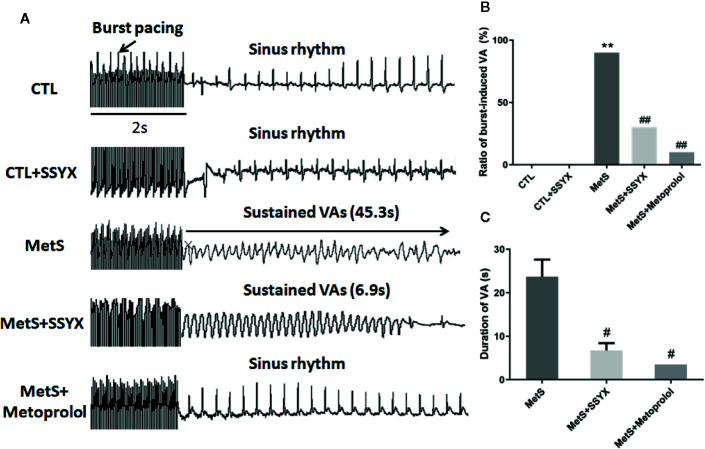
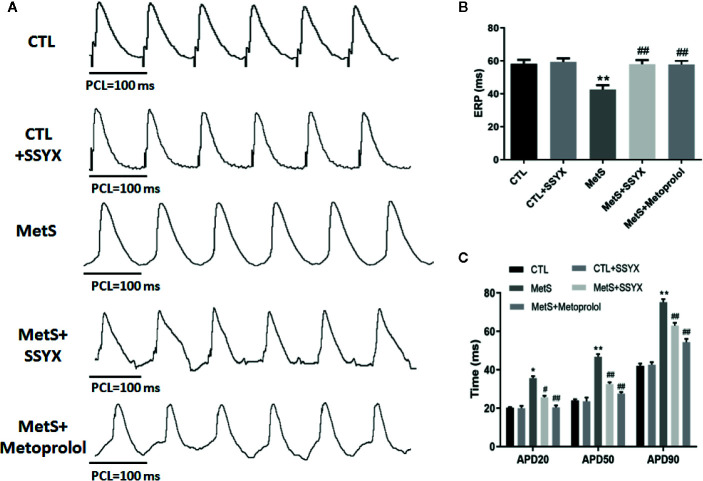
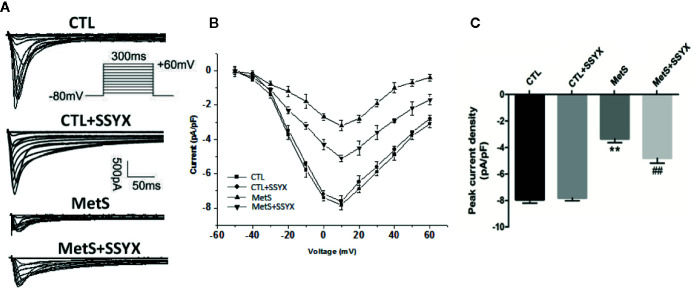
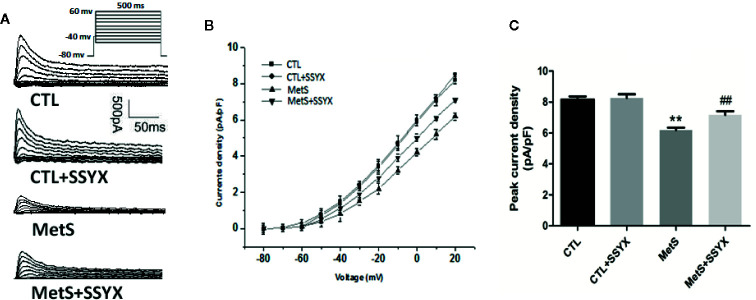
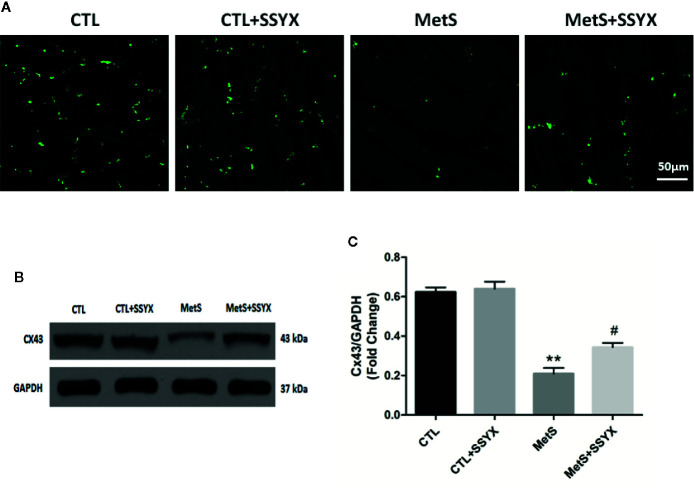
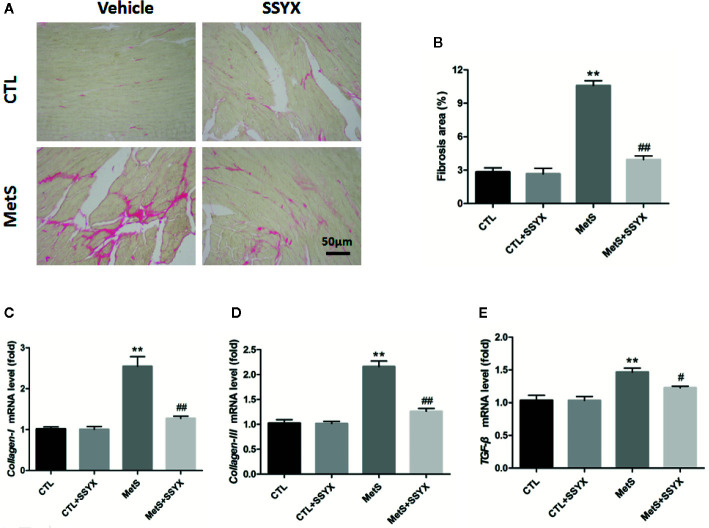
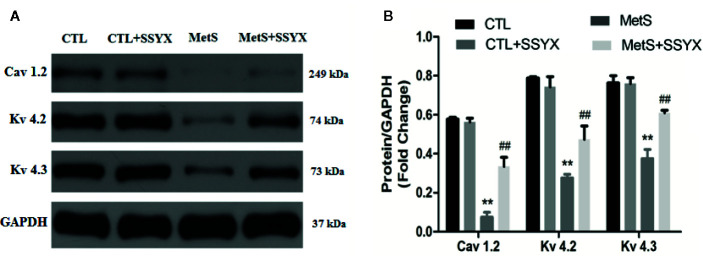
Shensong Yangxin (SSYX) is a traditional Chinese medicine, which has been proven to improve the clinical symptoms of arrhythmia. However, the role of SSYX in metabolic syndrome (MetS)-induced electrical remodeling remains to be fully elucidated. Here, we sought to clarify whether SSYX can alter the electrophysiological remodeling of cardiac myocytes from MetS rats by regulating transient outward potassium current ( ) and calcium current ( ). Male Wistar rats were subjected to 16 weeks of high-carbohydrate, high-fat to produce a MetS model group. SSYX (0.4 g/kg) was administrated by daily gavage 8 weeks following high-carbohydrate, high-fat for 8 weeks. electrophysiological study was performed to evaluated ventricular arrhythmias (VA) vulnerability and electrophysiological properties. The potential electrical mechanisms were estimated by whole-cell patch-clamp and molecular analysis. The H9C2 cells were used to verify the protective role of SSYX . After 16-week high-carbohydrate, high-fat feeding, MetS model rats showed increased body weight (BW), blood pressure (BP), blood sugar (BS), heart rate (HR) and heart weights to tibia length (HW/TL) ratio. Furthermore, MetS rats depicted increased VA inducibility, shortened effective refractory period (ERP) and prolonged action potential duration (APD). Lower and current densities were observed in MetS rats than CTL rats. Additionally, MetS rats exhibited significantly increased cardiac fibrosis, decreased Cx43 expression and protein levels of Cav1.2, Kv4.2, Kv4.3 than CTL group. As expected, these MetS-induced effects above were reversed when SSYX was administrated. Mechanistically, SSYX administrated significantly down-regulated the TLR4/MyD88/CaMKII signaling pathway both and . Collectively, our data indicated that the electrical remodeling induced by MetS contributed to the increased VA susceptibility. SSYX protects against MetS-induced VA by inhibiting electrical remodeling through TLR4/MyD88/CaMKII signaling pathway.
参松养心(SSYX)是一种中药,已被证明可改善心律失常的临床症状。然而,SSYX在代谢综合征(MetS)诱导的电重构中的作用仍有待充分阐明。在此,我们试图阐明SSYX是否能通过调节瞬时外向钾电流( )和钙电流( )来改变MetS大鼠心肌细胞的电生理重构。雄性Wistar大鼠接受16周的高碳水化合物、高脂肪饮食以建立MetS模型组。在高碳水化合物、高脂肪饮食8周后,每天灌胃给予SSYX(0.4 g/kg),持续8周。进行电生理研究以评估室性心律失常(VA)易感性和电生理特性。通过全细胞膜片钳和分子分析评估潜在的电机制。使用H9C2细胞验证SSYX的保护作用。经过16周的高碳水化合物、高脂肪喂养后,MetS模型大鼠的体重(BW)、血压(BP)、血糖(BS)、心率(HR)以及心脏重量与胫骨长度之比(HW/TL)增加。此外,MetS大鼠的VA诱导性增加,有效不应期(ERP)缩短,动作电位时程(APD)延长。与对照组大鼠相比,MetS大鼠的 和 电流密度较低。此外,与对照组相比,MetS大鼠的心脏纤维化显著增加,Cx43表达以及Cav1.2、Kv4.2、Kv4.3的蛋白水平降低。正如预期的那样,给予SSYX后,上述MetS诱导的效应得到逆转。从机制上讲,给予SSYX后, 和 中的TLR4/MyD88/CaMKII信号通路均显著下调。总体而言,我们的数据表明,MetS诱导的电重构导致VA易感性增加。SSYX通过TLR4/MyD88/CaMKII信号通路抑制电重构,从而预防MetS诱导的VA。