Mechanisms of Peripheral Tolerance Unit, San Raffaele Telethon Institute for Gene Therapy (SR-Tiget), IRCCS San Raffaele Scientific Institute, Milan, Italy.
Front Immunol. 2020 Jul 8;11:1178. doi: 10.3389/fimmu.2020.01178. eCollection 2020.
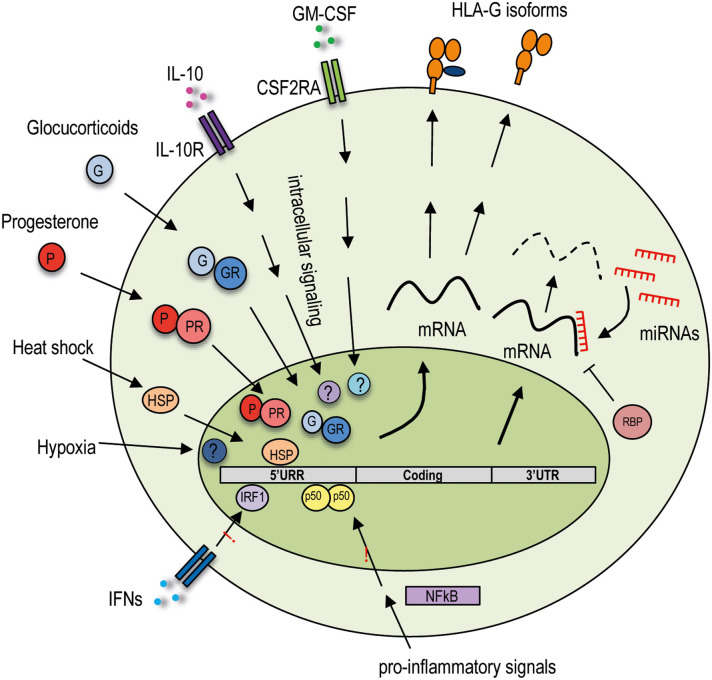
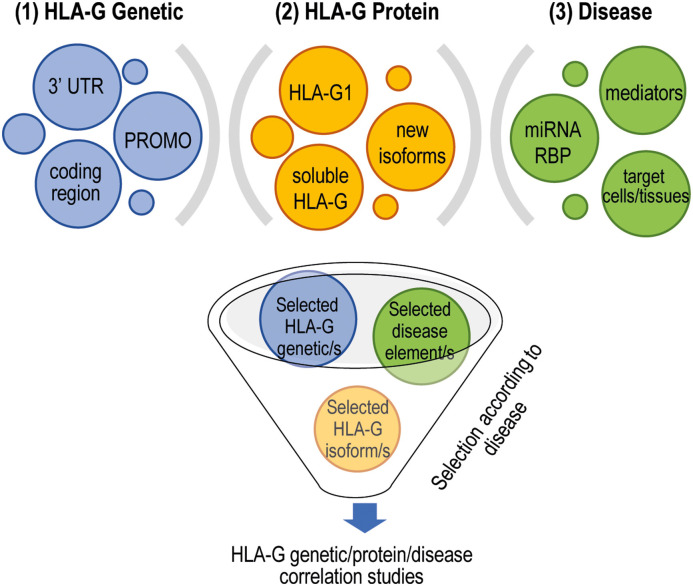
The non-classical HLA-G is a well-known immune-modulatory molecule. In physiological condition, HLA-G surface expression is restricted to the maternal-fetal interface and to immune-privileged adult tissues, whereas soluble forms of HLA-G are detectable in various body fluids. HLA-G can be expressed in pathological conditions including tumors, chronic infections, or after allogeneic transplantation. HLA-G exerts positive effects modulating innate and adaptive immune responses and promoting tolerance, or detrimental effects inducing immune escape mechanisms. HLA-G locus, in contrast to classical HLA class I gene, is highly polymorphic in the non-coding 3' untranslated region (UTR) and in the 5' upstream regulatory region (5' URR). Variability in these regions influences HLA-G expression by modifying mRNA stability or allowing posttranscriptional regulation in the case of 3' UTR or by sensing the microenvironment and responding to specific stimuli in the case of HLA-G promoter regions (5' URR). The influence of genetic variations on the expression of HLA-G makes it an attractive biomarker to monitor disease predisposition and progression, or response to therapy. Here, we summarize the current knowledge, efforts, and obstacles to generate a general consensus on the correlation between HLA-G genetic variability, protein expression, and disease predisposition. Moreover, we discuss perspectives for future investigation on HLA-G genotype/expression in association with disease predisposition and progression.
非经典 HLA-G 是一种众所周知的免疫调节分子。在生理条件下,HLA-G 表面表达局限于母胎界面和免疫特权的成人组织,而可溶性 HLA-G 形式可在各种体液中检测到。HLA-G 可在包括肿瘤、慢性感染或同种异体移植后的病理条件下表达。HLA-G 通过调节先天和适应性免疫反应并促进耐受发挥积极作用,或通过诱导免疫逃逸机制产生有害作用。与经典 HLA I 类基因相比,HLA-G 基因座在非编码 3'UTR 和 5'上游调控区(5'URR)中高度多态。这些区域的变异性通过改变 mRNA 稳定性或允许 3'UTR 的转录后调节,或通过感知微环境并响应 HLA-G 启动子区域(5'URR)中的特定刺激来影响 HLA-G 的表达。遗传变异对 HLA-G 表达的影响使其成为监测疾病易感性和进展或对治疗反应的有吸引力的生物标志物。在这里,我们总结了目前关于 HLA-G 遗传变异、蛋白表达与疾病易感性之间相关性的共识的知识、努力和障碍。此外,我们还讨论了未来在与疾病易感性和进展相关的 HLA-G 基因型/表达方面进行研究的前景。