Avitabile Elisabetta, Fusco Laura, Minardi Silvia, Orecchioni Marco, Zavan Barbara, Yilmazer Acelya, Rauner Martina, Pippia Proto, Tasciotti Ennio, Delogu Lucia Gemma
Department of Chemistry and Pharmacy, University of Sassari, Sassari, Italy.
Department of Chemical and Pharmaceutical Sciences, University of Trieste, Trieste, Italy.
Front Bioeng Biotechnol. 2020 Jul 8;8:722. doi: 10.3389/fbioe.2020.00722. eCollection 2020.
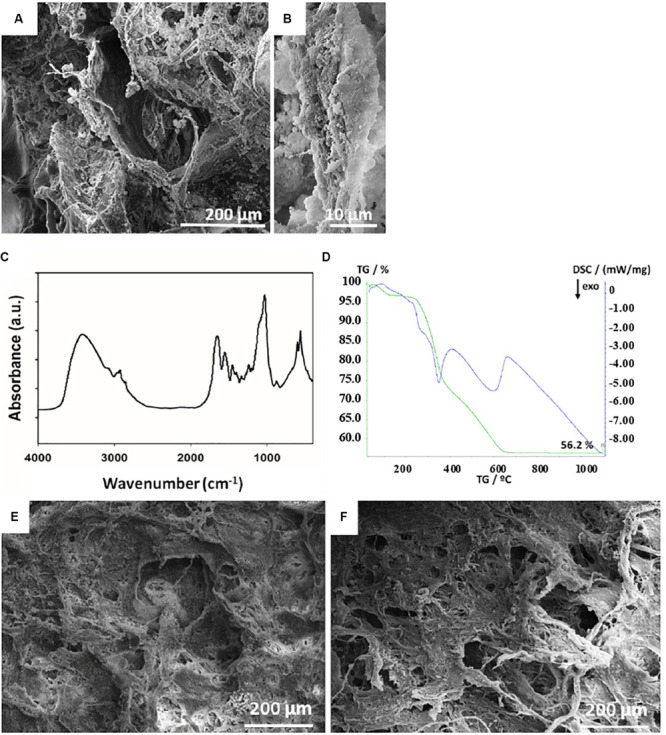
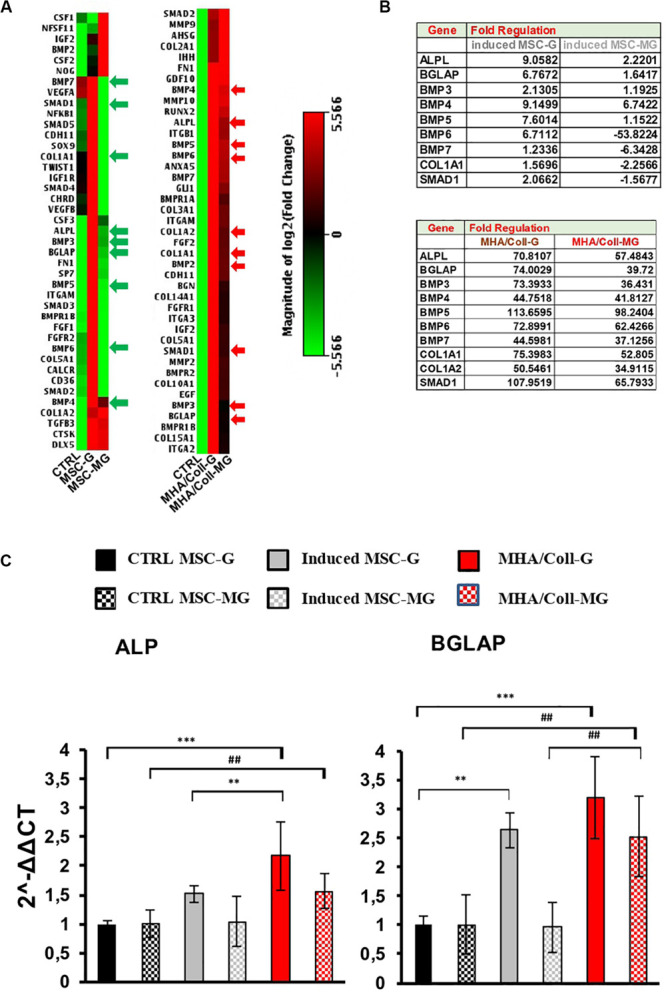
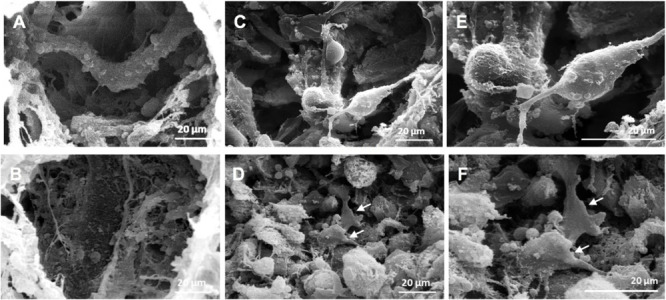
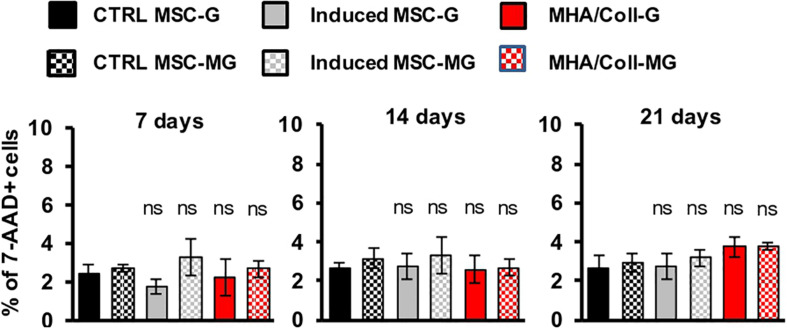
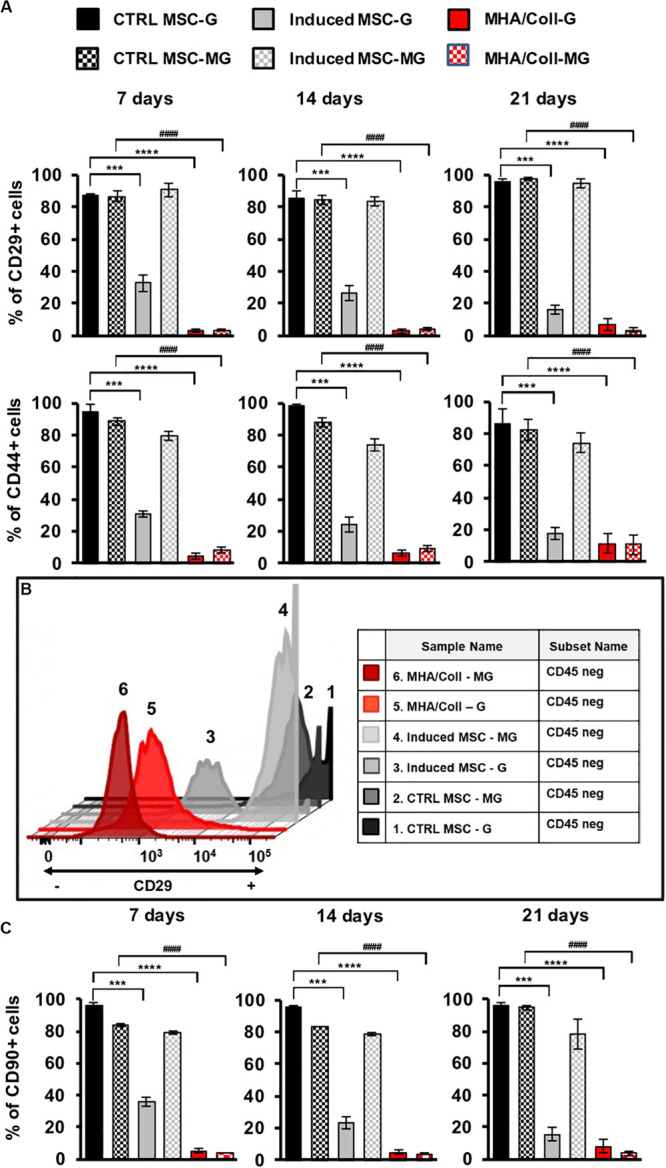
Prolonged exposure to microgravity (MG) during long-duration space flights is known to induce severe dysregulation of osteoblast functions connected to a significant bone loss, similar to the condition induced by osteoporosis. Hence, we here present MG as a promising model to challenge the effectiveness of new scaffolds designed for bone regeneration in counteracting bone loss. To this end, we carried out an integrative study aimed to evaluate, in the extreme condition of Random Positioning Machine-simulated MG, the osteoinductive potential of nanocrystalline magnesium-doped hydroxyapatite/type I collagen composite scaffold (MHA/Coll), that we previously demonstrated to be an excellent tool for bone tissue engineering. Initially, to test the osteoinductive properties of our bioinspired-scaffold, MHA/Coll structure was fully characterized under MG condition and compared to its static counterpart. Human bone marrow-derived mesenchymal stem cells were used to investigate the scaffold biocompatibility and ability to promote osteogenic differentiation after long-duration exposure to MG (up to 21 days). The results demonstrate that the nanostructure of MHA/Coll scaffold can alleviate MG-induced osteoblast dysfunction, promoting cell differentiation along the osteogenic lineage, with a consequent reduction in the expression of the surface markers CD29, CD44, and CD90. Moreover, these findings were corroborated by the ability of MHA/Coll to induce the expression of genes linked to osteogenesis, including alkaline phosphatase and osteocalcin. This study confirmed MHA/Coll capabilities in promoting osteogenesis even in extreme long-term condition of MG, suggesting MG as an effective challenging model to apply in future studies to validate the ability of advanced scaffolds to counteract bone loss, facilitating their application in translational Regenerative Medicine and Tissue Engineering.
长期太空飞行中长时间暴露于微重力环境会导致成骨细胞功能严重失调,进而引发显著的骨质流失,这与骨质疏松症引发的状况类似。因此,我们在此提出将微重力作为一个有前景的模型,用以检验为骨再生设计的新型支架在对抗骨质流失方面的有效性。为此,我们开展了一项综合研究,旨在评估在随机定位机模拟的微重力极端条件下,纳米晶掺镁羟基磷灰石/ I型胶原复合支架(MHA/Coll)的骨诱导潜力,我们之前已证明该支架是骨组织工程的优良工具。首先,为测试我们的仿生支架的骨诱导特性,在微重力条件下对MHA/Coll结构进行了全面表征,并与其静态对照进行比较。使用人骨髓间充质干细胞来研究该支架的生物相容性以及在长时间暴露于微重力(长达21天)后促进成骨分化的能力。结果表明,MHA/Coll支架的纳米结构可缓解微重力诱导的成骨细胞功能障碍,促进细胞沿成骨谱系分化,从而降低表面标志物CD29、CD44和CD90的表达。此外,MHA/Coll诱导与成骨相关基因(包括碱性磷酸酶和骨钙素)表达的能力也证实了这些发现。本研究证实了MHA/Coll即使在微重力的极端长期条件下也具有促进成骨的能力,表明微重力是一种有效的挑战性模型,可应用于未来研究以验证先进支架对抗骨质流失的能力,促进其在转化再生医学和组织工程中的应用。