Wang Ye, Chen Yihui, Liang Ge, Zeng Kai, Chen Xiao-Hui, Ying San-Cheng, Wang Zezhou, Lv Xue-Bin, Gao Rong
Key Laboratory of Bio-Resource and Eco-Environment of Ministry Education, Key Laboratory of Animal Disease Prevention and Food Safety of Sichuan Province, College of Life Sciences, Sichuan University, Chengdu, Sichuan, 610064, China.
Sichuan Academy of Animal Science, Chengdu, 610066, China.
Vet Anim Sci. 2019 Sep 26;8:100074. doi: 10.1016/j.vas.2019.100074. eCollection 2019 Dec.
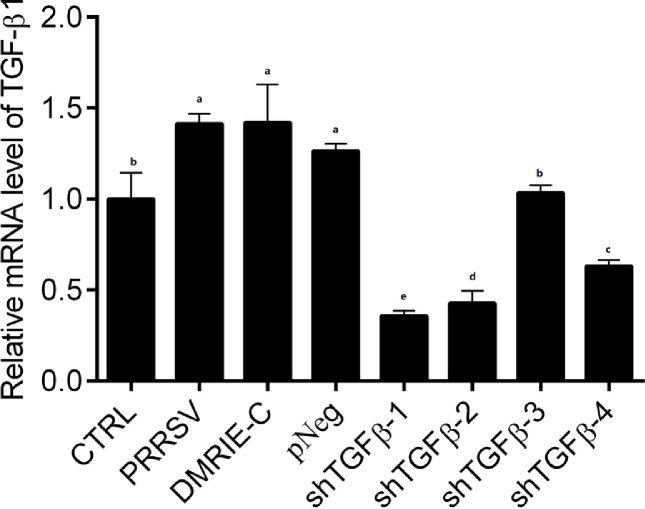
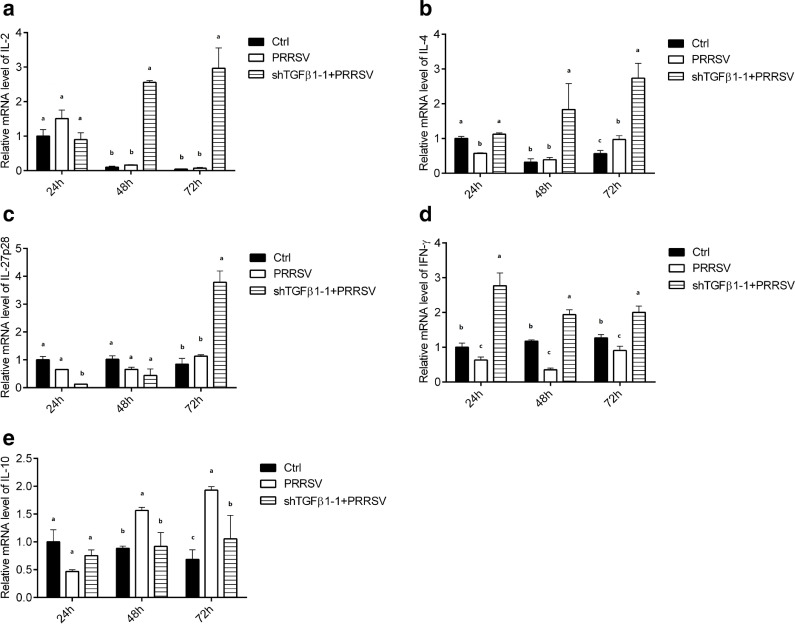
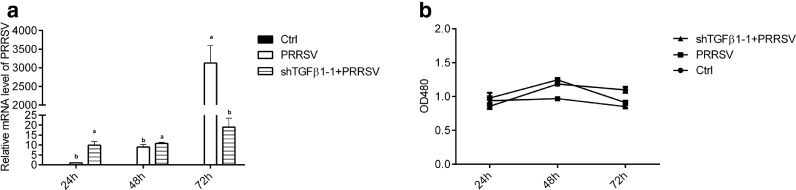
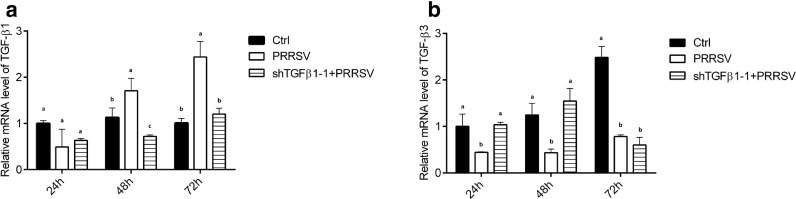
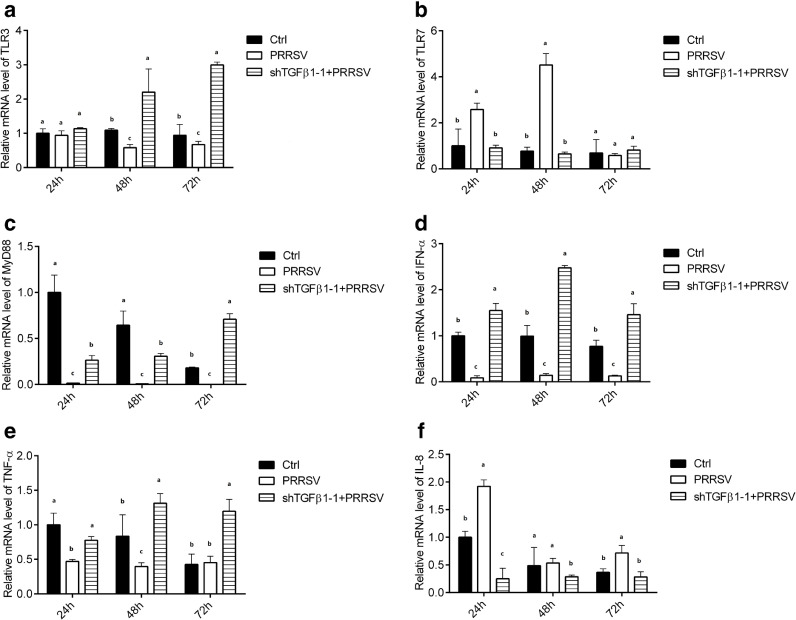
Transforming growth factor beta 1 (TGF-β1) was of importance in the pathogenesis of porcine reproductive and respiratory syndrome virus (PRRSV). To determine whether knockdown of TGF-β1 gene expression could facilitate the control of PRRSV infection, specific sequences for expressing shRNA targeted to porcine TGF-β1 gene were synthesized and cloned into pSilencer 3.1-H1 neovector. Then they were used to transfect peripheral blood mononuclear cells of Tibetan pig (Tp-PBMCs) followed by PRRSV inoculation. The positive recombinant plasmids were screened for inhibition of TGF-β1 gene expression by real-time quantitative RT-PCR. Conversely, the mRNA level of PRRSV in shRNA treated Tp-PBMCs dramatically decreased, and there were significant increases of the transcription of immune genes, such as interleukin-2 (IL-2), interleukin-4 (IL-4), interferon-alpha (IFN-α), interferon-gamma (IFN-γ), tumor necrosis factor-alpha (TNF-α), toll-like receptor 3 (TLR3), toll-like receptor 7 (TLR7), Myeloid differentiation primary response gene (88) (MyD88), and interleukin-27p28 (IL-27p28). However, the expressions of IL-8 and IL-10 genes significantly reduced in comparison to the control infected cells. In addition, transfection with the shRNA plasmids significantly elevated the viability of immune cells. Therefore the knockdown of TGF-β1 gene expression by shRNA not only inhibits the replication of PRRSV but also improves immune responsiveness following viral infection, suggesting a novel way to facilitate the control of PRRSV infection in pigs.
转化生长因子β1(TGF-β1)在猪繁殖与呼吸综合征病毒(PRRSV)的发病机制中具有重要作用。为了确定敲低TGF-β1基因表达是否有助于控制PRRSV感染,合成了靶向猪TGF-β1基因的shRNA表达特异性序列,并将其克隆到pSilencer 3.1-H1新载体中。然后用它们转染藏猪外周血单个核细胞(Tp-PBMCs),随后接种PRRSV。通过实时定量RT-PCR筛选阳性重组质粒对TGF-β1基因表达的抑制作用。相反,经shRNA处理的Tp-PBMCs中PRRSV的mRNA水平显著降低,免疫基因如白细胞介素-2(IL-2)、白细胞介素-4(IL-4)、α干扰素(IFN-α)、γ干扰素(IFN-γ)、肿瘤坏死因子-α(TNF-α)、Toll样受体3(TLR3)、Toll样受体7(TLR7)、髓样分化初级反应基因(88)(MyD88)和白细胞介素-27p28(IL-27p28)的转录显著增加。然而,与对照感染细胞相比,IL-8和IL-10基因的表达显著降低。此外,用shRNA质粒转染显著提高了免疫细胞的活力。因此,通过shRNA敲低TGF-β1基因表达不仅抑制了PRRSV的复制,还提高了病毒感染后的免疫反应性,为促进猪PRRSV感染的控制提供了一种新方法。