Fuchs Boris, Sørheim Kristin Marie, Chincarini Matteo, Brunberg Emma, Stubsjøen Solveig Marie, Bratbergsengen Kjell, Hvasshovd Svein Olav, Zimmermann Barbara, Lande Unni Støbet, Grøva Lise
Inland Norway University of Applied Sciences, Faculty of Applied Ecology, Agricultural Sciences and Biotechnology, NO-2418 Elverum, Norway.
Norwegian Centre for Organic Agriculture (NORSØK), Gunnars veg 6, N-6630 Tingvoll, Norway.
Vet Anim Sci. 2019 Oct 1;8:100075. doi: 10.1016/j.vas.2019.100075. eCollection 2019 Dec.
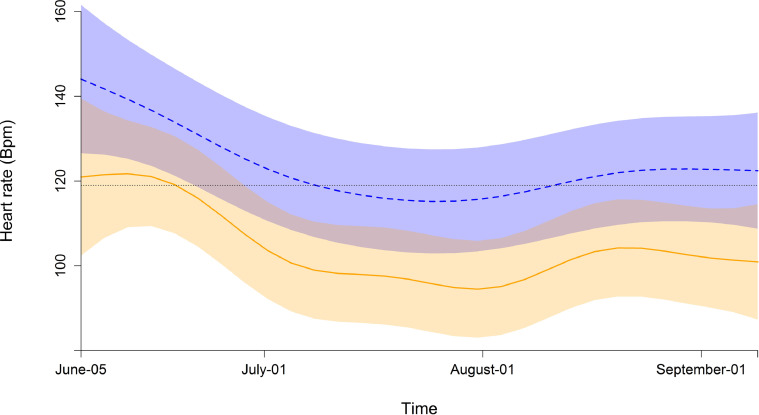
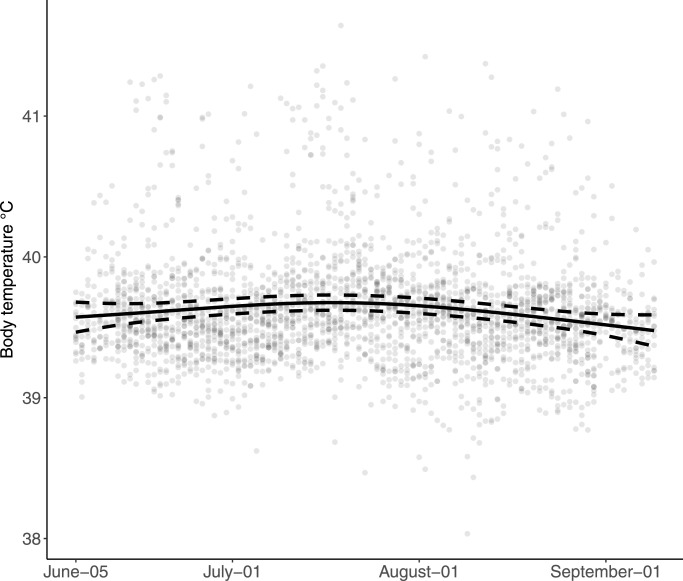
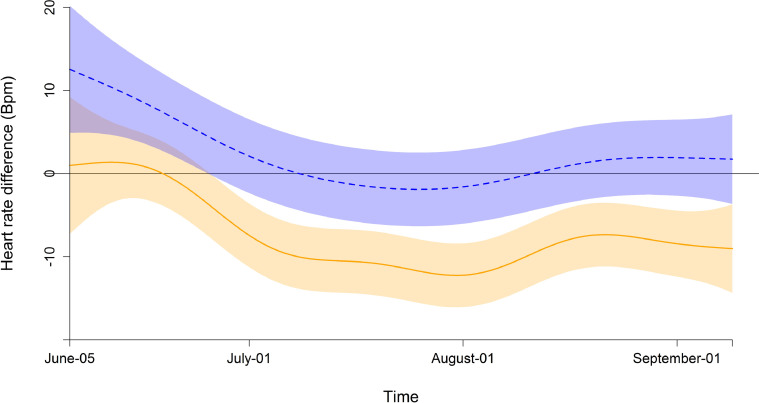
Advantages of low input livestock production on large pastures, including animal welfare, biodiversity and low production costs are challenged by losses due to undetected disease, accidents and predation. Precision livestock farming (PLF) enables remote monitoring on individual level with potential for predictive warning. Body temperature (Tb) and heart rate (HR) could be used for early detection of diseases, stress or death. We tested physiological sensors in free-grazing Norwegian white sheep in Norway. Forty Tb sensors and thirty HR sensors were surgically implanted in 40 lambs and 10 ewes. Eight (27%) of the HR and eight (20%) of the Tb sensors were lost during the study period. Two Tb sensors migrated from the abdominal cavity in to the digestive system. ECG based validation of the HR sensors revealed a measurement error of 0.2 bpm (SD 5.2 bpm) and correct measurement quality was assigned in 90% of the measurements. Maximum and minimum HR confirmed by ECG was 197 bpm and 68 bpm respectively. Mean passive HR was 90 bpm (SD = 13 bpm) for ewes and 112 bpm (SD = 13 bpm) for lambs. Mean Tb for all animals was 39.6°C (range 36.9 to 41.8°C). Tb displayed 24-hour circadian rhythms during 80.7 % but HR only during 41.0 % of the studied period. We established baseline values and conclude that these sensors deliver good quality. For a wide agricultural use, the sensor implantation method has to be further developed and real-time communication technology added.
大型牧场低投入畜牧生产的优势,包括动物福利、生物多样性和低成本,受到未被发现的疾病、事故和捕食造成的损失的挑战。精准畜牧养殖(PLF)能够在个体层面进行远程监测,并具有预测预警的潜力。体温(Tb)和心率(HR)可用于疾病、应激或死亡的早期检测。我们在挪威自由放牧的挪威白羊身上测试了生理传感器。40个体温传感器和30个心率传感器通过手术植入40只羔羊和10只母羊体内。在研究期间,8个(27%)心率传感器和8个(20%)体温传感器丢失。两个体温传感器从腹腔迁移到了消化系统。基于心电图对心率传感器的验证显示测量误差为0.2次/分钟(标准差5.2次/分钟),90%的测量结果被判定为测量质量正确。经心电图确认的心率最大值和最小值分别为197次/分钟和68次/分钟。母羊的平均静息心率为90次/分钟(标准差 = 13次/分钟),羔羊为112次/分钟(标准差 = 13次/分钟)。所有动物的平均体温为39.6°C(范围为36.9至41.8°C)。在80.7%的研究期间,体温呈现24小时昼夜节律,但心率仅在41.0%的研究期间呈现昼夜节律。我们确定了基线值,并得出结论,这些传感器质量良好。为了广泛应用于农业,传感器植入方法必须进一步改进,并增加实时通信技术。